
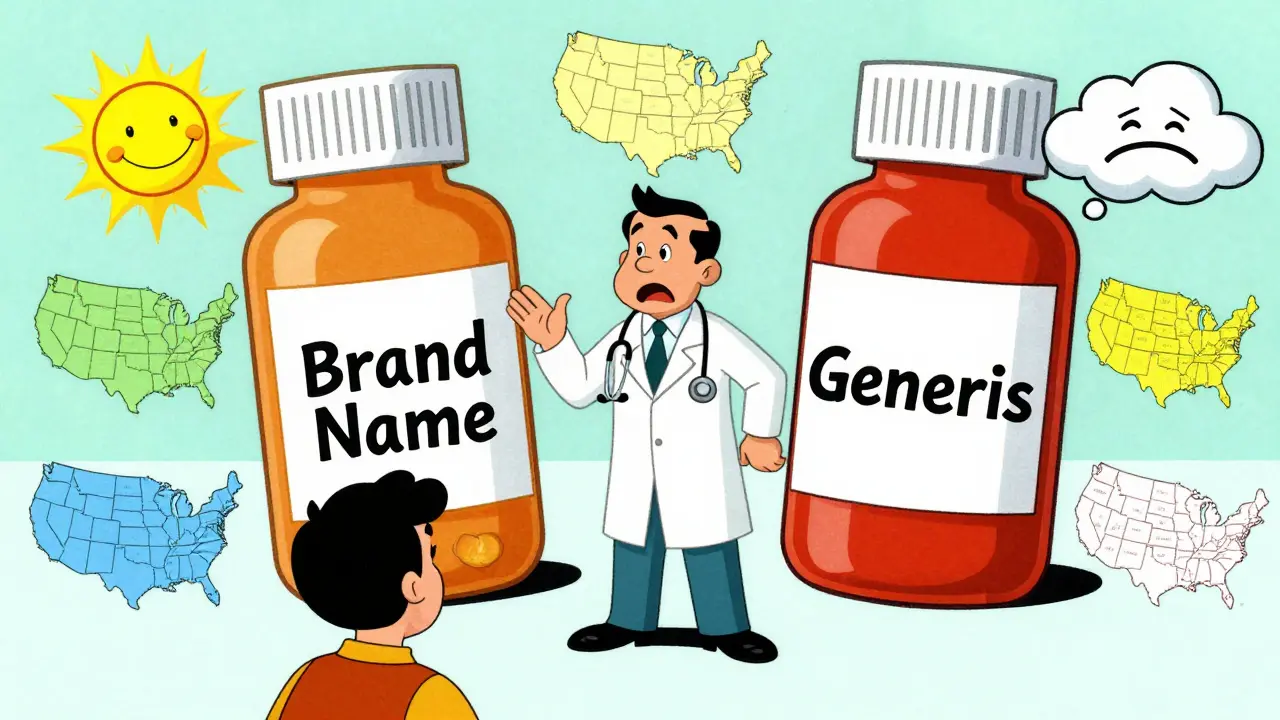
Every time a pharmacist swaps a brand-name drug for a generic, they’re making a decision that could carry legal weight. It’s not just about saving money - it’s about patient safety, state laws, and who’s responsible when things go wrong. In 2026, with over 90% of prescriptions filled as generics, this isn’t a rare edge case. It’s daily practice. And the risks? They’re real, growing, and often misunderstood.
Why Generic Substitution Comes With Legal Risk
The idea behind generic drugs is simple: same active ingredient, lower cost. But the legal reality? It’s messy. In 2011, the U.S. Supreme Court ruled in PLIVA v. Mensing that generic drug manufacturers can’t be sued under state law for failing to update warning labels. Why? Because federal law forces them to use the exact same label as the brand-name version. They can’t change it, even if new safety data emerges. This created a legal black hole. If a patient has a bad reaction to a generic drug, they can’t sue the maker of that generic. And they usually can’t sue the brand-name company either - because they didn’t make the product the patient took. That leaves pharmacists in the middle. If you substitute a drug without proper consent or documentation, and something goes wrong, you could be the one held liable. It’s not theoretical. A 2019 case in the Journal of Patient Safety involved a patient who suffered permanent brain damage after switching from a brand-name antiepileptic to a generic. The court dismissed the case because of federal preemption. But the pharmacist? They were still investigated by the state board. Liability doesn’t always mean a lawsuit - it can mean losing your license.State Laws Vary Wildly - And So Does Your Risk
There’s no national rulebook for generic substitution. Each state sets its own rules, and the differences are huge.- 27 states require substitution if the drug is deemed therapeutically equivalent - unless the prescriber or patient says no.
- 23 states only allow substitution; they don’t force it.
- 18 states require you to tell the patient directly - not just rely on the label.
- 32 states let patients refuse substitution - but only if you ask them.
- 27 states protect pharmacists from higher liability when substituting. 23 states? No protection at all.
High-Risk Drugs: Where Substitution Gets Dangerous
Not all generics are created equal. For drugs with a narrow therapeutic index - meaning the difference between a safe dose and a toxic one is tiny - substitution can be risky. These drugs include:- Warfarin (blood thinner)
- Levothyroxine (thyroid hormone)
- Phenytoin, carbamazepine, valproate (antiepileptics)
How to Protect Yourself: A 7-Step Risk Reduction Plan
You don’t have to live in fear. You can reduce your risk with clear, consistent practices.- Know your state’s law - and check it every year. Laws change. The National Association of Boards of Pharmacy updates its state pharmacy law compendium annually. Bookmark it. Print it. Review it.
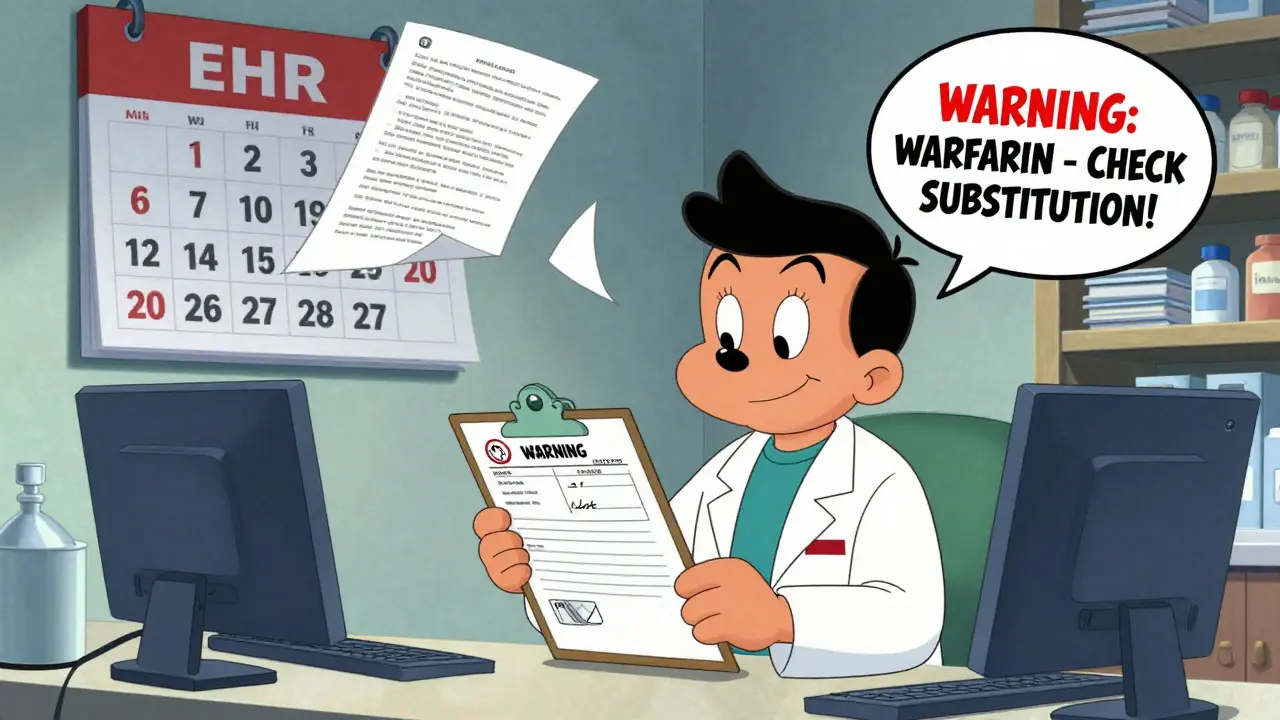
- Use EHR alerts. Set up electronic flags in your pharmacy system for narrow therapeutic index drugs. If a prescription for levothyroxine or warfarin comes in, your system should pop up: “Check substitution policy.”
- Get written consent - for high-risk drugs. Even if your state doesn’t require it, use a simple form: “I understand this prescription has been changed from [brand] to [generic]. I’ve been told the risks and agree.” Have the patient sign. Keep it in their file.
- Communicate with prescribers. If you’re unsure about substituting a drug like carbamazepine, call the doctor. Ask: “Is this patient stable? Has this drug been working well?” Most will appreciate the call.
- Log every substitution. Record the brand name, generic name, lot number, and patient consent status. If a problem arises later, you’ll have proof you followed protocol.
- Complete a liability risk assessment. The 2021 Journal of the American Pharmacists Association published a 27-point checklist. Use it. It covers everything from labeling to documentation to staff training.
- Get supplemental malpractice insurance. Standard liability coverage often excludes substitution-related claims. Look for policies that specifically cover generic drug substitution. Premiums have risen 18% since 2011 - but they’re cheaper than a lawsuit.
What Patients Need to Know - And How to Tell Them
Patients aren’t the enemy. Most want to save money. But they need to be partners in the decision. In states with notification laws, you’re legally required to inform them. But even in states without those laws, you should. Here’s a simple script:“Your prescription was switched from [brand] to [generic]. It’s the same active ingredient, but the fillers are different. For most people, it works just fine. But for some - especially if you’re on [warfarin, levothyroxine, etc.] - small changes can make a difference. Would you like to stick with the brand, or are you okay with the generic?”
A 2022 Reddit thread with over 4,000 upvotes featured patients who developed severe hypothyroid symptoms after switching to a generic levothyroxine. One wrote: “I felt like I was dying. No one told me it might be the pill.” That’s not negligence - it’s missed opportunity. If you take 30 seconds to explain, you build trust. And trust reduces liability.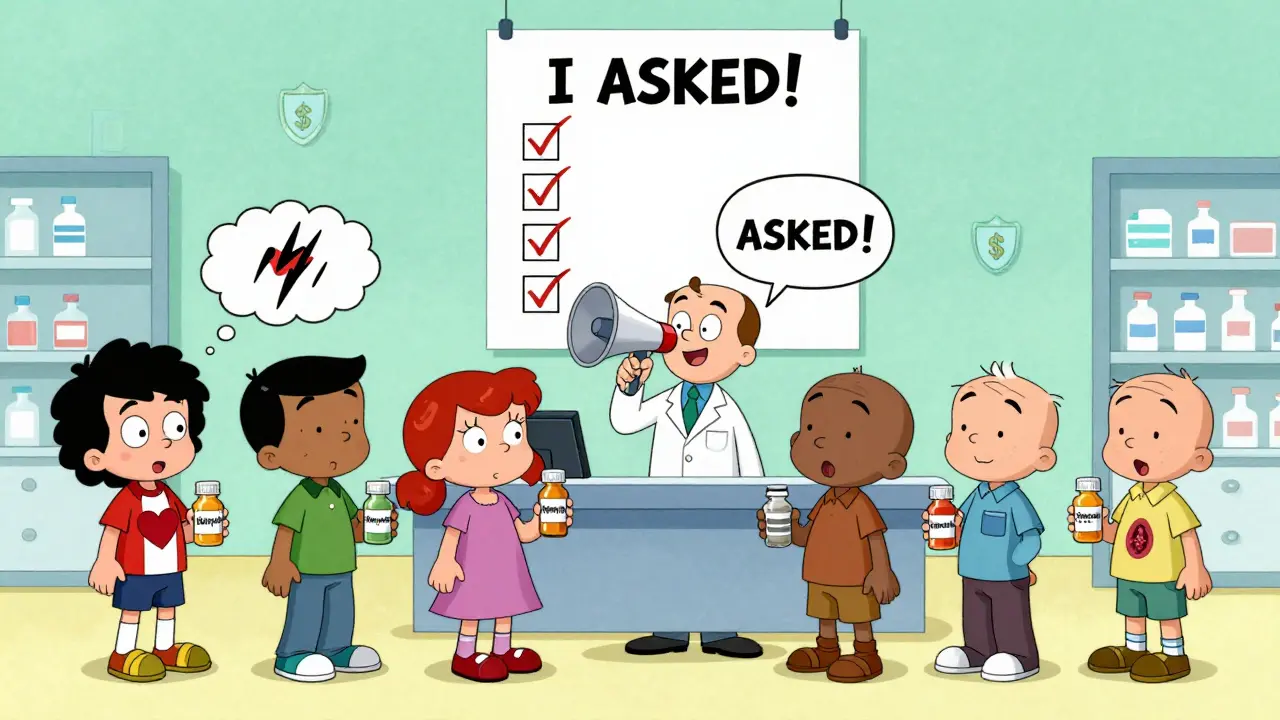
The Bigger Picture: Where the System Is Failing
The cost savings are real. Between 2009 and 2018, generics saved the U.S. healthcare system $1.67 trillion. That’s not small change. But the system is built on a broken foundation. Generic manufacturers can’t update labels. Brand-name companies aren’t responsible for generics. Patients can’t sue. Pharmacists are caught in the middle. And the FDA’s attempts to fix this - like its 2023 pilot program for label changes - have moved slowly. Only 12% of label change requests came from generic companies. The solution? A “consensus labeling” model, proposed by Dr. Aaron Kesselheim at Harvard. Imagine one standardized label, updated by a neutral body based on all available safety data. All manufacturers - brand and generic - would use it. That would close the liability gap without raising prices. Five states are already piloting this under the Interstate Pharmacy Compact. It’s not perfect. But it’s the only path forward that balances safety, cost, and fairness.What’s Next for Pharmacists
In 2026, generic substitution isn’t going away. Biologics and biosimilars are coming - and their substitution rules are even more complex. Forty-five states already have laws for them, with wildly different liability protections. Your job isn’t to fight the system. It’s to navigate it - smartly, safely, and ethically. Stay informed. Document everything. Talk to patients. Push for change - through your state pharmacy association, your licensing board, your professional societies. The system won’t fix itself. But you can make sure you’re not the one who pays the price for its flaws.Generic drugs save lives - and money. But only if the system protects the people who give them out.
Alexandra Enns
January 25, 2026 AT 00:54Let me get this straight - the FDA lets generic drug makers use the exact same label as the brand, even when they know it’s outdated? That’s not negligence, that’s corporate treason. And now pharmacists are the ones getting sued? Please. This system was designed to protect Big Pharma and screw over the people who actually hand out the meds. I’ve seen this happen in Ontario - patients crashing because no one told them the generic was different. Someone needs to burn this whole regulatory circus down.
Marie-Pier D.
January 26, 2026 AT 02:34Wow, this post is so important 💗 I’ve been a pharmacist for 14 years and I’ve seen so many patients panic after switching meds without warning. I always take 30 seconds to say, ‘Hey, your pill changed - let me tell you why and what to watch for.’ It’s not just legal protection - it’s human care. Thank you for writing this. We’re not just pill dispensers, we’re the last line of defense. 🫶
Dolores Rider
January 26, 2026 AT 13:58They’re lying to us. The FDA and Big Pharma are in cahoots. Generic drugs don’t work the same - they use different fillers that contain microchips to track you. That’s why people get weird symptoms after switching. I read it on a forum where a guy said his cat started talking after his levothyroxine changed. Coincidence? I think not. 🤫👁️
Jenna Allison
January 28, 2026 AT 02:50Therapeutic index drugs are the real issue here. Warfarin, levothyroxine, phenytoin - even a 5% difference in absorption can be catastrophic. Bioequivalence testing is flawed because it’s based on healthy volunteers, not elderly patients with 7 comorbidities. Pharmacists need to be trained on this, not just told to ‘follow the law.’ The system’s broken, and we’re the ones cleaning up the mess.
Sharon Biggins
January 29, 2026 AT 07:26you’re so right about the documentation part!! i started using the consent forms last year and honestly? it’s been a game changer. patients actually appreciate it. one guy told me ‘i wish every pharmacist did this.’ i cried a little. you’re not just protecting yourself - you’re building trust. keep going!! 🙌
John McGuirk
January 30, 2026 AT 15:27Why do you think the FDA allows this? Because they’re owned by the same corporations that make the brand drugs. They want you to switch so the brand can jack up prices later. And now the pharmacist gets blamed? Classic. I bet the lobbyists wrote the state laws too. You think this is about safety? No. It’s about profit. Always profit.
Michael Camilleri
January 30, 2026 AT 23:47People think medicine is science but it’s just ritual. We hand out pills like prayers and pretend the body obeys. The real problem isn’t substitution - it’s our delusion that a pill can fix everything. You think a label change will save you? No. You think a signature on a form will protect you? You’re not a pharmacist. You’re a priest in a white coat. And the gods are silent.
Darren Links
February 1, 2026 AT 20:53Yeah sure, let’s blame pharmacists. Meanwhile, the government lets generic manufacturers get away with using cheap fillers that cause inflammation. And the FDA? They’re too busy approving new opioid formulations to care. This isn’t about liability - it’s about systemic decay. We’re just the convenient scapegoats. I’d rather be a dentist. At least they don’t have to worry about invisible chemical ghosts in their pills.
Husain Atther
February 2, 2026 AT 23:03This is a very thoughtful analysis. I work in a community pharmacy in Delhi, and we face similar challenges - but with even less regulation. Patients often don’t know what they’re taking. I’ve started keeping a small printed guide in our waiting area explaining generics and when to be cautious. Small steps matter. Thank you for highlighting the human side of this.
Helen Leite
February 3, 2026 AT 13:42THEY’RE ADDING LITHIUM TO THE GENERIC LEVOTHYROXINE!!! I know a woman who went from 100mcg to 88mcg and started hearing voices. She thought it was stress. It was the pill. The FDA is covering it up. I’ve been posting screenshots of the lot numbers. Someone needs to investigate this. 🚨🧪
Marlon Mentolaroc
February 4, 2026 AT 22:38Let’s be real - 90% of patients don’t even notice the switch. The ones who do? Usually because they’re hypochondriacs or on Reddit. But yeah, for the 5% who are sensitive? You’re right to be cautious. Just document, communicate, and don’t lose sleep over it. Most lawsuits are settled before trial anyway. Chill.
Gina Beard
February 6, 2026 AT 16:58Liability isn’t about the law. It’s about perception. If the patient believes the switch caused harm, they’ll sue. The truth doesn’t matter. Documentation is armor. Not because it’s perfect - but because it’s visible.
Phil Maxwell
February 8, 2026 AT 00:44Just wanted to say I’ve been using the 27-point checklist from JAPhA since last year. Took me a weekend to set up in our system. Now my team does it automatically. No one’s complained. No claims. Just quieter days. Small changes, big impact. Thanks for the reminder to keep it simple.