
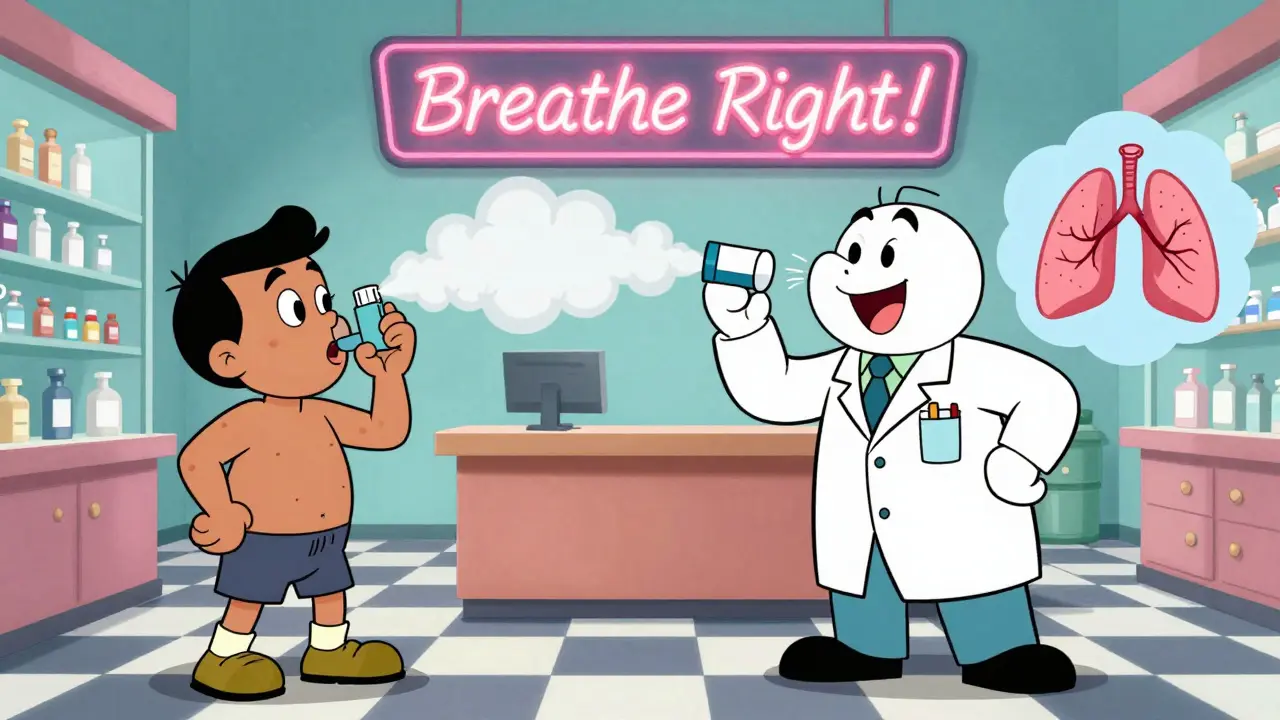
Getting your medication right isn’t just about taking it-it’s about taking it correctly, consistently, and on time. For people using inhalers, patches, or injectables, that’s harder than it sounds. Up to 70% of patients don’t take their meds as prescribed, and the consequences are real: more hospital visits, worse health, and higher costs. The good news? There are practical, proven ways to fix this-and they’re not all high-tech.
Why Adherence Matters More Than You Think
Missing a dose of your inhaler might seem small. But over weeks or months, it adds up. For asthma or COPD patients, poor inhaler use leads to more flare-ups, emergency room trips, and even lung damage. Patches for pain or hormones? If they fall off or aren’t replaced on schedule, your body doesn’t get the steady dose it needs. Injectables like insulin or biologics? A missed shot can spike blood sugar or trigger a flare-up of autoimmune disease.
The numbers don’t lie. In the U.S., non-adherence causes around 125,000 deaths every year and costs the system between $100 and $289 billion. That’s not just a statistic-it’s your neighbor, your parent, your friend. And it’s not because people are lazy. It’s because the systems around these meds are complicated, expensive, or poorly explained.
Inhalers: It’s Not Just About Pressing the Button
Most people think using an inhaler is simple: shake, breathe in, press. But studies show over 80% of patients use them wrong. You might be inhaling too fast, not holding your breath long enough, or forgetting to rinse your mouth afterward-leading to thrush or reduced effectiveness.
Traditional fixes like printed instructions or one-time demos from a doctor rarely stick. But a 2021 study in Dovepress found that when pharmacists spent 20 minutes teaching proper technique and then followed up at 7 and 30 days, patients improved their inhaler use by 40%. That’s huge.
Now, tech is stepping in. Smart inhalers like Propeller Health’s sensor attach to your device and track every use. They sync with your phone, send reminders, and even show you patterns-like how often you skip your rescue inhaler on weekends. One user in the r/asthma Reddit community saw adherence jump from 55% to 82% in three months. But it’s not perfect. Some users say the app crashes on older Android phones. Others felt anxious with constant alerts.
The key? Use tech as a tool, not a punishment. If reminders stress you out, turn off notifications and just check the data once a week. The goal isn’t perfection-it’s awareness.
Patches: Stick With It (Literally)
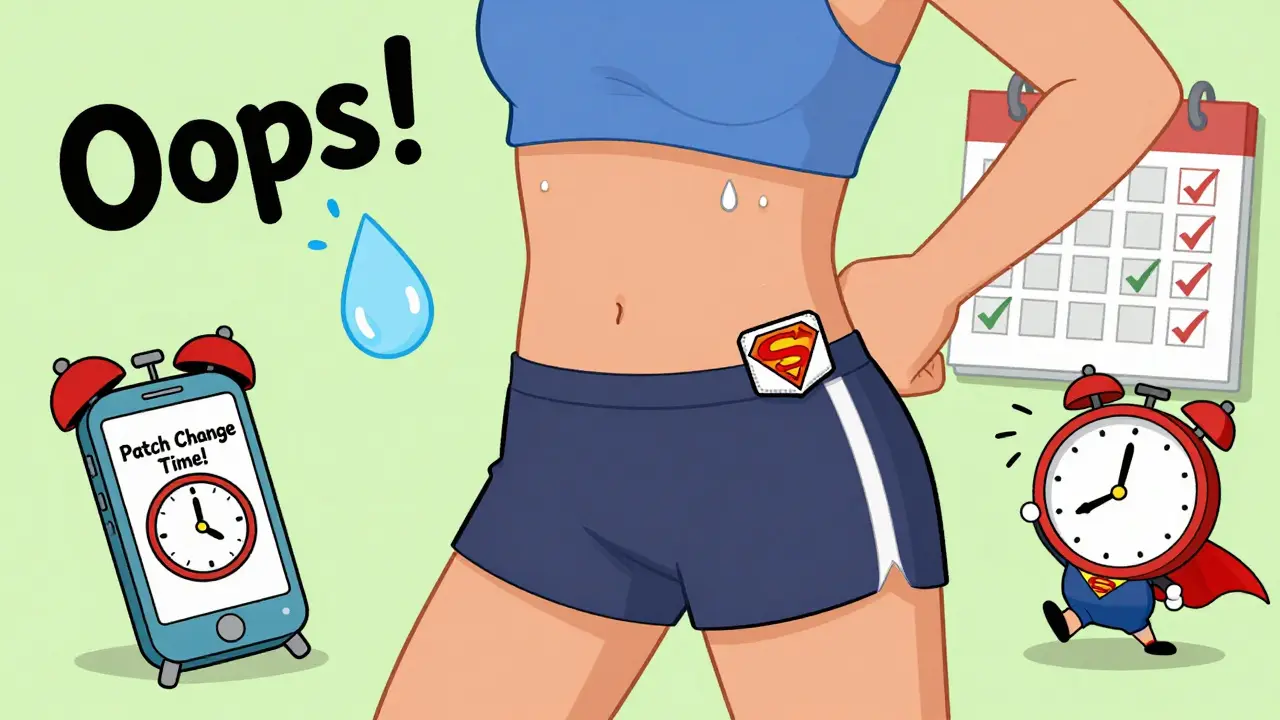
Patches are supposed to be easy: stick on, forget about it. But skin irritation, sweat, hair, or just forgetting to replace it on schedule can break the chain. A 2022 survey by the American Diabetes Association found that 31% of patch users struggled with skin reactions. That’s more than 1 in 3 people.
Simple fixes work here. Rotate application sites-don’t keep putting it on your arm every time. Clean the skin with water (no alcohol or lotion) before applying. If irritation persists, talk to your pharmacist about switching brands. Some patches use different adhesives that are gentler on sensitive skin.
There’s also tech, like Proteus Digital Health’s ingestible sensor. It’s swallowed with the patch and activates in your stomach, sending a signal that you took your med. It’s FDA-approved and accurate-but it’s not for everyone. It’s expensive, requires swallowing a tiny chip, and isn’t covered by most insurance. For most people, a simple alarm on your phone labeled “Patch Change Day” works better.
And don’t underestimate the power of routine. Tie patch changes to something you already do daily-like brushing your teeth or eating breakfast. That habit stacking makes it stick.
Injectables: More Than Just a Shot
Injectables are often the most intimidating. Whether it’s insulin, rheumatoid arthritis meds, or migraine treatments, people delay or skip shots because of pain, fear, or complexity. A Novo Nordisk study found that 22% of caregivers found companion apps too complicated to use.
Smart pens have changed the game. Devices like Novo Nordisk’s connected insulin pens track dose, time, and even injection site. They show you trends-like if you’re consistently missing evening doses-and sync with apps to share data with your care team. In one trial, dose accuracy improved by 27%.
But here’s the catch: accuracy doesn’t always mean adherence. A 2023 study from Columbia University pointed out that these devices track when the pen is activated-not whether the full dose was delivered. If you press too hard, too fast, or pull away early, you might not get the full medicine. That’s why training matters. Ask your pharmacist for a hands-on demo. Practice on an orange first.
For long-term meds like monthly biologics, extended-release formulations help. Drugs like Depakote ER release slowly, meaning fewer doses per month. That cuts down on the mental load. If your doctor hasn’t mentioned it, ask: “Is there a longer-acting version of this?”
The Five Dimensions of Adherence
Dr. Richard B. Martinello from Yale New Haven Health says real adherence programs must fix five things: affordability, accessibility, acceptability, awareness, and activation.
- Affordability: If your inhaler costs $400 a month and your insurance only covers $50, you won’t take it. Talk to your pharmacist about patient assistance programs. Many drugmakers offer free or discounted meds.
- Accessibility: Can you get refills easily? Are you traveling? Are your meds stored properly? Patches need cool, dry places. Injectables often need refrigeration. Plan ahead.
- Acceptability: Do you hate the way the inhaler tastes? Does the patch itch? Is the injection painful? There are alternatives. Ask for a different brand, delivery method, or even a different drug.
- Awareness: Do you know why you’re taking it? If you don’t understand how it helps your lungs or joints, you won’t care. Ask your doctor to explain it in plain terms-not medical jargon.
- Activation: Are you empowered to speak up? If your phone reminder goes off and you feel guilty, you’ll turn it off. If you feel supported, you’ll lean in. Find a care team that listens.

What Actually Works-And What Doesn’t
Not all solutions are equal. Here’s what the data says:
| Strategy | Inhalers | Patches | Injectables |
|---|---|---|---|
| Pharmacist counseling | 40% improvement in technique | 28% fewer hospitalizations | 32% reduction in missed doses |
| Smart devices (sensors/pens) | 35% higher adherence | 15-20% adoption rate | 27% better dose accuracy |
| Simple reminders (phone alarms) | 22% increase | 18% increase | 20% increase |
| Extended-release formulations | Not applicable | 25% better tolerability | 25% better tolerability |
| Pillboxes or blister packs | Not applicable | Not applicable | 10-15% improvement |
Notice something? The most effective strategy across the board is human interaction-especially from a pharmacist. Tech helps, but it doesn’t replace conversation. A 2023 CDC guide found that patients who had follow-ups at 7, 30, and 90 days had 37% better long-term adherence than those who got one-off advice.
How to Start Improving Today
You don’t need a smart inhaler or a fancy app. Start small:
- Ask your pharmacist: “Am I using this right?” Get a live demo-not a video.
- Set one daily reminder on your phone labeled with your med name and time.
- Write down one reason you take this med. Stick it on your mirror. “I take this so I can play with my grandkids without wheezing.”
- Check your refill date. Don’t wait until you’re out. Set a calendar alert two days before.
- If you miss a dose, don’t panic. Call your doctor or pharmacist. They’ve heard it before.
Track your progress for two weeks. Did you miss fewer doses? Did you feel more in control? That’s the win.
What’s Next for Medication Adherence
The future is here-but unevenly distributed. By 2027, Deloitte predicts 75% of inhalers will have built-in tracking. AI will predict when you’re likely to skip a dose and send a gentle nudge. Insurance plans might start covering smart devices as preventive care.
But the real breakthrough won’t be in the tech. It’ll be in how we treat people. If you feel judged when you miss a dose, you’ll hide it. If you feel heard, you’ll speak up. The best adherence tool isn’t a sensor-it’s a care team that doesn’t give up on you.
And that’s something every patient deserves.
Why do people miss doses of inhalers, patches, or injectables?
People miss doses for many reasons-not laziness. Common causes include forgetting, fear of side effects, pain from injections, skin irritation from patches, confusion about how to use the device, high costs, or feeling overwhelmed by complex routines. Some patients also feel embarrassed or judged when they don’t follow instructions perfectly.
Are smart inhalers worth the cost?
For many, yes-if you’re struggling to remember doses or use your inhaler correctly. Devices like Propeller Health track usage, give feedback, and help you spot patterns. Studies show they can boost adherence by 35%. But they cost $100-$300 a year, and only 37% of U.S. private insurance plans cover them. Medicare Advantage coverage is rising, though. If your doctor recommends one and you’re eligible, it’s worth trying. If not, a simple phone alarm works almost as well.
Can I use a pillbox for my inhaler or patch?
No. Pillboxes are designed for oral pills, not inhalers or patches. You can’t store an inhaler in a pillbox and expect it to work the same way. But you can use a pillbox to track when you last used your inhaler or changed your patch. Write the date on a sticky note and stick it inside the box. It’s low-tech, but it helps.
What if I can’t afford my medication?
Talk to your pharmacist. Most drugmakers offer patient assistance programs that give free or discounted meds to those who qualify. You can also check nonprofit organizations like NeedyMeds or the Partnership for Prescription Assistance. Some states have Medicaid expansion programs that cover maintenance meds. Never stop taking your medicine because of cost-ask for help first.
Do I really need to tell my doctor if I miss doses?
Yes. Your doctor can’t help you fix what they don’t know. If you’re skipping doses because of side effects, cost, or confusion, they can adjust your treatment-switch you to a different drug, change the dose, or connect you with support services. Being honest isn’t weakness-it’s the first step to better health.
How long does it take to build a habit of taking medication?
It varies, but most people start seeing consistency after 3-4 weeks with daily reminders and routines. The key isn’t perfection-it’s progress. Missing one dose doesn’t ruin everything. Just get back on track the next day. Studies show that people who track their doses for just two weeks are more likely to stick with it long-term.
Improving adherence isn’t about guilt or discipline. It’s about systems that work with you-not against you. Whether you’re using a simple alarm, talking to your pharmacist, or trying a smart device, the goal is the same: help your body heal, one dose at a time.
Jane Wei
December 16, 2025 AT 08:16Just set a phone alarm labeled "Inhaler Time" and it changed everything. No app, no sensor, just me and my phone.
Salome Perez
December 17, 2025 AT 15:53I’ve been a pharmacist for 18 years, and I can tell you this: the most powerful tool in adherence isn’t tech-it’s the 15-minute conversation you have with someone who actually listens. I’ve watched patients go from 20% adherence to 90% just because someone took the time to ask, "What’s getting in your way?" Not "Why aren’t you taking it?"-that’s the difference between shame and support.
Smart inhalers? Great for some. But if you’re drowning in anxiety over notifications, turn them off. Just check the data once a week. Awareness, not pressure, is the goal. And if cost is the barrier? Always ask about patient assistance programs. Most drugmakers have them-you just have to know to ask.
Josh Potter
December 18, 2025 AT 15:38Y’all are overcomplicating this. I had COPD and used to skip my inhaler because I forgot. So I glued a sticky note to my coffee maker: "BREATHE BEFORE YOU SIP." Now I do it every damn morning. No app. No fancy pen. Just a Post-it and a little shame. Works better than any sensor.
And for the love of god, stop acting like patches are rocket science. If it falls off, stick it back on with medical tape. If your skin burns, switch brands. Done. Stop overthinking it.
Steven Lavoie
December 18, 2025 AT 22:41The part about "activation"-being empowered to speak up-hit me hard. I used to hide missed doses because I feared being judged as "non-compliant." But when my nurse said, "We’re not here to punish you, we’re here to fix what’s broken," everything changed. Adherence isn’t about discipline-it’s about dignity. If your care team makes you feel guilty, find a new one. Your health deserves better than shame.
Kaylee Esdale
December 19, 2025 AT 01:06My mom’s on insulin and she hates needles. We tried everything-pens, apps, reminders. Nothing worked until we started using a simple checklist taped to the fridge. One box for morning. One for night. She checks them with her coffee. No tech. No stress. Just a pen and paper. And now she hasn’t missed a dose in 6 months.
Don’t underestimate the power of something you can touch. Your brain remembers what you see. Not what you hear in an app notification.
Radhika M
December 19, 2025 AT 09:16Here in India, many people can’t afford smart devices. But we use WhatsApp groups. Family members send voice notes: "Did you take your patch today?" It’s low tech, but it works. The human voice matters. Not the alarm. Not the app. The voice.
Also, if you’re using inhalers, rinse your mouth after. Always. Thrush is no joke. I learned this the hard way.
Naomi Lopez
December 19, 2025 AT 20:43Look, I get it. People love to romanticize "low-tech solutions." But let’s be real-this is 2025. If you’re still using sticky notes and phone alarms while companies are deploying AI-driven predictive adherence platforms, you’re not being clever, you’re being nostalgic. The data shows smart inhalers improve adherence by 35%. That’s not a gimmick, that’s a medical breakthrough. Stop glorifying inefficiency.
Meghan O'Shaughnessy
December 20, 2025 AT 11:48I love how this post avoids the usual "just be more disciplined" nonsense. Adherence isn’t a moral failing. It’s a system failure. And honestly? The most underrated fix is simply asking patients what they need-not telling them what they should do. I’ve seen people switch from monthly injections to quarterly ones and suddenly their life opens up. It’s not about compliance-it’s about designing care that fits real life.
Victoria Rogers
December 21, 2025 AT 18:03Ugh. Another "healthcare is broken" sob story. The real problem? People don’t want to take responsibility. You miss a dose? You’re lazy. You can’t afford your meds? Get a better job. Stop blaming the system. I’ve been on insulin for 15 years. I take it every day. No app. No therapist. Just discipline. You could too if you wanted to.