
When you pick up a generic pill at the pharmacy, you expect it to work just like the brand-name version. But behind that simple tablet or capsule is a complex manufacturing process-and when things go wrong, the consequences aren’t just inconvenient, they can be dangerous. Quality defects in generic drugs aren’t rare glitches. They’re systemic failures tied to outdated equipment, tight profit margins, and inadequate oversight. These aren’t theoretical risks. People are getting sick because their pills crumble, contain the wrong dose, or are contaminated with particles you can’t even see.
What Exactly Are These Defects?
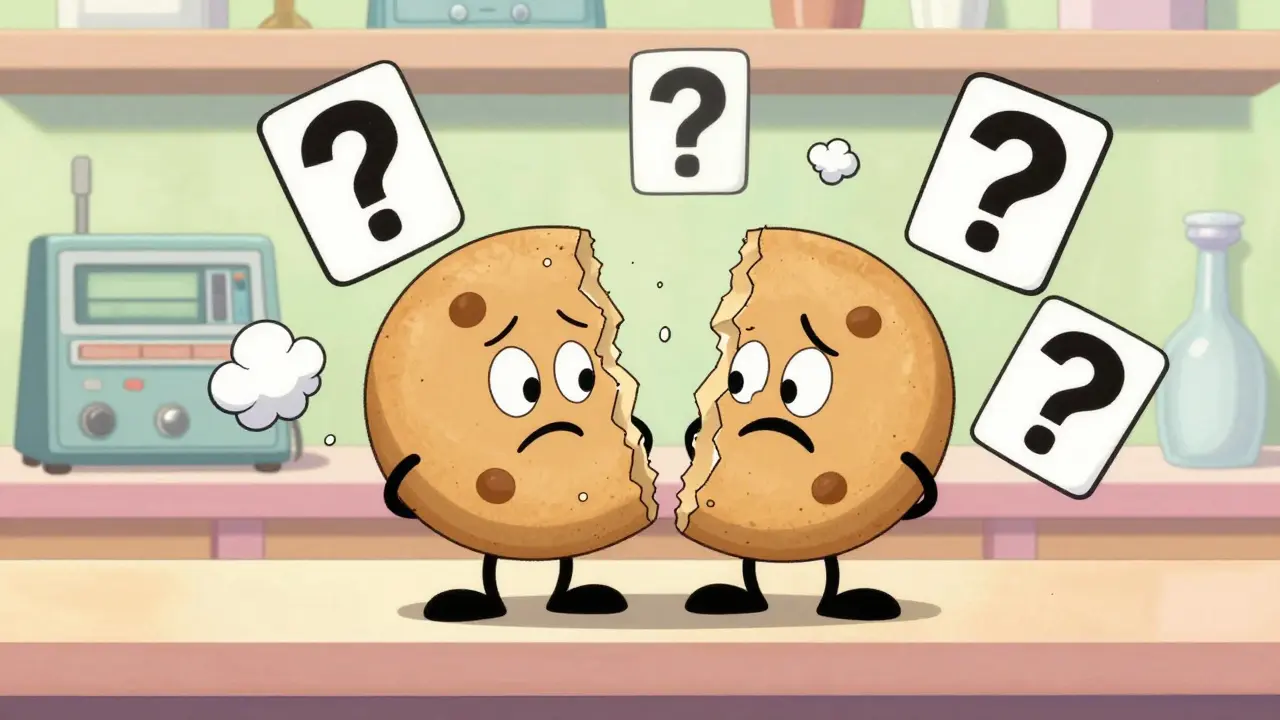
Generic drug manufacturing defects fall into clear, measurable categories. Each one has specific causes and real-world impacts. Take capping, for example. This is when a tablet splits horizontally, like a cookie cracking in half. It happens when compression force exceeds 15 kN and the moisture content in the formulation drops below 2%. In hydrophobic drugs like certain pain relievers, this creates weak spots. Patients report pills breaking apart in their hands-or worse, in their mouths. A 2023 pharmacist survey found 42% had patients complain about tablets crumbling during dispensing. Then there’s lamination, where layers of the tablet peel apart. This usually occurs when tablet presses run faster than 40 rotations per minute and pre-compression isn’t strong enough. The result? A pill that looks fine but falls apart in the stomach, releasing the full dose all at once. That’s especially dangerous for controlled-release medications like metformin ER or oxycodone. One Reddit user described receiving a batch of generic metformin that crumbled into powder-patients reported spikes in blood sugar because the drug was absorbed too fast. Weight variation is another major issue. The USP <905> standard allows no more than 5% deviation from target weight per tablet. But when granule flow rates drop below 0.5 g/s, batches can swing wildly. Vici Health Sciences found 12.7% of affected batches had dose variations that pushed patients outside therapeutic ranges. A 10% overdose of levothyroxine, for instance, can trigger heart palpitations. A 10% underdose can leave hypothyroid patients feeling exhausted and depressed. Punch sticking happens when the active ingredient sticks to the machine’s metal punches. This occurs with APIs that melt below 120°C and moisture levels above 4%. Ejection forces spike by 300-500 N, causing uneven dosing and surface damage. Patients notice pills with rough, uneven textures-or worse, pills that look different from one bottle to the next. In 2023, the FDA received 327 adverse reports specifically citing visible defects like chipping, cracking, or discoloration.Why Are Generics More Prone to Defects?
Branded drugs don’t have these problems nearly as often. Why? It’s not because they’re better formulated. It’s because they’re made under different pressures. Branded manufacturers spend 15-18% of production costs on quality assurance. Generic manufacturers? Only 8-10%. That gap isn’t accidental. The generic drug market is a race to the bottom. Companies compete on price, not quality. The top 10 generic makers now control 58% of the U.S. market, but even among them, quality varies wildly. Teva had a 0.8% batch rejection rate in 2023. Smaller competitors averaged 3.2%. That’s a fourfold difference. Add to that aging infrastructure. Many generic plants still use machinery from the 1980s. The industry average is 66,000 defects per million opportunities-over 19,000 times worse than the standard in automotive manufacturing. Equipment calibration is often outdated. Tablet presses with punch tolerances off by more than ±0.05 mm are still in use. Real-time monitoring systems that track compression forces within ±10% of target? Not common. Cross-contamination is another silent threat. Many facilities produce multiple drugs on the same lines. Without rigorous cleaning protocols-which cost money-residue from one drug can end up in another. A patient on blood thinners might unknowingly ingest traces of an antibiotic, triggering dangerous interactions.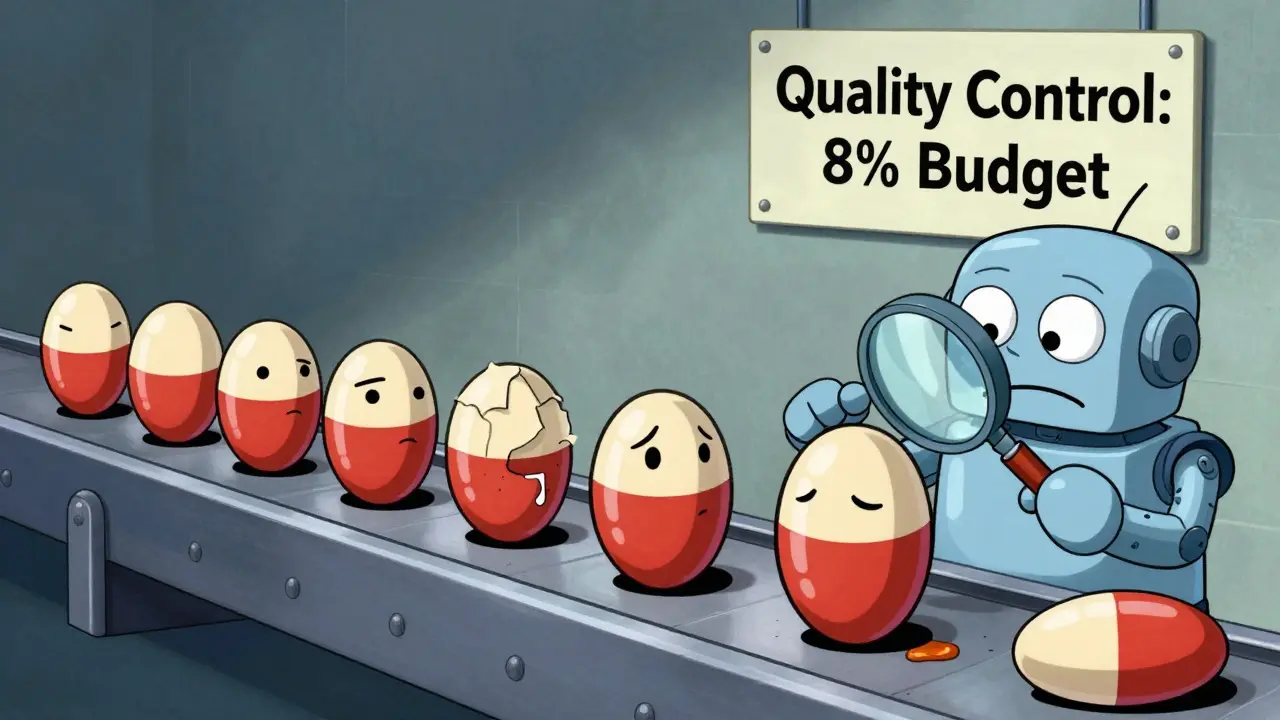
The Human Cost
These aren’t just numbers. They’re real people. A 2023 survey of 1,247 pharmacists found 68% had encountered quality issues with generics in the past year. Nearly one in three reported patients saying a generic drug “just didn’t work like it used to.” That’s not placebo. That’s therapeutic inequivalence. A 2021 study in JAMA Internal Medicine found that 7.3% of generic drug applications failed bioequivalence testing-not because the formula was wrong, but because manufacturing inconsistencies changed how the drug was absorbed. Hospital formulary committees saw 17.3% of generic substitution requests in 2023 include quality concerns. Nearly 10% of those cases led to permanent retention of the brand-name drug. Why? Because the risk wasn’t worth it. One hospital in Ohio switched back to branded levothyroxine after 11 patients on the generic version developed new atrial fibrillation symptoms. Testing confirmed inconsistent absorption rates across batches. The FDA’s MedWatch system logged 1,842 adverse events in 2023 tied directly to generic drug quality. That’s just what got reported. Most patients don’t know what to look for. They assume the pharmacy gave them the right thing. They don’t realize their headache, nausea, or irregular heartbeat might be caused by a tablet that was never meant to look like that.What’s Being Done?
Change is happening-but slowly. The FDA’s 2023 Emerging Technology Program has helped 47 generic manufacturers adopt continuous manufacturing. Unlike traditional batch processing, continuous systems monitor every step in real time. They’ve cut defect rates by 65%. Companies like Sandoz and Dr. Reddy’s are now using AI-powered visual inspection systems that catch defects as small as 0.1 mm. These systems detect 92% of flaws-compared to 78% for human inspectors. The 2024 Drug Supply Chain Security Act now requires track-and-trace for high-risk generics. Early results show a 22% drop in counterfeit-related quality issues. That’s progress. But the real problem is investment. The Generic Pharmaceutical Association estimates it would take $28.7 billion to bring all U.S. generic facilities up to modern standards. The industry spends $1.2 billion a year. That’s less than 5% of what’s needed. Without a major shift, McKinsey & Company predicts 15-20% of generic manufacturers will exit the market in five years-not because they’re unprofitable, but because they can’t afford the recalls and shortages anymore.
What You Can Do
If you take generics, here’s what to watch for:- Check your pills. Are they different in color, shape, or texture from last time? Don’t ignore it.
- Notice if your symptoms change after switching generics-even if it’s the same manufacturer. A change in absorption can mean a change in effect.
- Report odd reactions to your pharmacist or doctor. If multiple patients report the same issue, it’s not coincidence.
- Ask if your prescription is a high-risk generic. Inhalers, injectables, and extended-release tablets have the highest defect rates.
What’s Next?
The FDA’s 2024-2027 plan aims to cut quality-related shortages by 30%. That’s a start. But real change will come only when regulators stop treating generics as interchangeable commodities-and start treating them as life-saving medicines. Until then, the burden falls on patients and providers to stay alert. Because in the world of generic drugs, quality isn’t guaranteed. It’s something you have to watch for.Are generic drugs less safe than brand-name drugs?
Not inherently. Generic drugs must meet the same bioequivalence standards as brand-name drugs. But manufacturing defects-like inconsistent dosing, contamination, or physical damage-happen far more often in generics due to lower investment in quality control. So while the formula may be identical, the actual product you get can vary significantly in quality.
What are the most dangerous types of generic drug defects?
The most dangerous defects are those that affect dose accuracy: weight variation, contamination in sterile injectables, and failed controlled-release mechanisms. A 10% overdose of thyroid medication or blood thinner can trigger heart problems. A 10% underdose can leave chronic conditions uncontrolled. Cosmetic issues like mottling or chipping are less dangerous but signal deeper manufacturing problems.
Why do some generic pills look different from others?
Different manufacturers use different inactive ingredients, binders, or dyes, which can change color or texture. But if the same manufacturer suddenly changes how your pill looks-especially if it’s crumbling, sticky, or uneven-that’s a red flag. It suggests a change in formulation, equipment, or process control.
Can I tell if my generic drug is defective just by looking at it?
Sometimes. Look for cracks, uneven coloring, sticking to the bottle, or pills that crumble easily. But many defects-like inconsistent drug distribution inside the tablet or trace contamination-are invisible. If you notice unusual side effects after switching generics, don’t assume it’s your body. Ask your pharmacist to check the batch number and report it.
Are there any generic drugs I should avoid?
No drug should be avoided outright. But high-risk categories include injectables, inhalers, and extended-release tablets, which have defect rates of 14-18%. If you rely on one of these, ask your doctor if the brand-name version is medically necessary. For critical medications like levothyroxine, warfarin, or seizure drugs, small variations can have big consequences.
Dean Jones
March 1, 2026 AT 19:08Ivan Viktor
March 2, 2026 AT 16:29Gretchen Rivas
March 4, 2026 AT 01:31Mike Dubes
March 5, 2026 AT 23:11Helen Brown
March 6, 2026 AT 13:21John Cyrus
March 6, 2026 AT 16:36John Smith
March 8, 2026 AT 06:51Sharon Lammas
March 9, 2026 AT 04:36marjorie arsenault
March 10, 2026 AT 15:33Shivam Pawa
March 12, 2026 AT 06:17Chris Beckman
March 13, 2026 AT 12:32