
Antibiotic-Zinc Separation Calculator
How to Use This Calculator
Enter your antibiotic type and zinc supplement details to calculate the optimal separation time. This tool helps ensure maximum effectiveness of your antibiotic treatment.
When you're taking antibiotics and also using zinc supplements, timing matters more than you might think. Taking them together can make your antibiotic less effective - and that’s not just a small risk. It could mean your infection doesn’t clear up, you need a second course of treatment, or worse, your body starts resisting antibiotics altogether.
Why Zinc and Antibiotics Don’t Mix
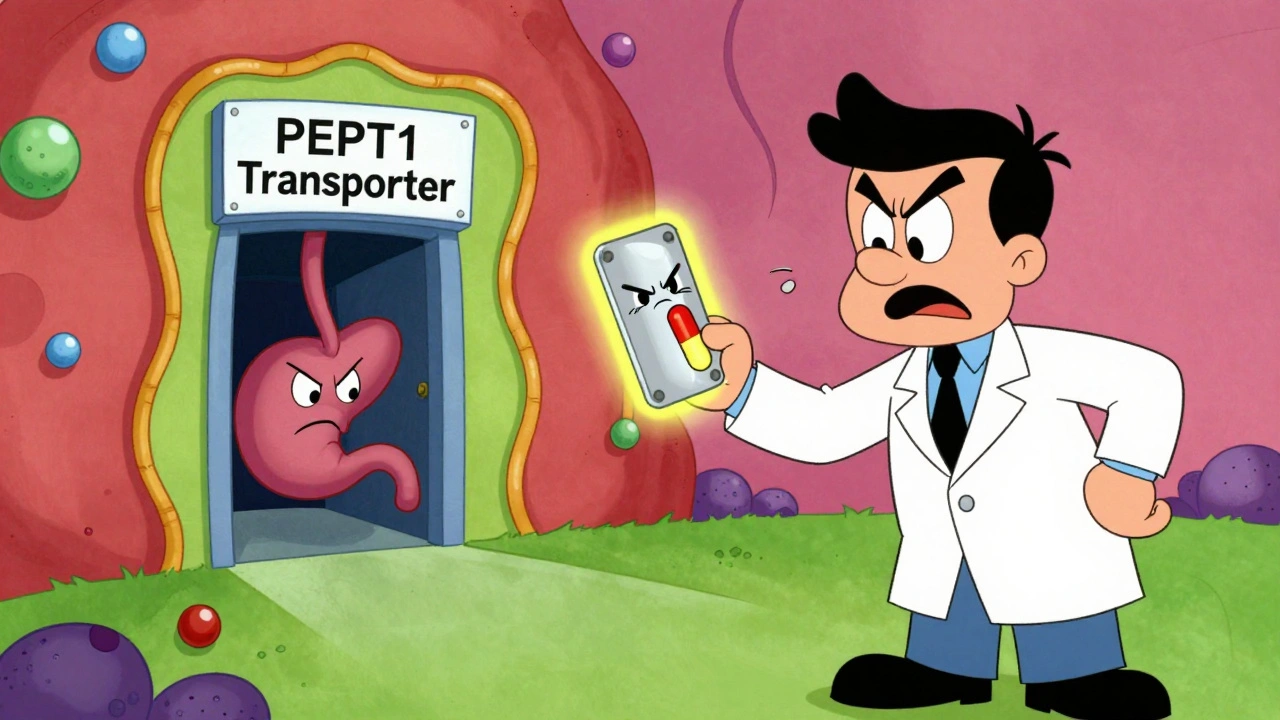
Zinc is a mineral your body needs for immune function, wound healing, and cell growth. But when it’s in your gut at the same time as certain antibiotics, it fights for the same path to get absorbed. Both zinc and some antibiotics rely on a transporter called PEPT1 to enter your bloodstream. When zinc is present, it blocks that doorway. The result? Less antibiotic gets in, and your treatment loses power. This isn’t theory. A 2012 study with 12 healthy men showed that when zinc sulfate was taken with cephalexin (a common antibiotic), the amount of antibiotic in the blood dropped sharply. The same thing happens with tetracyclines like doxycycline and quinolones like ciprofloxacin. These drugs bind to zinc like magnets, forming compounds your body can’t absorb. You end up swallowing the pill, but your body doesn’t get the medicine it needs.Which Antibiotics Are Most Affected?
Not all antibiotics react the same way. Here’s what you need to know:- Tetracyclines (doxycycline, minocycline, tetracycline): These are the most sensitive. Zinc can cut their absorption by up to 50%. That’s why doctors warn against taking them with dairy, antacids, or supplements.
- Quinolones (ciprofloxacin, levofloxacin, moxifloxacin): Also strongly affected. Zinc reduces absorption by 20-40%, enough to make treatment fail.
- β-lactams (cephalexin, amoxicillin): Moderate interaction. The effect is smaller than with tetracyclines, but still clinically meaningful.
- Macrolides (azithromycin, clarithromycin) and aminoglycosides: No significant interaction. These are safer to take with zinc if timing is tight.
If you’re prescribed an antibiotic and also take zinc, check the class. If it’s doxycycline or ciprofloxacin, you can’t just take them at breakfast and dinner. You need space between them.
How Far Apart Should You Take Them?
The rule isn’t guesswork. It’s backed by pharmacokinetic studies and clinical guidelines from the NIH, Linus Pauling Institute, and WebMD.For most antibiotics:
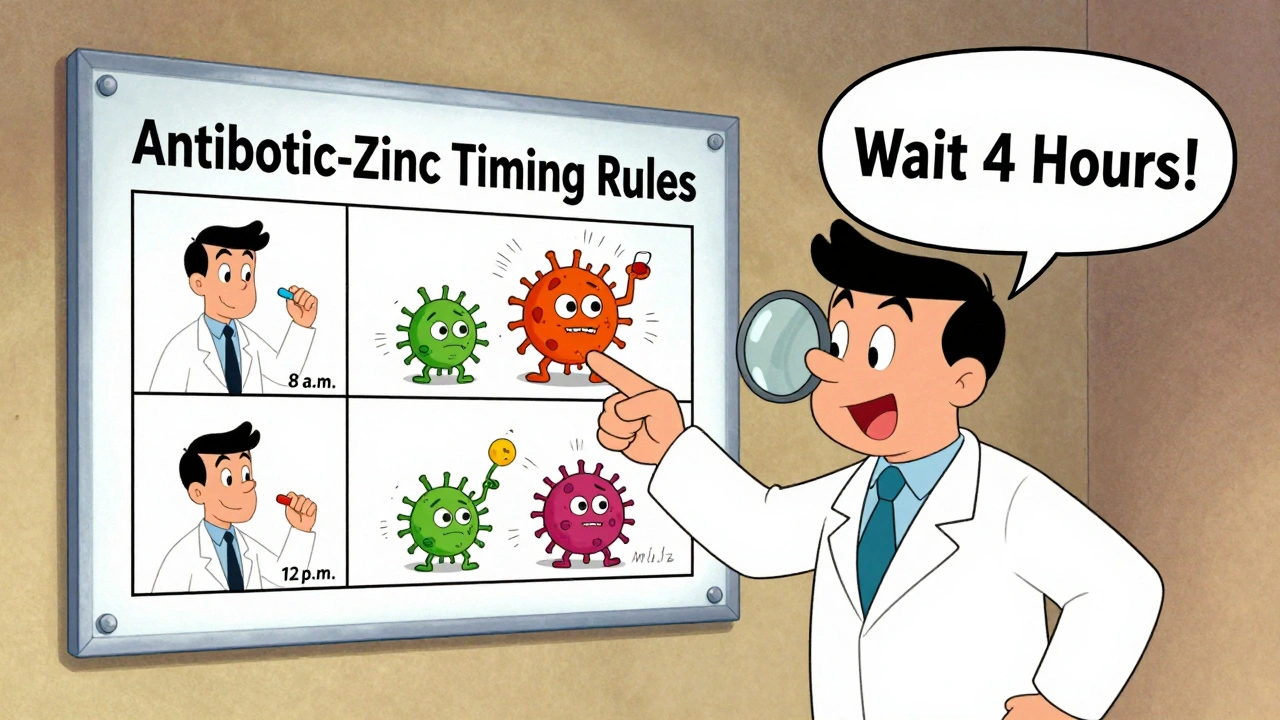
- Take your antibiotic at least 2 hours before your zinc supplement.
- Or wait 4 to 6 hours after your zinc dose before taking the antibiotic.
For tetracyclines specifically, go with the longer window: 4-6 hours either way. Their chelation with zinc is stronger, so they need more time to clear.
Why not 30 minutes? Because your stomach doesn’t empty that fast. Even if you feel like you’ve digested it, zinc ions are still floating around, ready to bind. Two hours is the minimum to let your gut reset.
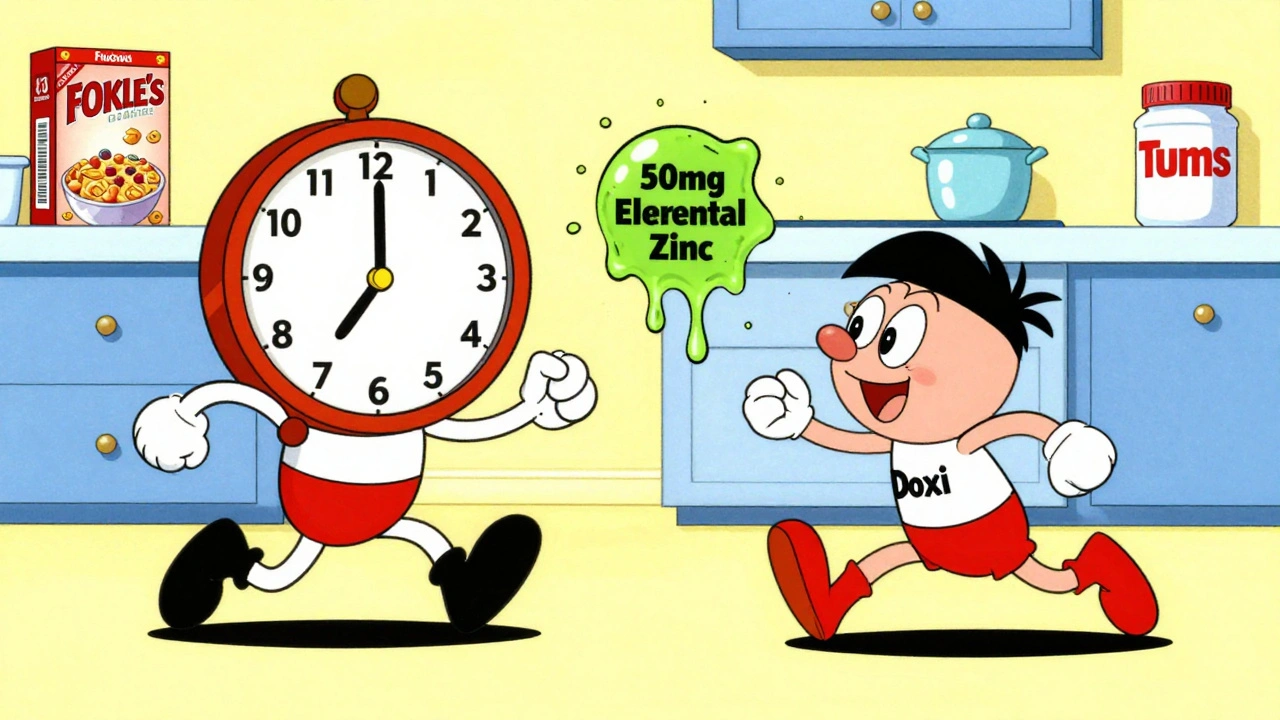
And here’s a common mistake: people think “I took my antibiotic at 8 a.m. and my zinc at 8 p.m.” - that’s fine. But if they take a multivitamin at noon that contains 20 mg of zinc, that’s still a problem. Multivitamins are the hidden trap. Always check the label for elemental zinc content. Many contain 15-30 mg - enough to interfere.
What About Zinc Formulations?
Not all zinc is the same. Zinc sulfate is the cheapest and most common, but it’s also the most likely to interfere. Zinc citrate and zinc gluconate may be slightly less disruptive, according to a 2022 study in the Journal of Pharmaceutical Sciences. That doesn’t mean they’re safe together - just that they might be a little less aggressive in blocking absorption.Extended-release zinc products (often marketed as “all-day” or “slow-release”) linger in your gut longer. For these, the recommended separation is at least 4 hours before or after your antibiotic.
If you’re unsure what kind you’re taking, assume it’s the worst-case scenario. Play it safe. Wait 4-6 hours.
Real Stories: What Happens When People Ignore This
On Reddit, a pharmacy student shared a case: a patient on doxycycline for Lyme disease showed no improvement. He was also taking a 50 mg zinc supplement daily. After being told to separate doses by 4 hours, his symptoms improved within 24 hours. Another case on Drugs.com involved a woman with a recurring UTI. She’d taken ciprofloxacin, but also took a 50 mg zinc pill within an hour of her dose. The infection came back. She didn’t realize zinc could be the culprit. WebMD’s user forum shows that 78% of people who took zinc and antibiotics together reported their infection didn’t clear. Of those, 38% had to restart their antibiotic course. That’s not just inconvenient - it’s expensive and risky.What If You Can’t Avoid Both?
Sometimes, you need both. Maybe you have a chronic infection and your doctor recommends zinc to support immunity. Or you’re recovering from surgery and your provider wants you on both. Here’s how to manage it:- Take your antibiotic first thing in the morning on an empty stomach.
- Wait 4 hours before taking your zinc supplement.
- If you take antibiotics twice a day, take the second dose at least 4 hours after zinc and at least 2 hours before your next meal.
- Use a medication app (like Medisafe or MyTherapy) to set alarms. One study found patients using reminders had an 83% compliance rate - compared to 47% without.
- Check every pill you take - including multivitamins, immune boosters, and even some cold remedies. Many contain zinc.
If your antibiotic is a macrolide like azithromycin, you don’t need to stress as much. But if you’re unsure, ask your pharmacist. They can look up your exact combo.
What About Food and Other Supplements?
Zinc isn’t the only troublemaker. Calcium, magnesium, iron, and antacids (like Tums or Pepto-Bismol) can interfere too. Avoid taking your antibiotic with dairy, calcium-fortified orange juice, or iron pills.Even if you’re taking your antibiotic with food to avoid stomach upset, make sure that food doesn’t contain zinc. Fortified cereals, protein bars, and some plant-based milks can have added zinc. Read labels.
And don’t forget: liquid antibiotics empty from the stomach faster than pills. That means the window for interference might be shorter - but still, don’t take zinc within 2 hours.
Why This Matters Beyond Just One Infection
This isn’t just about one round of antibiotics. If you take an antibiotic at a subtherapeutic level because of zinc interference, you’re not just failing to treat your infection - you’re training bacteria to survive.Antibiotic resistance is already a global crisis. The CDC reports over 269 million outpatient antibiotic prescriptions were filled in the U.S. in 2022. When people don’t get the full dose because of interactions, resistant strains thrive. That affects everyone.
Health systems are catching on. Epic Systems, one of the biggest electronic health record platforms, reduced concurrent zinc-antibiotic prescriptions by 78% after adding automatic alerts in 2021. But you can’t rely on that. You need to know your own meds.
Bottom Line: Simple Rules to Follow
- Never take zinc and tetracycline, quinolone, or cephalexin at the same time.
- Separate doses by at least 2 hours - but aim for 4-6 hours for safety, especially with tetracyclines.
- Check every supplement for elemental zinc content. 15 mg or more can cause interference.
- Use phone alarms to remind you when to take each.
- If you’re unsure, ask your pharmacist. They’re trained to catch these interactions.
There’s no magic trick. No “natural” workaround. Just timing. And if you get this right, your antibiotic will work like it’s supposed to - and you’ll avoid the cycle of failed treatments and resistant bugs.
Can I take zinc and antibiotics on the same day?
Yes, you can take them on the same day, but not at the same time. Separate them by at least 2 hours - ideally 4 to 6 hours - to avoid blocking absorption. Take your antibiotic first, then wait before taking zinc, or take zinc in the morning and your antibiotic in the evening.
Does zinc interfere with all antibiotics?
No. Zinc mainly interferes with tetracyclines (like doxycycline), quinolones (like ciprofloxacin), and some β-lactams (like cephalexin). It does not significantly affect macrolides (like azithromycin) or aminoglycosides. Always check the class of your antibiotic or ask your pharmacist.
Is it safe to take zinc with amoxicillin?
Amoxicillin is a β-lactam antibiotic, and studies show zinc can reduce its absorption slightly. While the effect isn’t as strong as with tetracyclines, it’s still measurable. To be safe, separate doses by at least 2 hours. If you’re on a high dose of zinc or have a serious infection, aim for 4 hours.
What if I accidentally took them together?
If you took them together once, don’t panic. One mistake won’t ruin your treatment. But don’t do it again. Monitor your symptoms. If your infection doesn’t improve within a few days, contact your doctor. You may need a longer course or a different antibiotic.
Can I take zinc after eating if I took my antibiotic on an empty stomach?
Yes - but timing still matters. Even if you eat after your antibiotic, zinc from food or supplements can still interfere if it’s present in your gut. Wait 4-6 hours after your zinc dose before taking your antibiotic, or take the antibiotic at least 2 hours before eating or taking zinc.
How do I know how much zinc is in my supplement?
Look for “elemental zinc” on the label. Many supplements list the compound (like zinc sulfate or zinc gluconate) but not the actual zinc amount. For example, 220 mg of zinc sulfate contains only about 50 mg of elemental zinc. Always check the elemental zinc value - anything over 15 mg can interfere with antibiotics.
Sandridge Nelia
December 3, 2025 AT 23:51So many people don’t realize how much their multivitamin is sabotaging their antibiotics. I used to take mine at lunch and my doxycycline at breakfast - no wonder my UTIs kept coming back. Once I spaced them 6 hours apart, boom, cleared up in 3 days. Seriously, check your labels. Elemental zinc isn’t always obvious. 🙏
Akash Sharma
December 4, 2025 AT 03:39I’ve been researching this for my pharmacology thesis and honestly, the data is way more nuanced than most Reddit posts let on. The 2012 cephalexin-zinc study? Small sample size, healthy males, single dose. Real-world patients? Older, on multiple meds, GI issues, varying pH levels. The 20-40% absorption drop? Might be 10% in someone with a slow gut. But yeah, better safe than sorry - especially with tetracyclines. I’ve seen patients fail treatment because they thought ‘a little zinc won’t hurt.’ Spoiler: it did. Also, zinc citrate vs sulfate? The difference is measurable but negligible clinically. Don’t waste money on fancy forms. Just time it right.
And yes, extended-release zinc? Big problem. Those things linger like a bad ex. If you’re on one, 6 hours is the minimum. I’ve had patients who took zinc at 7am and doxycycline at 1pm and still had subtherapeutic levels. Their gut was still full of zinc ions. Your stomach doesn’t ‘reset’ just because you ate. It’s a chemical environment, not a washing machine.
Also, liquid antibiotics? Faster gastric emptying, sure, but zinc still binds. I’ve had patients take azithromycin liquid and think they’re safe because it’s ‘not a tetracycline’ - then they take a zinc gummy 90 minutes later. Nope. Still a risk. Stick to the 2-hour rule across the board unless you’re on macrolides or aminoglycosides. And even then, why risk it?
Bottom line: this isn’t ‘alternative medicine advice.’ This is pharmacokinetics 101. If your doctor doesn’t mention it, ask. Pharmacists are the real MVPs here. They catch this stuff daily. Don’t be that guy who blames the antibiotic when it’s the zinc gummy you took with your protein shake.
May .
December 5, 2025 AT 03:44Erik van Hees
December 6, 2025 AT 19:55Bro I’ve been taking zinc with my cipro for years and never had an issue. I’m a marathon runner, I need the zinc for recovery. My doc never said anything. Maybe you’re overcomplicating this? My immune system’s never been better. Maybe it’s just placebo effect from all these ‘warnings’?
Justin Hampton
December 7, 2025 AT 07:25Oh great. Another ‘science-based’ post from someone who thinks reading a PubMed abstract makes them a doctor. You cite a 12-man study from 2012 like it’s gospel. Ever heard of real patients? Real guts? Real variability? I’ve been on antibiotics for chronic acne for 8 years. Took zinc daily. Never had a treatment fail. Your ‘4-hour rule’ is arbitrary. You’re scaring people into avoiding a cheap, effective supplement because you read a study in a journal that doesn’t even cover real-world use.
And let’s not forget - most people take zinc for colds. You’re telling someone with a sore throat to wait 4 hours after their zinc lozenge before taking their antibiotic? That’s not medicine, that’s bureaucratic nonsense. The body doesn’t work like a chemistry lab. It’s adaptive. You’re overestimating binding affinity and underestimating human biology.
Also, ‘antibiotic resistance’? Please. That’s a pharma scare tactic. The real driver is overprescribing, not someone taking zinc with cephalexin. Don’t make people feel guilty for trying to stay healthy.
Pooja Surnar
December 7, 2025 AT 11:34so u take zinc with antibiotics and then wonder why ur infection never goes away?? wow. ur just dumb. u think ur body is a magic box? zinc binds to antibiotics like glue. its basic chem. if u cant read a label or wait 2 hours u deserve to be sick forever. and dont say u 'forgot' - ur just lazy. and multivitamins?? theyre all full of zinc and u dont even know?? ur a walking public health hazard. stop taking supplements unless u know what u r doing. u r not helping urself u r helping superbugs. #zincisnotyourfriend
Sara Larson
December 8, 2025 AT 01:22OMG I literally just read this and went to check my supplements - and guess what? My ‘immune booster’ gummy had 15mg zinc. 😳 I’ve been taking it with my amoxicillin every day for 2 weeks. No wonder my sinus infection came back! Thank you so much for this. I’m setting alarms now - 8am antibiotic, 2pm zinc. I feel so much better already just knowing I’m doing it right 💪❤️
Josh Bilskemper
December 9, 2025 AT 20:20Interesting that you cite WebMD and Linus Pauling Institute as authoritative sources. The former is a monetized click farm, the latter is a pseudoscience cult that promoted vitamin C as a cure for cancer. Your entire argument rests on cherry-picked pharmacokinetic data from studies that don’t reflect clinical outcomes. If absorption dropped 30%, why aren’t we seeing massive treatment failures in populations with high zinc intake? India, for instance. Millions take zinc supplements. Antibiotic failure rates are not elevated. Your fear-mongering is bad science disguised as helpful advice.
Joanne Rencher
December 11, 2025 AT 19:32why do people even take zinc? like. it’s not like you’re deficient unless you’re in a third world country or eating nothing but rice. if you’re eating meat and veggies you’re fine. just stop taking supplements and save your money. also i hate when people act like they’re saving the world by spacing out their pills. it’s not that deep.
dan koz
December 13, 2025 AT 16:02in Nigeria we just take zinc and antibiotics together - no problem. our bodies are different. you westerners overthink everything. my cousin took cipro and zinc for 10 days - healed fast. maybe your gut is too sensitive? or maybe you just need to eat more food with it. stop being scared of science. zinc is natural, antibiotics are natural - they been used together for centuries.
Mark Gallagher
December 14, 2025 AT 12:08Let me guess - you’re one of those people who thinks ‘global health’ means telling Americans how to take their supplements. You cite studies like they’re scripture, but ignore the fact that 90% of the world doesn’t live in your sanitized, pill-popping bubble. We don’t have pharmacists on every corner. We don’t have apps to remind us. We eat, we take what’s given, we heal. Your 4-hour rule is a luxury. And your condescension toward people who can’t afford to micromanage their meds? That’s not science. That’s elitism dressed up as public health.
Also, the CDC doesn’t care about zinc-antibiotic interactions. They care about overprescribing. You’re distracting from the real issue. Fix the doctors who prescribe antibiotics for viral infections. Don’t blame the patient for taking zinc.