
TCA Therapeutic Drug Monitoring Calculator
TCA Blood Level Assessment
Risk Assessment
Tricyclic antidepressants (TCAs) like amitriptyline and nortriptyline aren’t used as often as they used to be. But they still have a vital role-especially for treatment-resistant depression, chronic nerve pain, and older adults who don’t respond to newer drugs. The problem? These medications are dangerous if the dose is even slightly off. A single extra tablet can send someone to the ICU. That’s why therapeutic drug monitoring isn’t just helpful-it’s lifesaving.
Why TCAs Are So Risky
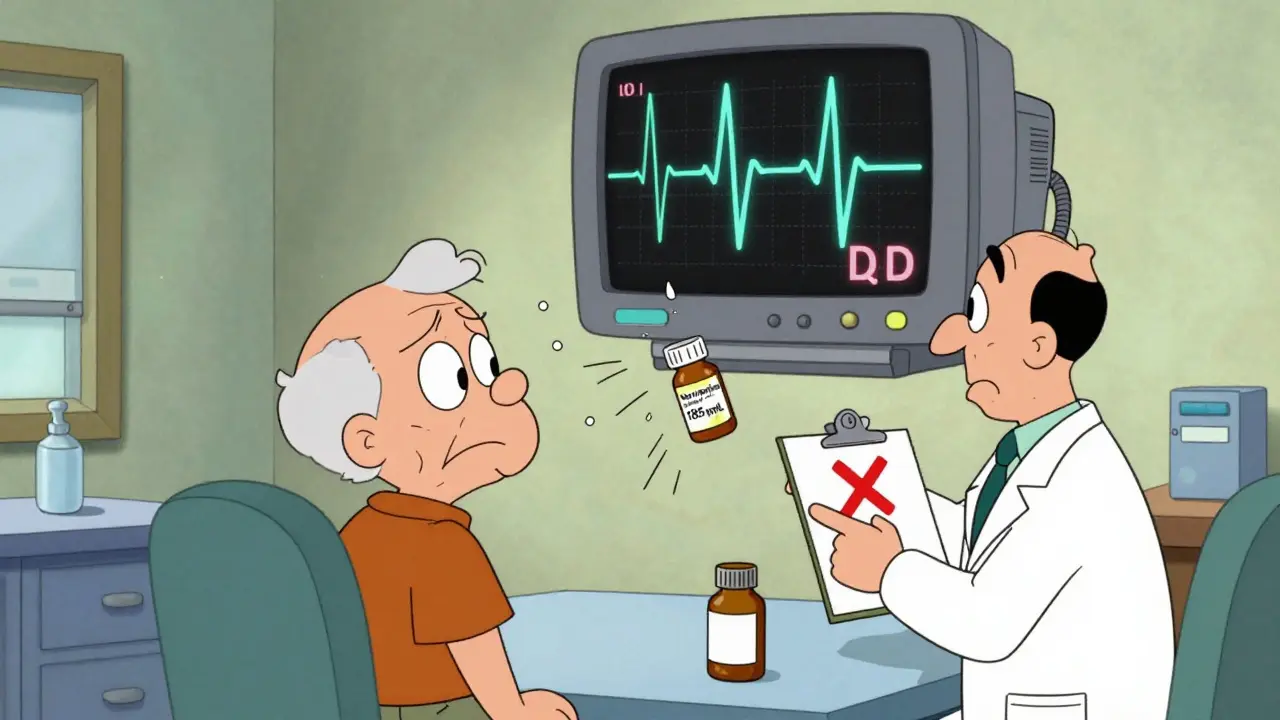
TCAs work by boosting serotonin and norepinephrine in the brain. But they don’t stop there. They also block receptors all over the body: in the heart, the gut, the eyes, and the nervous system. This is fine at the right dose. At the wrong dose? It becomes a medical emergency.The biggest danger is cardiac toxicity. TCAs block sodium channels in heart muscle, which slows down electrical signals. On an ECG, this shows up as a widened QRS complex-over 100 milliseconds is a red flag. If it hits 140 ms or higher, you’re looking at ventricular arrhythmias, seizures, or even sudden death. And here’s the scary part: a patient can feel fine, have a ‘therapeutic’ blood level, and still be on the edge of cardiac collapse.
Other signs of toxicity include dry mouth, blurred vision, urinary retention, confusion, and extreme drowsiness. In older adults, these symptoms are often mistaken for dementia or normal aging. That’s why blood tests aren’t optional-they’re essential.
What Therapeutic Levels Look Like
There’s no one-size-fits-all range. Each TCA has its own safe zone:- Amitriptyline: 80-200 ng/mL
- Nortriptyline: 50-150 ng/mL
- Desipramine: 100-300 ng/mL
Levels above 500 ng/mL are almost always toxic. But even within the therapeutic range, some people react badly. One 72-year-old woman at Johns Hopkins had a nortriptyline level of 185 ng/mL-above the 150 ng/mL ceiling. She was dizzy but not in distress. Without monitoring, her doctor might have kept the dose. Instead, it was cut in half. She never had another episode.
That’s the power of TDM. It doesn’t just tell you the dose is right. It tells you if the body is handling it.
When and How to Test
Timing matters more than most clinicians realize. Blood must be drawn at trough-right before the next dose, when drug levels are lowest. This gives the true steady-state reading. Testing too early? You’ll get false highs. Testing too late? You’ll miss rising toxicity.It takes 5-7 days of consistent dosing to reach steady state. That’s why testing on day 3 or 4 is pointless. Patients often stop taking their meds when they feel better. That’s a red flag. If they’re not taking it daily, the test won’t mean anything.
Most labs use HPLC or mass spectrometry. Results take 24-48 hours. In emergencies, you don’t wait. If a patient has a QRS over 100 ms, you give sodium bicarbonate immediately. You don’t wait for a lab report. But for routine care? Waiting is exactly what you need.
Why Some Patients Are at Higher Risk
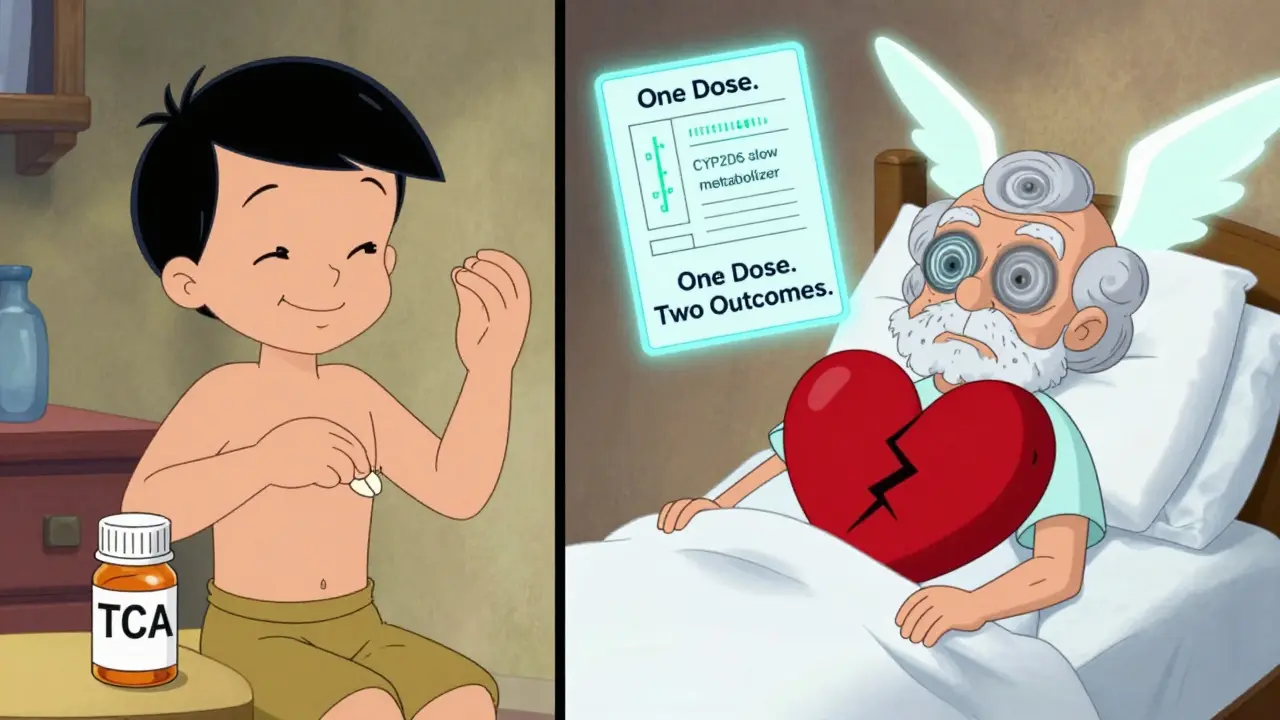
Not everyone metabolizes TCAs the same way. Genetics play a huge role. The CYP2D6 and CYP2C19 enzymes break down these drugs. Some people have slow versions of these enzymes-they’re called poor metabolizers. Their bodies can’t clear the drug fast. One dose becomes two. Two doses become five. They don’t even know they’re overdosing.Conversely, ultrarapid metabolizers break down TCAs too fast. They might need double or triple the standard dose just to feel any effect. Without testing, they’re labeled non-responsive and switched to something else-losing a drug that might have worked perfectly.
Older adults are another high-risk group. Liver function declines with age. Kidneys don’t filter as well. They’re more sensitive to anticholinergic side effects. In fact, 40% of TCA users in the U.S. are over 65. That’s why TDM is especially critical here. A 25 mg dose that’s fine for a 30-year-old might be toxic for a 75-year-old.
The Hidden Problems with TDM
Even with all the science, TDM is still underused-and misused.- 20% of requests are filled out incorrectly-missing doses, timing, or other meds.
- 37% of requests don’t list drugs that interfere with metabolism (like fluoxetine or bupropion).
- 15-20% of labs use different reference ranges. A level of 140 ng/mL might be ‘high’ in one lab and ‘normal’ in another.
- Some doctors order the test but don’t act on it. That’s worse than not testing at all.
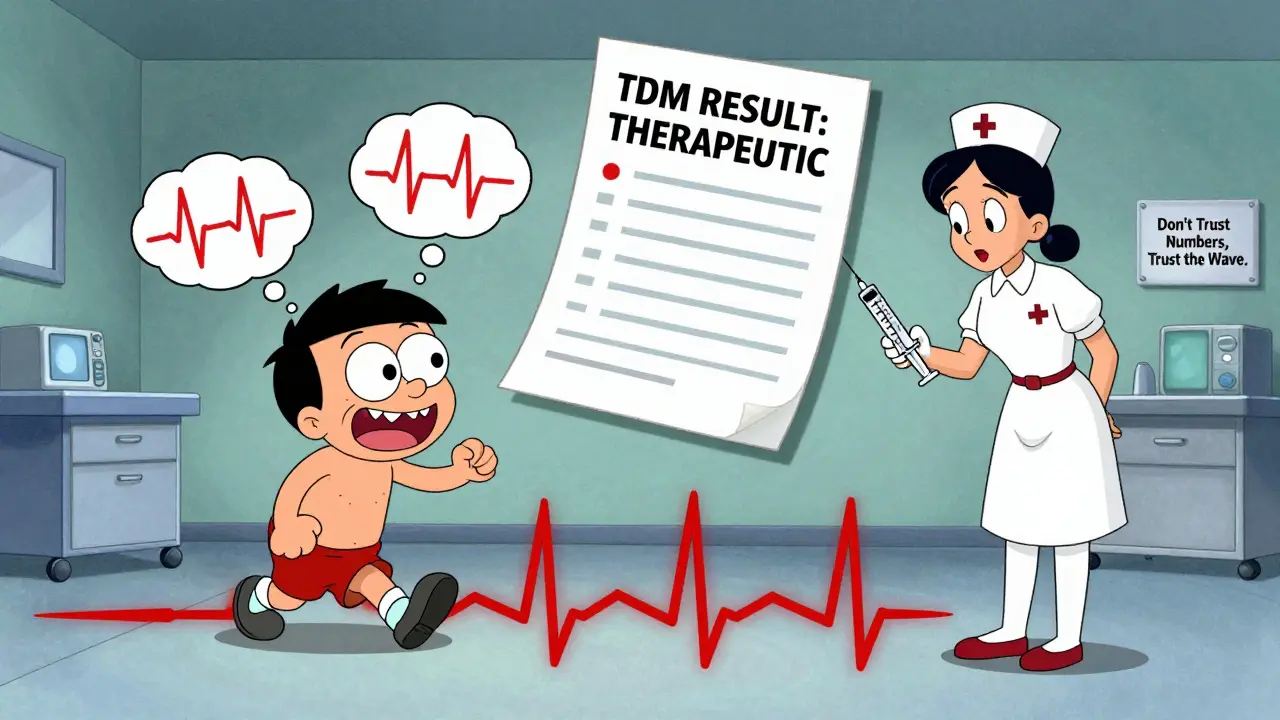
One study across 12 European hospitals found that 65% of severe TCA poisonings happened because TDM was either not done or ignored. The patient had a level of 190 ng/mL-just inside the therapeutic range. But their ECG showed QRS widening. No one connected the dots. They died.
That’s the biggest lesson: levels don’t tell the whole story. You need to combine the lab result with the ECG, the symptoms, and the patient’s history.
What’s New in TDM
The field is changing. In 2023, Siemens Healthineers rolled out a handheld device in Europe that gives TCA results in 20 minutes. It’s not in U.S. hospitals yet, but it’s coming. This means ERs and psych units can adjust doses on the spot instead of waiting days.AI tools are also entering the game. One FDA-cleared platform, PsychX Analytics, now combines TCA levels, ECG data, and clinical notes to predict toxicity risk. It doesn’t replace the doctor-but it flags danger before the patient does.
And now, some clinics are combining TDM with genetic testing. If you know someone is a slow CYP2D6 metabolizer, you start them on half the usual dose. That cuts the number of tests needed by 40%. Mayo Clinic’s data shows patients reach stable levels 10 days faster when they use both.
When TDM Is Worth It-and When It’s Not
TCAs aren’t first-line anymore. SSRIs are safer. But they don’t work for everyone.Use TDM if:
- The patient is over 60
- They have heart disease or a history of arrhythmias
- They’re taking other meds that affect liver enzymes
- They’ve had side effects before
- They’re being treated for neuropathic pain (nortriptyline is gold standard here)
Don’t bother with TDM if:
- The patient is young, healthy, and on a low dose for under 2 weeks
- They’re being treated for mild depression and have no risk factors
- The goal is short-term use
For most people, the risk of TCA toxicity is low. But for the ones it isn’t? Monitoring isn’t a luxury. It’s the only thing standing between them and cardiac arrest.
Real-World Impact
A psychiatrist in Ohio reported preventing three ICU admissions in one year just by checking TCA levels monthly in elderly patients. A nurse practitioner in Minnesota says her biggest challenge? Getting patients to come back for blood draws. ‘They feel better. They think they don’t need it. But if we don’t check, they might not feel better next week-they might not feel anything at all.’That’s the truth. TCAs are old drugs with modern risks. Their narrow window demands precision. And precision comes from data-not guesswork.
Even with new antidepressants, TCAs still save lives. But only if we stop treating them like they’re safe. They’re not. They’re powerful. And power without control is deadly.
What is the therapeutic range for amitriptyline?
The therapeutic blood concentration range for amitriptyline is 80-200 ng/mL. Levels below 80 ng/mL may not be effective, while levels above 500 ng/mL are considered toxic and carry high risk of cardiac arrhythmias, seizures, or death. Always correlate serum levels with clinical symptoms and ECG findings.
Why is TDM more important for TCAs than SSRIs?
TCAs have a narrow therapeutic index-meaning the difference between an effective dose and a toxic one is very small. SSRIs are much safer in overdose; fatal outcomes are rare. TCAs can cause life-threatening heart rhythm problems even at therapeutic doses, especially in older adults or those with liver issues. TDM is the only way to catch rising toxicity before symptoms appear.
Can you rely on symptoms alone to adjust TCA doses?
No. Many patients with high TCA levels show no symptoms until they suddenly develop cardiac arrest. Others have severe side effects at low levels due to genetic differences. Symptoms like dry mouth or drowsiness are common and non-specific. Relying on them alone leads to under- or overdosing. Blood levels combined with ECG and clinical context are essential.
How long does it take to get TDM results?
Standard lab turnaround is 24-48 hours. In emergencies, you don’t wait-treatment is based on ECG and symptoms. For routine monitoring, the delay is acceptable. New point-of-care devices now deliver results in 20 minutes, but these are not yet widely available.
Do I need genetic testing along with TDM?
Not always, but it helps. If a patient has had multiple failed dose adjustments or severe side effects, CYP2D6 and CYP2C19 genotyping can explain why. Poor metabolizers may need half the dose; ultrarapid metabolizers may need double. Combining genetics with TDM reduces the number of blood tests needed by up to 40% and gets patients to a stable dose faster.
Is TDM covered by insurance?
Yes, in most cases. In the U.S., TDM for TCAs is typically covered by Medicare and private insurers when ordered for appropriate indications like elderly patients, polypharmacy, or prior toxicity. Costs range from $150-$250 per test. Many hospitals have protocols that require TDM before initiating long-term TCA therapy.
What should I do if a patient’s QRS is widened but their TCA level is ‘therapeutic’?
Treat the ECG, not the number. A QRS >100 ms is a medical emergency, regardless of serum concentration. Administer sodium bicarbonate immediately, monitor continuously, and prepare for possible arrhythmias. Some patients are unusually sensitive to TCAs-levels within the ‘normal’ range can still be toxic for them. Always prioritize clinical signs over lab values.
Tommy Chapman
February 20, 2026 AT 02:23Freddy King
February 21, 2026 AT 20:38Laura B
February 22, 2026 AT 22:15Chris Beeley
February 24, 2026 AT 00:02Benjamin Fox
February 25, 2026 AT 10:39Danielle Gerrish
February 25, 2026 AT 21:25Liam Crean
February 26, 2026 AT 20:41madison winter
February 28, 2026 AT 16:50Ellen Spiers
March 1, 2026 AT 22:59Marie Crick
March 3, 2026 AT 22:49John Cena
March 5, 2026 AT 09:56