Hashimoto's Thyroiditis: Causes, Symptoms, and How Medications Affect Your Thyroid
When your immune system mistakenly attacks your thyroid, you might be dealing with Hashimoto's thyroiditis, an autoimmune condition where the body produces antibodies that destroy thyroid tissue, leading to underactive thyroid function. Also known as chronic lymphocytic thyroiditis, it’s the most common reason people end up on thyroid hormone replacement. Women are up to seven times more likely to develop it than men, and it often shows up between ages 30 and 50—though it can strike at any age.
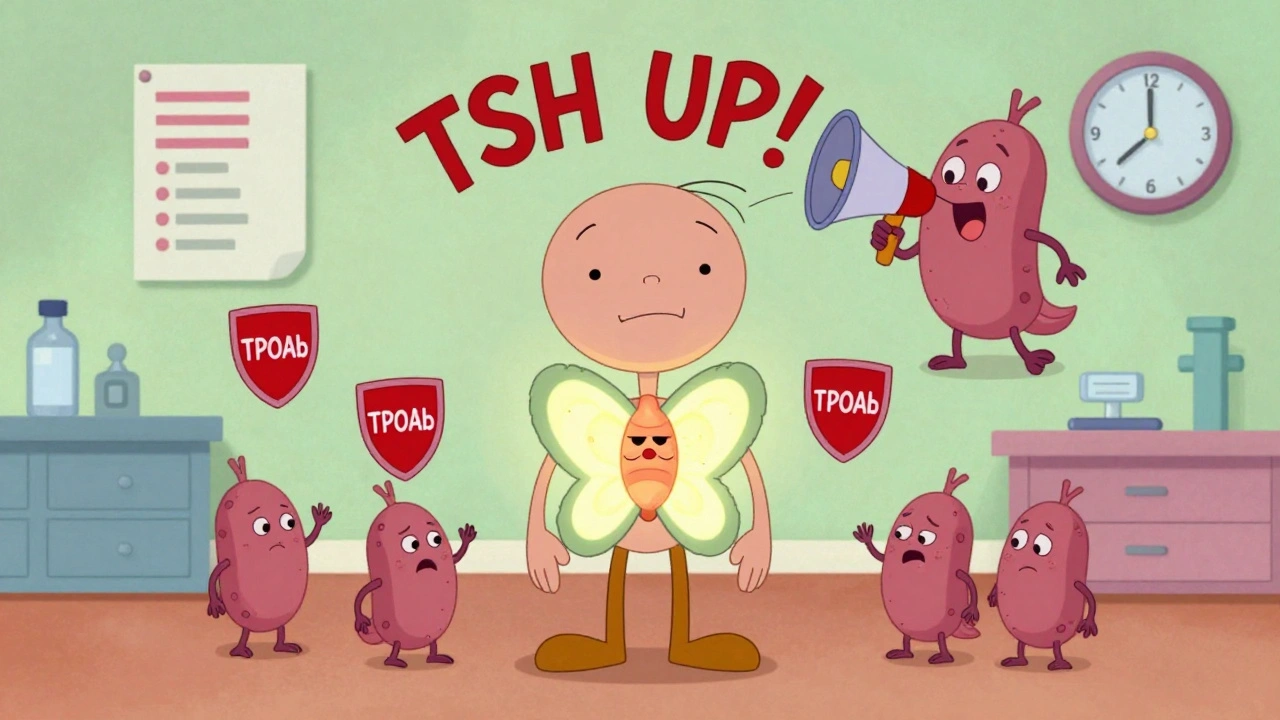
Many people with Hashimoto’s don’t realize they have it until their thyroid levels drop low enough to cause fatigue, weight gain, or brain fog. The real clue? High levels of thyroid antibodies, specific proteins like TPOAb and TgAb that signal your immune system is targeting your thyroid. These aren’t just numbers on a lab report—they tell doctors whether your hypothyroidism is autoimmune or caused by something else, like radiation or surgery. And here’s the thing: even if your TSH looks normal, rising antibodies can mean your thyroid is slowly getting damaged. That’s why tracking them matters.
Medications play a big role in managing Hashimoto’s. Levothyroxine is the standard treatment, replacing the T4 hormone your thyroid can’t make anymore. But what you take isn’t the whole story. Some supplements, like biotin, a B vitamin often used for hair and nails, can interfere with thyroid lab tests and give false readings. High-dose biotin can make your TSH look artificially low, hiding the real problem. That’s why doctors ask you to stop it before blood work. And if you’re on other meds—like iron, calcium, or even some antidepressants—timing matters. Taking them too close to your thyroid pill can block absorption. You need space between them, usually 4 hours.
Hashimoto’s doesn’t just affect your thyroid—it’s tied to other autoimmune conditions. People with it are more likely to have celiac disease, type 1 diabetes, or rheumatoid arthritis. That’s why doctors often check for those too. And while diet won’t cure it, some find relief cutting out gluten or reducing inflammation with anti-foods. It’s not magic, but it helps some people feel better while their meds do the heavy lifting.
You’ll find articles here that connect directly to your experience: how certain drugs can mess with your thyroid tests, why hair loss shows up even when your TSH is "normal," and how to avoid dangerous interactions with supplements like biotin or zinc. These aren’t theory pieces—they’re real-world guides from people who’ve been there. Whether you’re just diagnosed or have been managing this for years, you’ll find practical tips that actually work.
 1 Dec 2025
Hashimoto’s thyroiditis is the leading cause of hypothyroidism, where the immune system attacks the thyroid. TSH monitoring is the cornerstone of treatment, guiding levothyroxine dosing to restore normal thyroid function. Learn how to manage it effectively.
View More
