Atrial Fibrillation: Causes, Risks, and How Medications Help
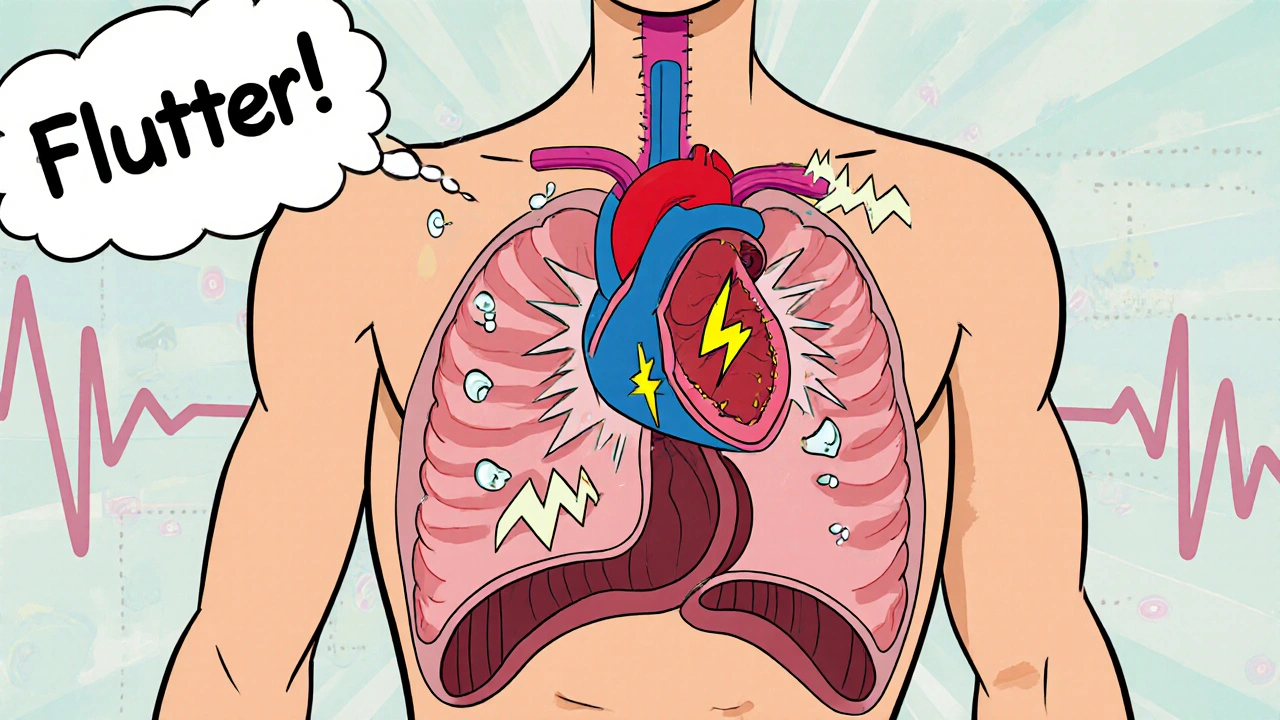
When your heart beats irregularly—fast, fluttery, or out of sync—it might be atrial fibrillation, a type of irregular heartbeat where the upper chambers of the heart quiver instead of pumping properly. Also known as AFib, it’s not just a nuisance—it raises your risk of stroke by five times. You might feel your heart skip, race, or thump in your chest. Some people don’t feel anything at all, which makes it even more dangerous.
Blood thinners, medications that prevent clots from forming in the heart, are often the first line of defense. Drugs like warfarin, apixaban, and rivaroxaban don’t fix the rhythm—they stop clots from traveling to your brain. Then there’s heart rate control, the strategy of slowing down the heart’s pumping speed using beta-blockers, calcium channel blockers, or digoxin. You don’t always need to restore a normal rhythm; sometimes just keeping the rate steady is enough to feel better and stay safe.
Atrial fibrillation doesn’t happen alone. It often shows up with high blood pressure, sleep apnea, thyroid issues, or after heart surgery. It’s also more common as you age—nearly 10% of people over 80 have it. And while some try natural fixes like magnesium or yoga, the science is clear: if you have AFib, skipping prescribed meds can be risky. Even if you feel fine, a clot can form silently and cause a stroke before you know anything’s wrong.
The posts below cover real-world issues tied to atrial fibrillation: how certain drugs like NSAIDs or diuretics can affect your heart, why some medications mess with lab tests that monitor AFib, and how lifestyle changes—like hydration or avoiding alcohol—can make a difference. You’ll find guides on managing side effects, understanding drug interactions, and knowing when to ask your doctor about alternatives. No fluff. Just what works.
 25 Nov 2025
Learn about the three most common heart rhythm disorders-atrial fibrillation, bradycardia, and tachycardia-what causes them, how they’re diagnosed, and how to manage them effectively.
View More
