
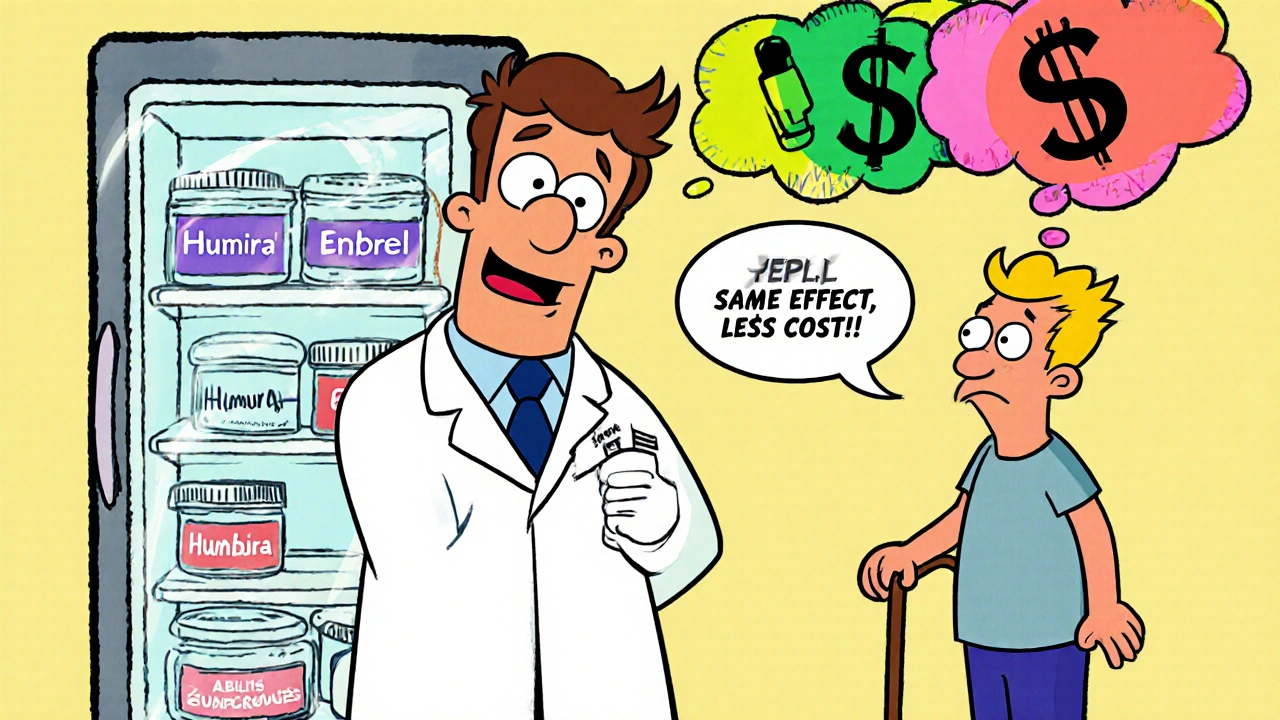
When a patient with multiple sclerosis starts a new treatment, they’re not just getting a pill. They’re getting a complex therapy that may need refrigeration, require weekly injections, and come with a monthly price tag of over $7,000. This is specialty pharmacy in action. Unlike your local drugstore, where 90% of prescriptions are filled with generics, specialty pharmacies deal with high-cost, high-complexity drugs-often biologics-that demand more than just dispensing. They require coordination, monitoring, education, and sometimes, difficult conversations about switching to generics or biosimilars.
What Makes Specialty Pharmacy Different?
Specialty pharmacy isn’t just about expensive drugs. It’s about drugs that change how care is delivered. These medications treat chronic, life-altering conditions like cancer, rheumatoid arthritis, hepatitis C, and HIV. Many are injectable or infused, require cold chain storage (2-8°C), and come with strict monitoring protocols. A patient on a specialty drug might need monthly blood tests, nurse follow-ups, and prior authorizations just to keep getting their medication. The big difference? Most specialty drugs don’t have generics. Until recently, nearly all were biologics-complex molecules made from living cells. Because of their complexity, they can’t be copied exactly like aspirin or metformin. That’s why specialty pharmacies have historically operated with generic substitution rates under 10%, compared to over 90% in retail pharmacies. But that’s changing. As patents expire, we’re seeing the first wave of generics and biosimilars enter the specialty space. And that’s where things get complicated.Generics vs. Biosimilars: Not the Same Thing
When people say "generic," they usually mean small-molecule drugs-like the generic version of Lipitor (atorvastatin) or Copaxone (glatiramer acetate). These are chemically identical to their brand-name counterparts. The FDA requires them to prove bioequivalence: they must deliver the same amount of active ingredient into the bloodstream at the same rate. That’s why a generic version of Copaxone dropped the annual cost from $78,000 to $45,000. Biosimilars are different. They’re not exact copies. Biologics are made from living organisms, so even tiny changes in manufacturing can affect the final product. A biosimilar must be "highly similar" to the reference product, with no clinically meaningful differences in safety or effectiveness. The FDA approved its first interchangeable biosimilar, Semglee (insulin glargine), in 2021. Interchangeable means a pharmacist can substitute it without the prescriber’s approval-just like a regular generic. But here’s the catch: not all biosimilars are interchangeable. And many prescribers still hesitate to switch patients, especially those who are stable. A 2023 survey of specialty pharmacy staff found that 72% of pharmacists reported resistance from physicians when proposing biosimilar switches, even when cost savings were clear.Why Substitution Isn’t Always Simple
Just because a generic exists doesn’t mean it’s safe to switch. Some drugs have a narrow therapeutic index (NTI). That means the difference between an effective dose and a toxic one is tiny. Levothyroxine is a classic example. Even small changes in blood levels can cause symptoms like fatigue, heart palpitations, or weight gain. Patients on NTI drugs often report side effects after switching between generic manufacturers-even if both are FDA-approved. One Reddit user described going from one generic levothyroxine to another and suddenly feeling "like a zombie." Pharmacists assured her the active ingredient was the same. But inactive ingredients-fillers, dyes, coatings-can vary. And for some people, those differences matter. Specialty pharmacies need systems to track which manufacturer’s version a patient is on. If a patient is stable on one brand of generic, switching to another without consent can trigger anxiety, nonadherence, or even clinical setbacks. A 2022 survey found that 78% of specialty pharmacy staff spent significant time addressing patient concerns about medication changes.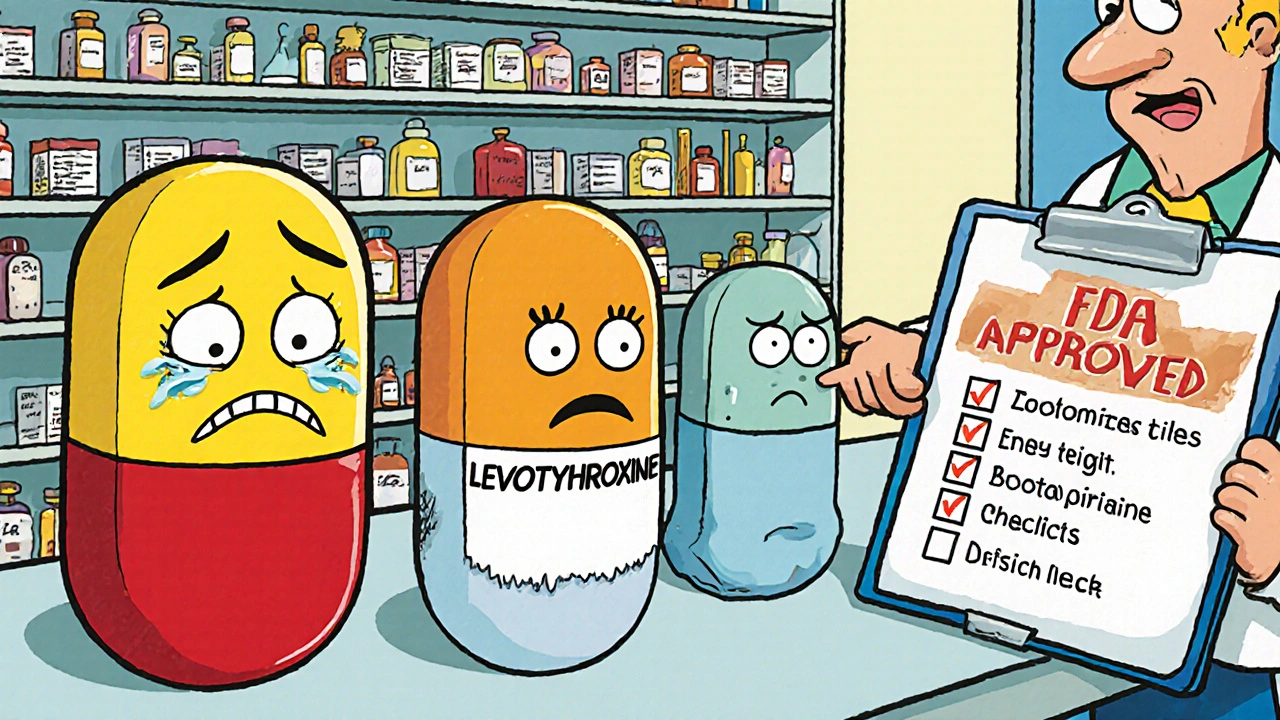
The PBM Problem
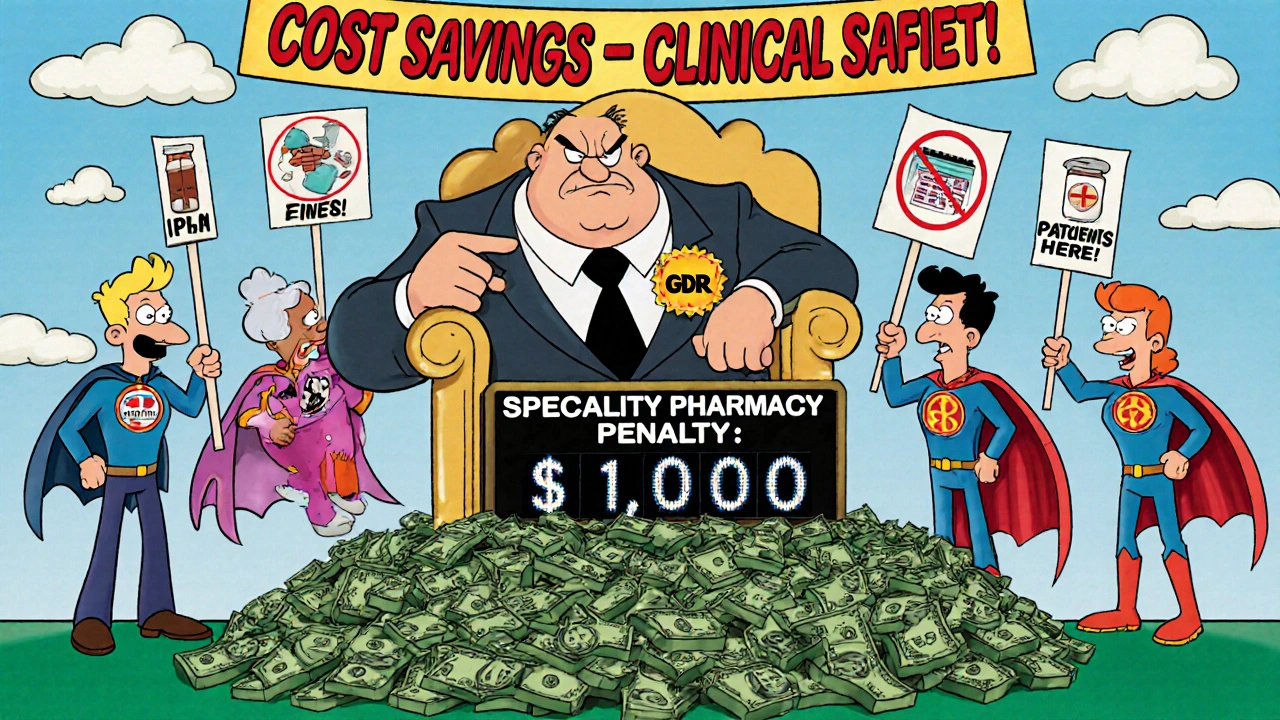
Pharmacy Benefit Managers (PBMs) control most specialty drug reimbursements. They set formularies, negotiate rebates, and determine what pharmacies get paid. Here’s the twist: many PBMs measure a pharmacy’s Generic Dispensing Ratio (GDR)-the percentage of prescriptions filled with generics. But specialty pharmacies often can’t hit GDR targets because many of their drugs have no generic alternative. Still, PBMs penalize them anyway. Some impose financial penalties or reduce reimbursement rates if a pharmacy’s GDR falls below a certain threshold-even when the pharmacy is dispensing drugs with no generic version available. This creates a perverse incentive. A specialty pharmacy might be forced to choose between following clinical best practices and meeting arbitrary PBM metrics. One pharmacy owner told a trade publication they were fined $12,000 last year for "low generic utilization"-even though 87% of their specialty prescriptions were for drugs with no generic option.How to Handle Generics in Specialty Pharmacy
If you’re running or working in a specialty pharmacy, here’s how to navigate this space:- Start with your top therapies. Focus on conditions where generics are available-like MS, hepatitis C, or rheumatoid arthritis. Don’t try to switch everything at once.
- Standardize your inventory. Pick one manufacturer per generic product. Avoid juggling five different versions of the same drug. It reduces confusion and inventory errors.
- Document patient-specific risks. If a patient has a known allergy to a dye or filler, note it in their profile. Some generics use different excipients. A red dye in one version might trigger a reaction in someone sensitive to azo compounds.
- Build a substitution protocol. Don’t let pharmacists make decisions on the fly. Create a written policy: when can you substitute? When must you consult the prescriber? What patient education is required?
- Monitor after the switch. For NTI drugs, schedule follow-up labs. For biologics, track adverse events and adherence. Don’t assume bioequivalence means clinical equivalence.
- Train your team. Staff need to explain why a patient’s pill looks different. They need to know how to respond to fear, anger, or confusion. Role-play these conversations. They’re going to happen.
The Cost Savings Are Real-If You Do It Right
The financial upside is massive. Specialty drugs now account for half of all U.S. drug spending, even though they make up only 2% of prescriptions. When a biosimilar enters the market, prices often drop 15-35% in the first year. The Congressional Budget Office estimates biosimilars could save the healthcare system $54 billion over the next decade. But savings only happen if patients stay on therapy. If a patient stops taking their drug because they’re scared of the new pill, or if they’re confused by frequent switches, the cost savings vanish-and health outcomes worsen. Specialty pharmacies that succeed are those that treat generics and biosimilars not as cost-cutting tools, but as part of a broader care strategy. That means investing in medication therapy management (MTM), patient education, and clear communication.What’s Next?
More biosimilars are coming. Humira (adalimumab), the top-selling drug in U.S. history, lost its patent exclusivity in 2023. Over a dozen biosimilars launched in the U.S. that year. The same will happen for Enbrel, Remicade, and others in the next five years. The challenge isn’t just technical-it’s cultural. Patients and providers still distrust generics for complex conditions. Many believe "if it’s expensive, it must be better." Pharmacists are on the front lines of changing that belief. The future of specialty pharmacy won’t be about avoiding generics. It’ll be about using them wisely-respecting patient needs, supporting clinical stability, and pushing back against PBM policies that punish pharmacies for doing the right thing.Specialty pharmacy isn’t just filling prescriptions anymore. It’s managing people. And when you’re managing people, the cheapest option isn’t always the best one.
Can a generic drug be substituted for a specialty biologic?
No. Generics are only approved for small-molecule drugs, like tablets or capsules with simple chemical structures. Biologics-such as Humira or Enbrel-are large, complex proteins made from living cells. They can’t be copied exactly, so the FDA created a separate category called biosimilars. Biosimilars are highly similar but not identical to the original biologic. Only interchangeable biosimilars can be substituted without a prescriber’s approval, and even then, state laws vary.
Why do some patients have side effects after switching to a generic?
Active ingredients in generics are identical to brand-name drugs, but inactive ingredients (like dyes, fillers, or coatings) can differ between manufacturers. For most people, this doesn’t matter. But for patients with allergies, sensitivities, or narrow therapeutic index drugs like levothyroxine or warfarin, these differences can trigger symptoms. A patient might feel fatigued, nauseous, or anxious after switching-not because the drug doesn’t work, but because their body reacted to a new filler or coating.
Do PBMs really penalize specialty pharmacies for not dispensing generics?
Yes. Many PBMs track a pharmacy’s Generic Dispensing Ratio (GDR) and impose financial penalties if it falls below a set target. This creates a major conflict for specialty pharmacies, since many of their medications-especially biologics-have no generic version. A pharmacy might be fined for "low generic utilization" even when 90% of its prescriptions are for drugs with no alternative. This practice is controversial and increasingly challenged by pharmacy associations.
Should I always switch a patient to a cheaper generic?
Not if the patient is stable. For chronic conditions like MS, rheumatoid arthritis, or HIV, maintaining consistency is often more important than cost. Studies show patients who switch between generic manufacturers-even FDA-approved ones-sometimes experience reduced adherence or worsening symptoms. Always consult the prescriber before switching, especially for NTI drugs. The goal isn’t just to save money-it’s to keep patients healthy and on therapy.
How can specialty pharmacies manage multiple generic manufacturers?
Limit the number of manufacturers per drug. Choose one preferred generic based on reliability, pricing, and patient feedback. Standardize packaging and labeling across your inventory. Use your pharmacy system to flag which manufacturer a patient is on, and document any allergies to inactive ingredients. Avoid sourcing from multiple distributors-it increases administrative burden and raises the risk of errors.
Are biosimilars as safe as brand-name biologics?
Yes. The FDA requires biosimilars to undergo rigorous testing to prove they have no clinically meaningful differences in safety, purity, or potency compared to the reference product. Over 35 biosimilars have been approved in the U.S. as of 2023, and real-world data from Europe shows no increase in adverse events compared to the original biologics. The main barrier to adoption isn’t safety-it’s cost-sharing policies and provider hesitation.
What’s the biggest mistake pharmacists make with specialty generics?
Assuming bioequivalence means clinical equivalence. Just because two drugs have the same active ingredient doesn’t mean they’ll work the same way for every patient. The biggest mistake is switching without patient education, documentation, or follow-up. Always explain why the medication changed, check for side effects, and track outcomes. The goal isn’t just to fill the prescription-it’s to ensure the patient stays on therapy and stays well.
Erin Nemo
December 1, 2025 AT 08:23Just switched my mom to a biosimilar for RA and she’s been fine-no flare-ups, saved us $4K/year. Why are people so scared of change?
Bonnie Youn
December 2, 2025 AT 09:14Stop treating patients like numbers PBMs can count
Generics aren’t magic bullets
If your patient’s stable don’t mess with it
They’re not just taking a pill-they’re holding onto their life
And you’re the one who gets to decide if they keep it
Suzanne Mollaneda Padin
December 3, 2025 AT 15:09As a specialty pharmacist for 12 years, I’ve seen this play out too many times. One patient switched from brand Humira to a biosimilar and developed antibodies-didn’t respond to anything after. Turned out the excipient changed. We now document every single filler in our EHR. It’s not about being paranoid-it’s about being precise. The FDA says they’re equivalent. But biology doesn’t read FDA guidelines. It reacts.
Rachel Stanton
December 5, 2025 AT 13:09The real issue isn’t the science-it’s the system. PBMs incentivize generic substitution even when it’s clinically inappropriate. We’re being punished for doing the right thing. I had a patient on a stable biologic for 7 years. PBM pushed a biosimilar. We consulted the rheumatologist. Got denied reimbursement. We paid out of pocket to keep her on the original. That’s not healthcare-that’s corporate extortion. And now they’re calling us ‘low performers’ for not hitting their GDR targets. When did we stop caring about outcomes and start caring about spreadsheets?
Charlotte Collins
December 7, 2025 AT 05:25Let’s be real-most of these "biosimilar savings" are just accounting tricks. PBMs take the rebate, pharmacy gets pennies, patient still pays $50 copay. Meanwhile, the manufacturer quietly raises the brand price to offset the biosimilar discount. It’s a shell game. The only ones saving money are the middlemen. And the patients? They’re the ones getting shuffled between formulations like lab rats. No wonder people are scared.
Kenny Leow
December 9, 2025 AT 00:29As someone who grew up in a family that relied on insulin before biosimilars were available, I’ve seen what happens when access is blocked by cost. But I’ve also seen what happens when people switch too fast without support. There’s a middle path: education, transparency, and patience. Not every change needs to be rushed. Not every dollar saved is worth a panic attack at 3 a.m. because your pill looks different. We need to honor both the science and the humanity.
Thank you for writing this.
Mary Ngo
December 9, 2025 AT 15:36Have you ever considered that the entire generic/biosimilar movement is a controlled demolition of pharmaceutical autonomy? The same entities pushing these switches also own the labs that test for antibody development. The FDA’s approval process is influenced by lobbying dollars. And who benefits most? The same conglomerates that control both the original biologics AND the biosimilars. You think this is about cost? It’s about consolidation. They want you dependent on ONE version-controlled, tracked, and monetized. Don’t be fooled. The system isn’t broken-it’s working exactly as designed.
Alexander Williams
December 11, 2025 AT 10:00The literature consistently shows that biosimilar substitution in stable patients on TNF inhibitors has non-inferior efficacy and safety profiles in randomized trials. However, real-world adherence data reveals a 12-18% drop-off in the first 6 months post-switch, particularly in patients with prior treatment failure or psychological comorbidities. The pharmacoeconomic models assume perfect substitution compliance, which is empirically invalid. Therefore, the cost-savings projections are overestimated by 30-40%. The clinical imperative remains: individualized decision-making, not population-level mandates.
James Allen
December 13, 2025 AT 09:25Look, I get it-some people are scared of new pills. But come on. We’re not talking about magic potions here. We’re talking about science. If a biosimilar gets FDA approval, it’s been tested on thousands. If you’re still clinging to the brand because it’s "expensive so it must be better," you’re falling for the marketing. This isn’t luxury perfume-it’s medicine. Stop letting fear drive decisions. The system’s broken, but the solution isn’t to hide behind "I’m stable"-it’s to demand better policies, not cling to overpriced relics.
Lauryn Smith
December 13, 2025 AT 23:26I used to work in a specialty pharmacy and I’ll never forget a patient who cried because her new pill was blue instead of white. She said, "This isn’t my medicine anymore." We didn’t switch her. We called the doctor. We kept her on the one she trusted. Sometimes the most important thing isn’t the cost-it’s the peace of mind. That’s not soft. That’s smart.
Edward Hyde
December 15, 2025 AT 10:11Pharmacists are being turned into PBM foot soldiers while the real villains-Big Pharma and the middlemen-laugh all the way to the bank. You think this is about patient care? Nah. It’s about squeezing every last drop of profit out of people who are already sick. The fact that we’re even having this conversation means the system’s already lost. And you? You’re just cleaning up the mess.