
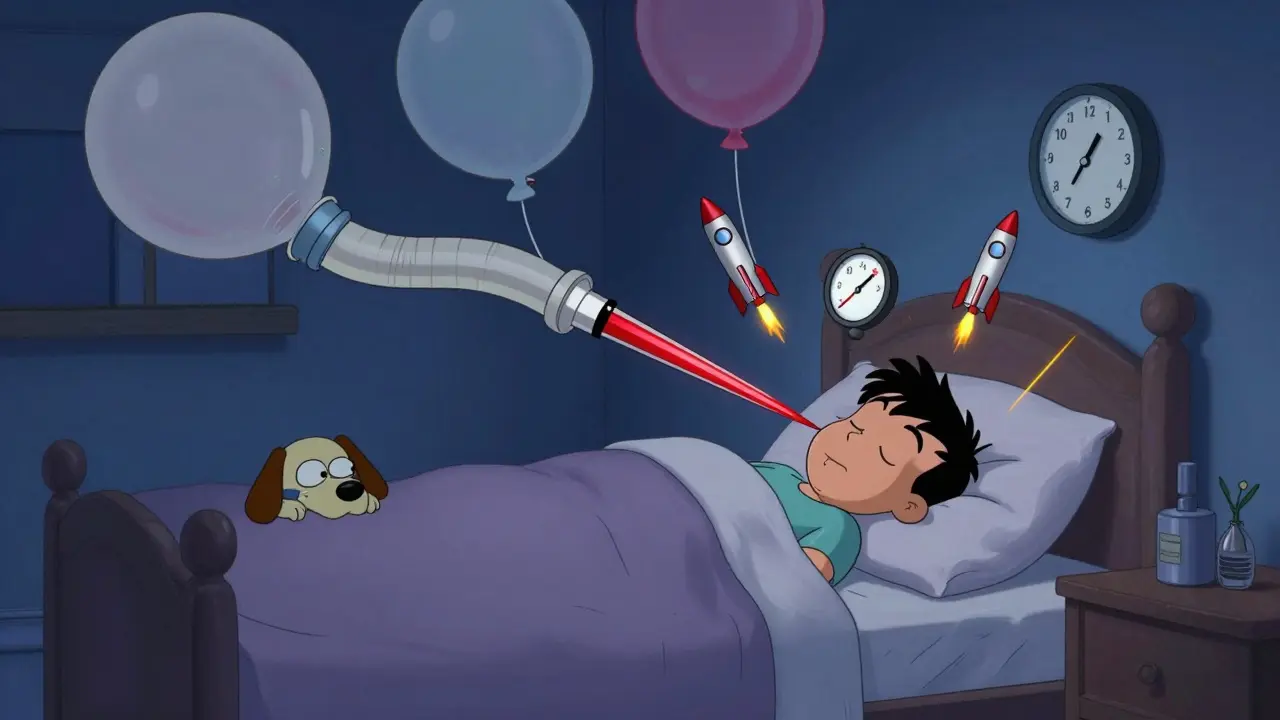
When Your Sleep Stops, Your Heart Struggles
Imagine sleeping through the night, but your body keeps waking up-dozens of times-because you stop breathing. Not because you’re startled, not because you’re dreaming, but because your airway collapses. This isn’t a nightmare. It’s obstructive sleep apnea (OSA), and it’s silently damaging your heart right now.
More than 1 billion people worldwide have sleep apnea. In the U.S. alone, 40 million adults are affected. Yet, 80% of those with moderate to severe cases don’t even know they have it. And here’s the scary part: if you have sleep apnea, your risk of heart disease, stroke, and high blood pressure jumps dramatically. This isn’t a coincidence. It’s a direct, measurable, and dangerous link.
How Sleep Apnea Attacks Your Blood Pressure
Every time you stop breathing during sleep, your oxygen levels drop. Your body panics. It releases stress hormones-adrenaline and noradrenaline-at levels two to four times higher than normal. Your heart rate spikes. Your blood vessels constrict. Your blood pressure rises, sometimes by 20 to 30 points in seconds.
That’s not a one-time spike. It happens every night. Over and over. For years. Your body never gets a real chance to rest. This constant stress turns into chronic high blood pressure. In fact, up to 80% of people with resistant hypertension-blood pressure that won’t drop even after taking three different medications-have undiagnosed sleep apnea.
And it’s not just daytime pressure. At night, healthy people’s blood pressure naturally drops by 10% or more. This is called “dipping.” But in 70 to 80% of people with sleep apnea, this dip doesn’t happen. Their pressure stays high all night-or even rises. This “non-dipping” pattern is one of the strongest predictors of heart attack and stroke. Your heart never gets a break.
The Heart Disease Connection
High blood pressure is just the start. Sleep apnea doesn’t just raise numbers-it damages your heart’s structure and function.
Every time your airway collapses, your chest creates a strong vacuum as you struggle to breathe. This pulls extra pressure on your heart, forcing it to work harder. Over time, your heart muscle thickens, especially the left ventricle. This condition, called left ventricular hypertrophy, is a major step toward heart failure.
People with moderate to severe sleep apnea are 140% more likely to develop heart failure. And if you already have heart failure, there’s a 40-60% chance you also have sleep apnea. It’s a vicious cycle: weak heart → worse breathing → more strain on heart.
Coronary artery disease isn’t far behind. Having moderate to severe sleep apnea raises your risk of a heart attack by 30%. The timing is telling: 26.5% of heart attacks in people with sleep apnea happen between midnight and 6 a.m.-when breathing episodes are most frequent. That’s nearly 10% higher than in people without the condition.
Stroke Risk Skyrockets
Stroke is another major threat. Sleep apnea doubles your risk of having a first stroke. If you’ve already had one, your chance of having another jumps to 3.2 times higher. Why? Because the same oxygen drops that harm your heart also damage your brain’s blood vessels. The worse the oxygen deprivation, the higher the risk. When oxygen levels fall below 90% for more than 12% of your sleep time, stroke-related death risk increases by 4.3 times.
And it’s not just about the stroke itself. People with untreated sleep apnea recover more slowly. Their rehab outcomes are worse. Their risk of another stroke remains high, even after treatment.
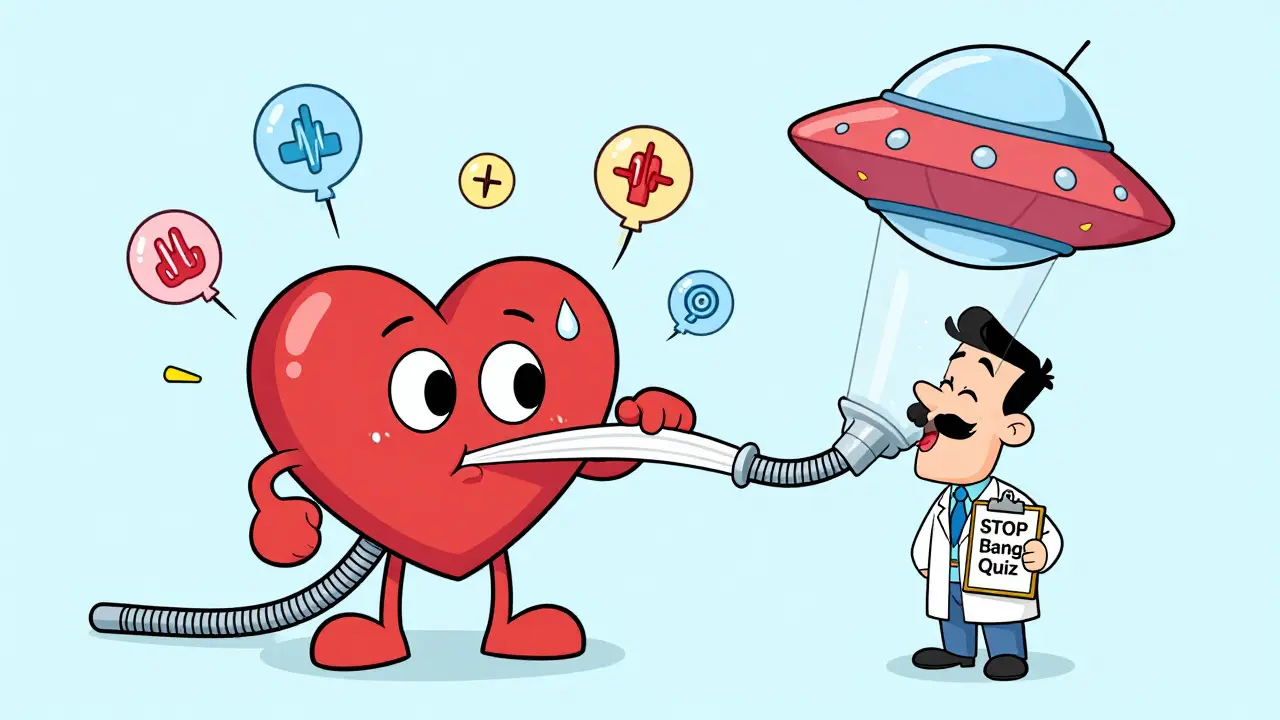
Arrhythmias: When Your Heart Goes Off Rhythm
Your heart doesn’t just get stronger or weaker-it can also start beating irregularly. Sleep apnea is one of the most common hidden causes of atrial fibrillation (AFib), the most frequent type of dangerous heart rhythm disorder.
People with sleep apnea are 2 to 4 times more likely to develop AFib. In one study, nearly half of patients with paroxysmal AFib-where the irregular heartbeat comes and goes-also had undiagnosed sleep apnea. Compare that to just 21% of people without AFib. That’s a huge gap.
And here’s the kicker: if you’re getting catheter ablation to fix AFib, your success rate drops by 30% if your sleep apnea isn’t treated. The same goes for cardiac resynchronization therapy-untreated sleep apnea lowers the response rate by 15%. Your heart treatment won’t work as well if your breathing is still broken.
Why Younger People Are at Greater Risk
You might think sleep apnea is just an older adult problem. It’s not. A 2024 study of nearly 10,000 adults found something alarming: people aged 20 to 40 with sleep apnea symptoms had a 45% higher chance of having high blood pressure, a 33% higher chance of diabetes, and a 25% higher chance of metabolic syndrome than their peers without symptoms.
In older adults over 41, the risk increase was much smaller-just 10-12%. That means sleep apnea isn’t just a sign of aging. It’s an accelerator. It’s pushing heart disease and metabolic problems into your 30s and 40s, decades earlier than they’d normally appear.
Why CPAP Isn’t Always Enough
Continuous Positive Airway Pressure (CPAP) is the standard treatment. It’s a mask that blows air into your airway to keep it open. It works. But here’s the problem: only 46% of people use it consistently-four hours a night, at least seven nights a week.
And even when used perfectly, CPAP only lowers blood pressure by 2 to 3 mmHg on average. That’s not nothing, but it’s not a magic fix. It doesn’t erase all the damage done over years of untreated apnea.
Still, CPAP does reduce stroke recurrence by 37% and improves outcomes in heart failure patients with central sleep apnea. So if you’re diagnosed, stick with it. Even partial use is better than none. But don’t assume one device fixes everything. Lifestyle changes-losing weight, sleeping on your side, avoiding alcohol before bed-still matter.
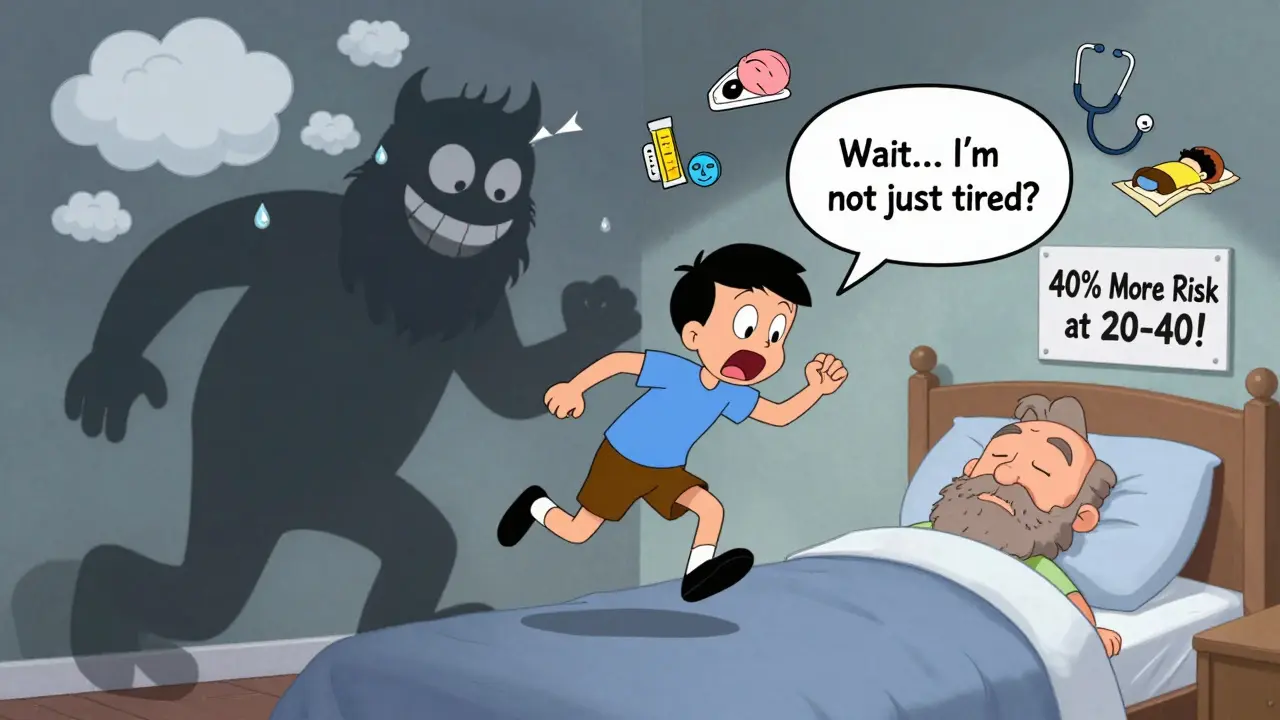
Who Should Be Screened?
Doctors aren’t routinely checking for sleep apnea. That’s a mistake. The American Heart Association now says: if you have any of these, get screened.
- High blood pressure, especially if it’s resistant to treatment
- Atrial fibrillation
- Heart failure
- Stroke or transient ischemic attack (mini-stroke)
- Coronary artery disease
- Unexplained daytime fatigue or snoring
One simple tool doctors can use is the STOP-Bang questionnaire. It asks about snoring, tiredness, observed apneas, high blood pressure, BMI, age, neck size, and gender. It catches 84% of moderate to severe cases. No sleep lab needed. Just a few questions.
The Bottom Line: Sleep Isn’t Optional
Your heart doesn’t just need food, exercise, and medicine. It needs uninterrupted sleep. Sleep apnea isn’t just about being tired. It’s a cardiovascular emergency in slow motion.
If you snore loudly, wake up gasping, feel exhausted during the day, or have high blood pressure that won’t budge-don’t ignore it. Talk to your doctor. Ask for a sleep screening. You might think it’s just a noisy bed partner problem. It’s not. It’s your heart screaming for help.
And if you’re already being treated for heart disease, ask: Could sleep apnea be making it worse? Because if it is, fixing your breathing might be the most important thing you do for your heart this year.
Can sleep apnea cause high blood pressure even if I’m not overweight?
Yes. While obesity is the biggest risk factor-70% of cases are linked to excess weight-sleep apnea can occur in people of any size. Genetics, jaw structure, neck anatomy, and age can all contribute. Even thin people with narrow airways or enlarged tonsils can develop obstructive sleep apnea. The mechanism-repeated oxygen drops and stress hormone surges-is the same. So if you have unexplained high blood pressure or daytime fatigue, don’t rule out sleep apnea just because you’re not overweight.
Is there a difference between obstructive and central sleep apnea when it comes to heart risk?
Yes. Obstructive sleep apnea (OSA), which accounts for 80-90% of cases, happens when the airway physically collapses. It’s strongly tied to high blood pressure, heart attacks, and stroke. Central sleep apnea (CSA), on the other hand, is caused by the brain failing to send the right signals to breathe. It’s more common in people with heart failure or after a stroke. While both are dangerous, OSA is the main driver of new heart disease in otherwise healthy people. CSA often develops as a result of existing heart failure, making it more of a complication than a cause.
How accurate are home sleep tests for diagnosing sleep apnea?
Home sleep tests are very good at catching moderate to severe obstructive sleep apnea-85-90% accurate. But they miss up to 40% of mild cases. If your symptoms are strong but your home test comes back normal, don’t accept it as final. A full overnight sleep study (polysomnography) in a lab is still the gold standard, especially if you have heart disease, stroke, or other serious conditions. Your doctor should consider your full clinical picture, not just the test result.
Can losing weight fix sleep apnea?
For many people, yes. Losing just 10% of your body weight can reduce the number of breathing pauses by 50% in moderate to severe cases. In some, especially those with mild apnea and recent weight gain, weight loss can eliminate the problem entirely. But it’s not guaranteed. Some people have anatomical issues-like a small jaw or large tongue-that persist even after weight loss. Still, weight loss improves blood pressure, reduces inflammation, and makes CPAP more effective. It’s one of the most powerful tools you have.
Why does sleep apnea increase the risk of diabetes?
Repeated oxygen drops and sleep fragmentation trigger stress hormones like cortisol, which raise blood sugar. At the same time, poor sleep reduces insulin sensitivity-your body’s ability to use glucose properly. This combination pushes blood sugar levels up, leading to prediabetes and type 2 diabetes. In fact, people with untreated sleep apnea are 83% more likely to develop diabetes than those without it. Treating sleep apnea can improve insulin sensitivity within weeks, even before significant weight loss occurs.
What to Do Next
If you’re over 40, snore, feel tired during the day, or have high blood pressure-start here. Write down your symptoms. Ask your doctor about a sleep apnea screening. Don’t wait for a heart attack or stroke to make you act.
If you’ve been diagnosed and are using CPAP, track your usage. Aim for at least four hours a night, five nights a week. If you can’t tolerate the mask, talk to your sleep specialist. There are other options: oral appliances, positional therapy, or even surgery in some cases.
And if you’re a cardiologist, pulmonologist, or primary care provider: screen your patients. Use STOP-Bang. Ask about snoring. Don’t assume fatigue is just stress. Sleep apnea is a cardiovascular disease risk factor-and it’s treatable. Ignoring it isn’t an option anymore.
Arjun Seth
January 14, 2026 AT 12:10Nat Young
January 14, 2026 AT 17:35Annie Choi
January 16, 2026 AT 07:34Ayush Pareek
January 16, 2026 AT 17:02Amy Ehinger
January 18, 2026 AT 00:40Tom Doan
January 18, 2026 AT 09:39Sohan Jindal
January 19, 2026 AT 20:19Nilesh Khedekar
January 21, 2026 AT 04:38RUTH DE OLIVEIRA ALVES
January 22, 2026 AT 03:24