
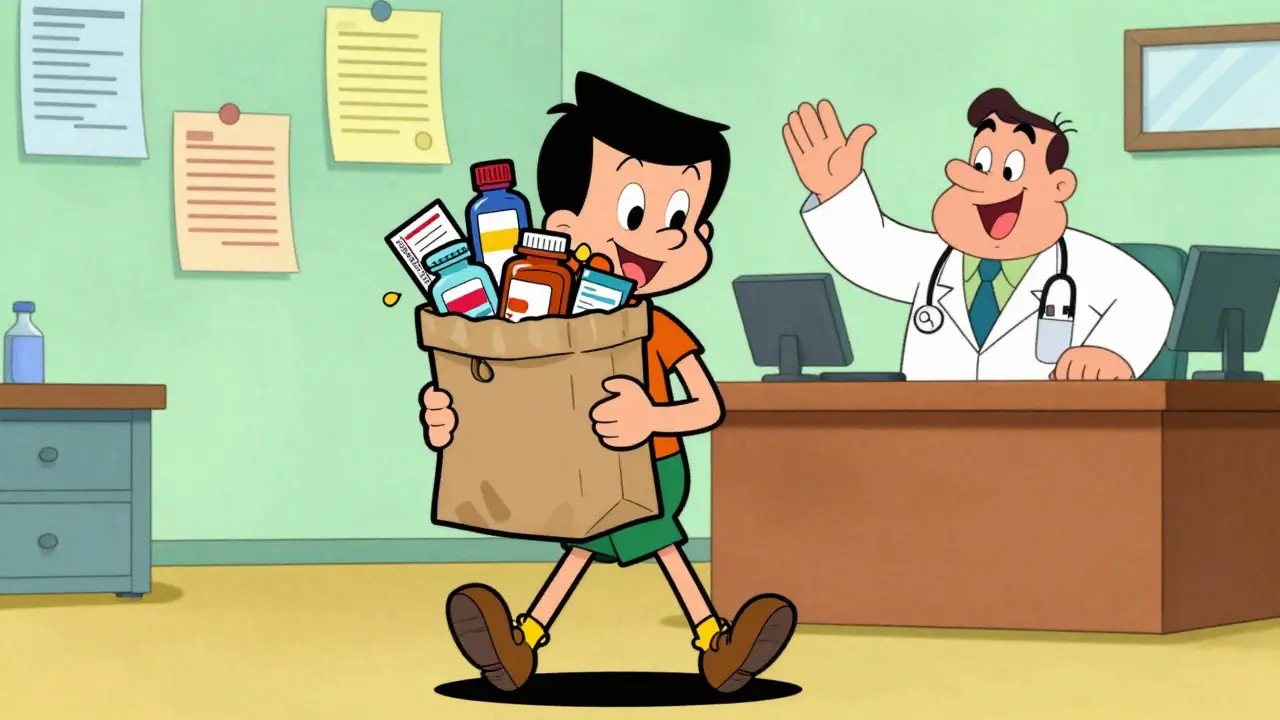
When you walk into a doctor’s office, emergency room, or hospital, the most important thing you can bring isn’t your insurance card or ID-it’s your medical history. Not just what you remember, not just the big stuff like diabetes or heart disease, but every pill, patch, supplement, and over-the-counter painkiller you’ve taken in the last six months. Why? Because a single missing detail can lead to a dangerous drug interaction, a preventable hospital stay, or even death.
Medication errors are one of the leading causes of preventable harm in healthcare. In the U.S. alone, they contribute to 7,000 to 9,000 deaths every year. Most of these aren’t caused by doctors making mistakes-they happen because the full picture of what a patient is taking never gets shared properly. That’s where medication reconciliation comes in: the formal process of comparing your current medications with what’s documented in your medical record. It’s not just paperwork. It’s a safety net.
Why Your Medication List Matters More Than You Think
Think about this: you take five prescription drugs, two over-the-counter pain relievers, a daily multivitamin, and a herbal supplement for sleep. Your doctor prescribes a new antibiotic. Without knowing about the supplement, they might not realize it interferes with the antibiotic, making it useless-or worse, causing liver damage. This isn’t hypothetical. A 2023 study found that 67% of patients don’t accurately report their over-the-counter meds or supplements to providers. That’s two out of three people.
People often think, “It’s just a vitamin,” or “I only take it once a week.” But the truth is, supplements like St. John’s Wort, ginkgo biloba, or even high-dose vitamin E can interact with blood thinners, antidepressants, and heart medications. And if your pharmacist doesn’t have the full list-because you bought it at a different store, paid cash, or didn’t tell anyone-you’re flying blind.
The American Society of Health-System Pharmacists (ASHP) says the single most effective way to fix this is the “brown bag method.” Bring every bottle, box, and pill organizer you have to your appointment. Don’t rely on memory. Don’t say, “I think I take that once a day.” Show them. This simple step cuts medication discrepancies by 40% compared to just talking about your meds.
What Happens When You Don’t Share Everything
Imagine you’re admitted to the hospital after falling. You’ve been taking warfarin for atrial fibrillation, aspirin for heart health, and melatonin for sleep. You don’t mention the melatonin because you think it’s harmless. The hospital team starts you on a new antibiotic. That antibiotic blocks how your body breaks down warfarin. Your blood thinning level spikes. You bleed internally. You’re in ICU for a week.
This scenario happens more than you’d guess. In fact, 50% of all medication errors happen during transitions of care-when you move from one provider to another, or from hospital to home. Of those, 20% cause real harm. And here’s the kicker: electronic systems can catch 32% more errors than manual checks alone. But they can’t catch what’s never entered in the first place.
Even with advanced tools like Surescripts, which pulls medication history from 98% of U.S. pharmacies, 15-20% of prescriptions are still missed because they’re paid for in cash. And 67% of patients don’t report OTC drugs. That’s a huge blind spot. No algorithm can fix that. Only you can.
What to Include in Your Medication List
Your list isn’t just for prescriptions. It needs to include:
- Brand and generic names of all prescription drugs
- Dosage and how often you take them (e.g., “5 mg once daily”)
- Over-the-counter medicines: painkillers, antacids, cold remedies
- Vitamins, minerals, and supplements (even if you only take them once a week)
- Herbal remedies: turmeric, ginseng, echinacea, etc.
- Topical treatments: creams, patches, eye drops
- Any medications you stopped taking and why
Don’t forget the “why.” If you stopped a blood pressure pill because it made you dizzy, tell them. If you started melatonin after your doctor said it was okay, say that too. Context matters. A provider might assume you’re still on a drug you stopped-because it’s still listed in the system.
Use a simple app, a printed sheet, or even a note on your phone. Update it every time you see a new provider, get a new prescription, or change your dose. Make it part of your routine-like checking your calendar.
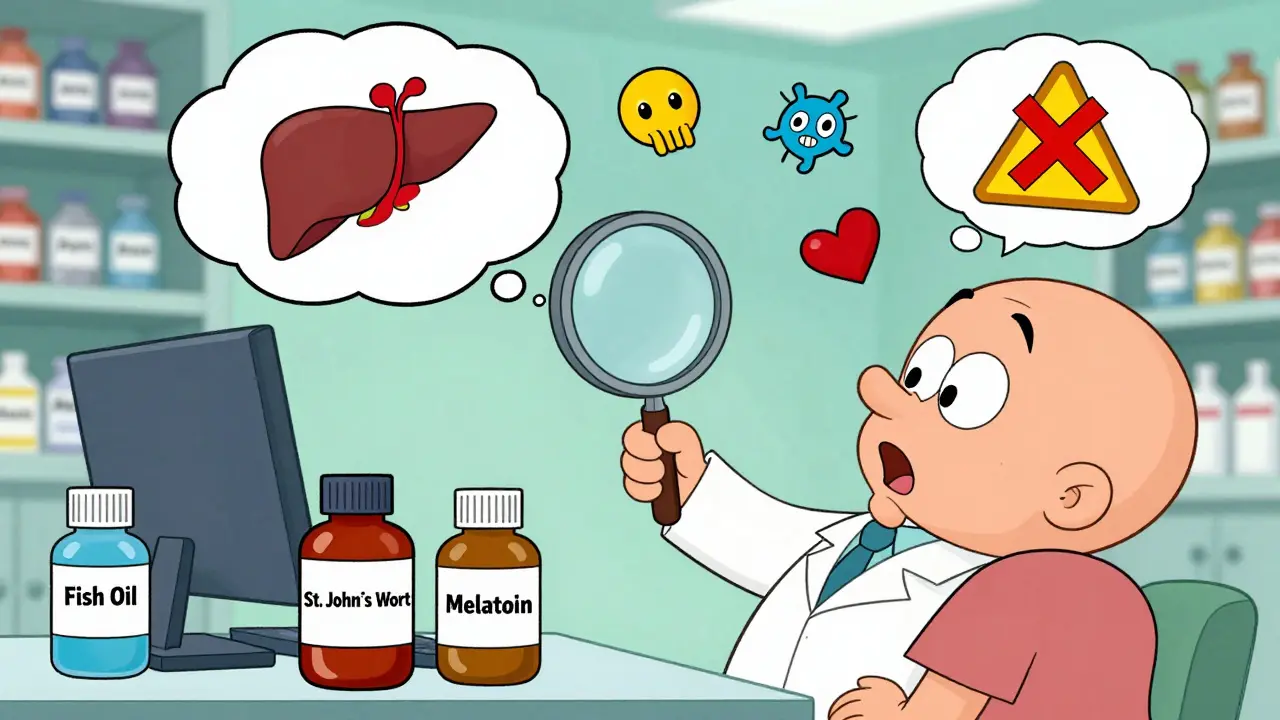
How Providers Use This Information
When you give your full list, providers don’t just check for duplicates. They look for red flags. High-alert medications-like insulin, blood thinners, opioids, and IV antibiotics-are flagged automatically in electronic systems. But even those systems miss things if the data isn’t complete.
Here’s what happens behind the scenes:
- Drug interaction checkers scan your list for conflicts (e.g., mixing NSAIDs with blood pressure meds can raise kidney risk)
- Dosage calculators adjust for age, weight, or kidney function
- Reconciliation tools compare your list to the hospital’s records and highlight mismatches
- Pharmacists review everything before you leave the hospital
But none of this works if your list is outdated. One study showed that electronic systems identify 1.1 extra medications per patient that manual checks miss. That’s one more drug that could prevent a bad reaction. But if you didn’t tell them about your fish oil or your daily CBD gummy, that extra drug stays hidden.
What to Do Before Your Next Appointment
You don’t need to be a medical expert to keep your list accurate. Here’s what to do:
- Every three months, empty your pill organizer and medicine cabinet into a bag.
- Write down every item, including brand names, doses, and frequency.
- Check the labels. Don’t guess.
- Take the list to every appointment-primary care, specialist, ER, even the dentist.
- Ask: “Is this still right? Should anything be added or removed?”
If you’re caring for an elderly parent or someone with memory issues, help them do this. A 2023 survey found that 83% of family caregivers struggle to track medications, and 41% have experienced a medication error because of it.
Also, use your patient portal. Most hospitals and clinics now let you view your medication list online. Check it monthly. If something’s wrong, message your provider. Don’t wait for your next visit.
When Technology Falls Short
Yes, electronic health records and pharmacy databases are powerful. But they’re not perfect. They don’t know about cash-paid meds. They don’t always update in real time. And they can’t tell you if you stopped a drug because it made you sick.
One patient on Reddit shared that during a hospital admission, their list of 12 medications was missing five because they were filled at different pharmacies. The system didn’t pull them all together. The patient had to physically show the bottles to get the right care.
That’s why no system replaces your involvement. Technology helps. But you’re the only one who knows your full story.
What If You’re Afraid to Speak Up?
Many people don’t share their full history because they’re embarrassed, afraid of being judged, or think their provider already knows. Maybe you took a supplement because a friend said it helped. Maybe you’re not sure if it’s “important.”
Here’s the truth: your provider has seen it all. They’ve had patients on everything from CBD oil to homeopathic remedies. They don’t judge-they protect. The more they know, the safer your care becomes.
If you’re nervous, try this: “I’m trying to make sure my meds are safe. Can you help me check if anything here might interact?” That’s all you need to say.
The Bigger Picture: Why This Isn’t Just Your Problem
Medication safety isn’t just about individual patients. It’s a system-wide issue. Hospitals get penalized by Medicare if they have too many medication errors. Insurance companies pay more when patients are readmitted because of bad drug interactions. And every error adds to the $21 billion in annual healthcare costs that could be saved if we got this right.
But the biggest cost isn’t financial-it’s human. A preventable fall. A stroke from a missed interaction. A loved one lost because a pill wasn’t on a list.
When you share your full medical history, you’re not just helping yourself. You’re helping the whole system work better.
Final Takeaway: Be Your Own Advocate
Medication safety isn’t something your doctor does for you. It’s something you do with them. You’re the only person who knows every pill you’ve taken, every side effect you’ve felt, every change you’ve made without telling anyone.
Keep your list updated. Bring your bottles. Ask questions. Don’t assume they know. Don’t assume it’s not important. If it’s in your medicine cabinet, it matters.
By doing this, you’re not just preventing errors-you’re taking control of your health. And in a world full of complex systems, that’s the most powerful thing you can do.
What should I do if I can’t remember all my medications?
Start by checking your pill bottles, pharmacy receipts, or your patient portal online. If you’re still unsure, bring all your medicine containers to your appointment-even empty ones. Your pharmacist can help you sort them out. You don’t need to remember everything; you just need to show everything.
Do I need to tell my doctor about vitamins and supplements?
Yes. Many supplements interact with prescription drugs. For example, St. John’s Wort can make birth control, antidepressants, and blood thinners less effective. Garlic, ginkgo, and fish oil can increase bleeding risk before surgery. Even common ones like vitamin E or calcium can interfere with thyroid or antibiotic meds. Always disclose them.
Can my provider see all my medications from other doctors?
Not always. Electronic systems can pull data from pharmacies and hospitals that use the same network, but if you’ve been to a clinic that uses a different system, or paid cash for a prescription, it might not show up. That’s why bringing your own list is still essential.
What if I’m taking something my doctor says I shouldn’t?
Tell them anyway. Providers need to know what you’re doing-even if it’s not recommended. They can’t help you safely adjust or monitor side effects if they don’t know. Many people stop taking meds because they’re embarrassed, but that’s when risks go up. Honesty saves lives.
How often should I update my medication list?
Update it every time you start, stop, or change a dose of any medication-including over-the-counter drugs and supplements. Also review it every three months. Your body and your needs change. Your list should too.
Can I share my list with my family or caregiver?
Absolutely. In fact, it’s a good idea. If you’re ever unable to speak for yourself, your caregiver can provide an accurate list to emergency staff. Keep a printed copy in your wallet or phone, and make sure your caregiver knows where to find it.
Next time you’re preparing for a doctor’s visit, skip the mental checklist. Grab your meds. Bring your list. Speak up. Your life might depend on it.

Brittany Wallace
January 1, 2026 AT 18:07Just brought my brown bag to my doc last week-turned out I was still on a blood pressure med I’d stopped 8 months ago because it made me dizzy. They caught it, changed my script, and I haven’t felt this good in years. 🙌
Turns out, the ‘just a vitamin’ stuff? Yeah, that’s the stuff that’ll sneak up on you. I take turmeric for my knees and didn’t think twice-until my pharmacist said, ‘Ohhh, that’s why your INR’s spiking.’
Tru Vista
January 3, 2026 AT 06:46Med reconciliation? More like med chaos. Docs don’t even read the lists. I gave mine on paper, emailed it, uploaded it. Still got prescribed a drug that clashes with my fish oil. They just clicked ‘confirm’ like it’s a Netflix subscription. 😒
Vincent Sunio
January 4, 2026 AT 12:24It is not merely advisable-it is a medical imperative-that patients maintain an exhaustive, chronologically accurate, and pharmacologically annotated inventory of all ingested substances, including over-the-counter agents, nutraceuticals, and phytotherapeutics. Failure to do so constitutes a breach of the fiduciary duty owed to one’s own physiological integrity.
Moreover, the reliance upon anecdotal evidence-such as the ‘brown bag’ method-is empirically inferior to digitized, interoperable EHR-integrated pharmacovigilance systems, which, when properly implemented, reduce error rates by 78%.
JUNE OHM
January 4, 2026 AT 20:52They don’t want you to know this-but the FDA lets Big Pharma hide interactions so you keep buying meds. They don’t care if you bleed out from ginkgo + warfarin. They want you dependent. I saw a whistleblower video-this is all a setup. 🚨💊
And why do they always say ‘just tell your doctor’? Because they don’t want you talking to other patients. The system is rigged. Bring your bottles. Fight back. 🇺🇸
Philip Leth
January 6, 2026 AT 17:15Man, I used to think my melatonin was harmless. Then I got hospitalized for a weird heart rhythm after starting a new antibiotic. Turns out, it messes with my pacemaker meds. I didn’t even think to mention it.
Now I keep a sticky note on my fridge with everything I take. My mom even prints it out for me. Best habit I ever picked up. Seriously-just do it. Your future self will thank you.
Angela Goree
January 8, 2026 AT 00:04WHAT. THE. HELL. Are people seriously still not bringing their meds?!!
My aunt died last year because she didn’t tell them she was taking St. John’s Wort with her antidepressant. She thought it was ‘natural’ so it was ‘safe.’
NO. IT. ISN’T.
Stop being lazy. Stop being embarrassed. Your life is not a secret. Your meds? They matter. Period.
Shanahan Crowell
January 9, 2026 AT 00:52You guys are underestimating how powerful this simple habit is. I started doing the brown bag thing after my dad had a bad reaction. Now I do it every 3 months like clockwork-same day I pay my bills.
My pharmacist remembers me now. She gives me little tips. My doctor says I’m the most prepared patient he’s ever had.
It’s not hard. It’s not scary. It’s just… necessary. And it saves lives. I’m not trying to be inspirational-I’m just saying: do it. Please.
Tiffany Channell
January 9, 2026 AT 03:32Let’s be real: most people who say ‘I bring my meds’ are just holding up a pill organizer with 3 bottles inside. The rest? They’re lying. Or they forgot. Or they think ‘it’s not important.’
This whole post is just virtue signaling. The system is broken. Your list doesn’t fix it. Your provider doesn’t care. And the algorithm that’s supposed to catch interactions? It’s trained on biased data.
You’re not saving lives-you’re just doing performative compliance.