
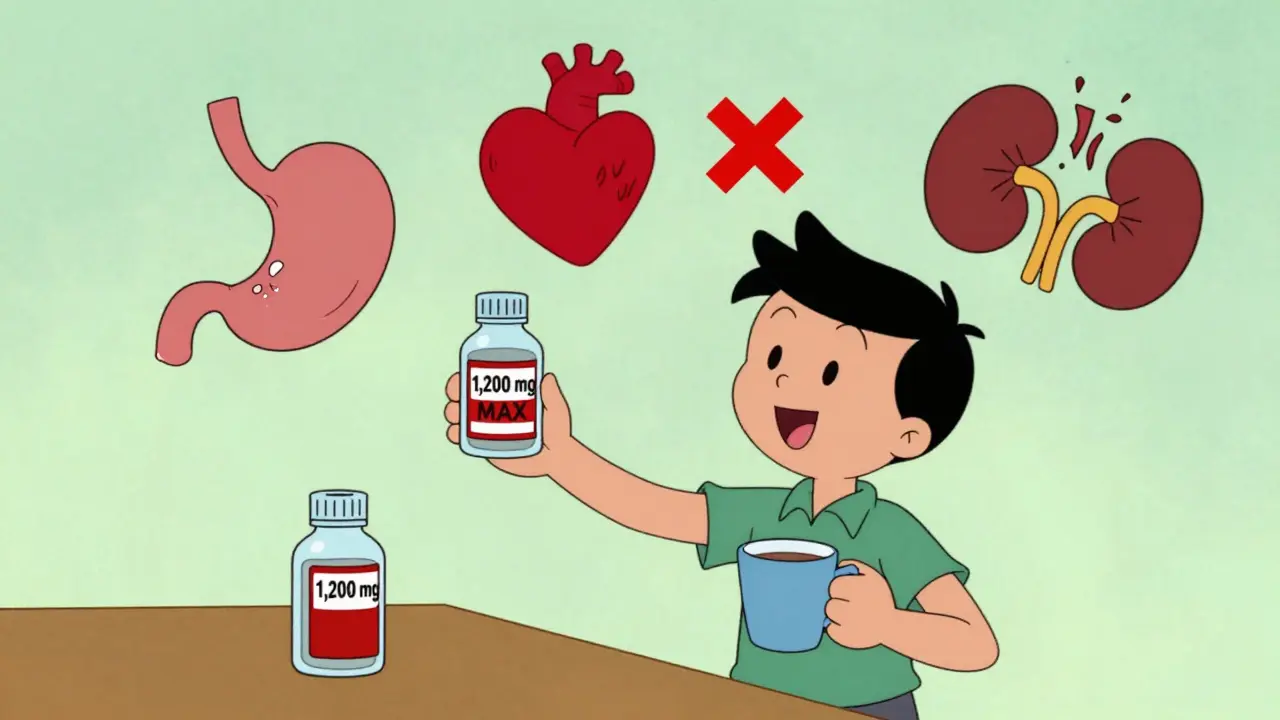
Every year, millions of people reach for ibuprofen or naproxen to ease a headache, back pain, or menstrual cramps. These are the go-to pain relievers on pharmacy shelves-cheap, fast, and easy to grab without a prescription. But here’s the thing: just because you can buy them over the counter doesn’t mean they’re harmless. In fact, taking them the wrong way can land you in the hospital. The FDA, Mayo Clinic, and other top health bodies are clear: ibuprofen and naproxen carry real risks, even at OTC doses. If you’ve ever taken one of these pills for more than a few days, you need to know the facts.
How Much Is Too Much?
Most people think they’re safe as long as they don’t take more than what’s on the bottle. But the bottle doesn’t tell the whole story. For ibuprofen, the maximum daily dose for OTC use is 1,200 mg. That’s six 200 mg tablets. For naproxen sodium, it’s 600 mg per day-three 220 mg tablets. Sounds simple, right? But here’s where it gets dangerous.
Many people take one tablet every 4 hours for ibuprofen, thinking that’s fine. But if you’re taking it for back pain or arthritis, you might end up hitting 1,200 mg by lunchtime. And if you’re also drinking alcohol, taking blood pressure meds, or have kidney issues? You’re stacking risks. Naproxen lasts longer-up to 17 hours-so people think they can take it less often. But that doesn’t mean it’s safer. In fact, its longer half-life means it builds up in your system, increasing the chance of side effects over time.
Real-world data shows people regularly exceed these limits. One Reddit user took 1,600 mg of ibuprofen daily for three weeks for back pain. Result? Hospitalization for gastrointestinal bleeding. Another case, documented by the FDA in early 2024, involved a 68-year-old who took the maximum dose of naproxen for 14 straight days. He ended up with acute kidney injury. These aren’t rare. The American College of Gastroenterology reports a 17% yearly rise in NSAID-related hospitalizations from 2018 to 2023.
Heart Risks Are Real-Even in Healthy People
You’ve probably heard that NSAIDs can hurt your stomach. But the bigger danger? Your heart. In 2020, the FDA strengthened warnings for all non-aspirin NSAIDs, including ibuprofen and naproxen. They found that even short-term use-just a few weeks-can raise the risk of heart attack or stroke. The risk isn’t just for people with existing heart disease. It’s there for anyone.
Studies show ibuprofen increases heart attack risk by about 61% at high doses (over 1,500 mg/day). Naproxen’s risk is lower-around 20%-but still present. Why? Because both drugs interfere with natural chemicals in your body that protect your blood vessels. Naproxen has a slightly better safety profile, according to the FDA’s 2015 Arthritis Advisory Committee. That’s why some doctors recommend it over ibuprofen for people with heart concerns. But “slightly better” doesn’t mean “safe.”
A 2024 study in The Lancet followed 10 million patients and found that even taking NSAIDs for under 7 days increased heart attack risk by 20% in high-risk groups. The American Heart Association now advises: avoid NSAIDs if you have heart disease. If you absolutely must use them, use the lowest dose for the shortest time possible.
Stomach Damage Is Silent-and Common
Your stomach doesn’t warn you when it’s being damaged. NSAIDs block enzymes that protect the stomach lining. That means ulcers can form without pain, bleeding, or warning signs-until you start vomiting blood or passing black, tarry stools.
Studies show NSAID users are 2 to 4 times more likely to develop ulcers than non-users. One in five people who take ibuprofen or naproxen daily for more than a month will develop a stomach ulcer. And it’s not just the elderly. A 35-year-old woman I know took 400 mg of ibuprofen every 6 hours for her migraines for six weeks. She never felt stomach pain. Then she collapsed from internal bleeding. Turns out, she had a perforated ulcer.
Naproxen carries a higher risk of gastrointestinal bleeding than ibuprofen at anti-inflammatory doses. Why? It’s more potent at blocking the protective COX-1 enzyme. That’s why experts say: if you’re prone to stomach issues, avoid naproxen. If you need something stronger than acetaminophen but have a sensitive stomach, ibuprofen might be the lesser evil-but only if you take it with food and never for more than 10 days.
Who Should Never Take These Pills?
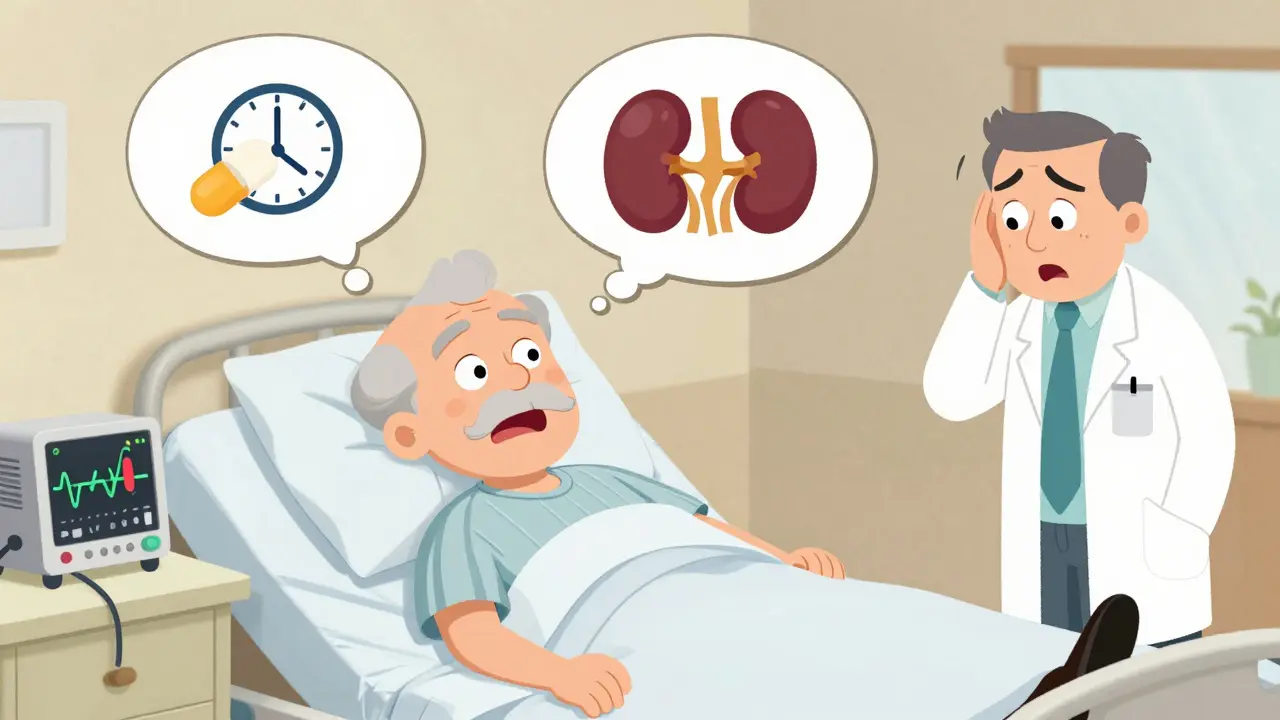
Not everyone should use OTC NSAIDs. Here are the groups who should avoid them entirely:
- People with kidney disease-NSAIDs reduce blood flow to the kidneys, which can cause sudden failure.
- Those with high blood pressure or heart failure-NSAIDs cause fluid retention, which worsens these conditions.
- Pregnant women after 20 weeks-NSAIDs can cause low amniotic fluid and harm fetal kidneys.
- People taking blood thinners like warfarin or aspirin-NSAIDs increase bleeding risk.
- Anyone over 65-older adults are more sensitive to side effects and have higher rates of complications.
- People with a history of stomach ulcers or bleeding-this is a hard no.
- Those with asthma triggered by pain relievers-NSAIDs can cause severe breathing problems.
And here’s something most people don’t know: ibuprofen can block the heart-protective effect of low-dose aspirin. If you take aspirin daily to prevent heart attack or stroke, taking ibuprofen at the same time can cancel out that benefit. Naproxen doesn’t do this as much-but you still shouldn’t mix them without talking to a doctor.
What About Acetaminophen? Is It Safer?
Acetaminophen (Tylenol) is often recommended as an alternative. It doesn’t cause stomach ulcers or increase heart risk like NSAIDs. But it’s not harmless. The liver processes it. Take more than 3,000 mg in a day-especially if you drink alcohol or have liver disease-and you risk acute liver failure. One study found that acetaminophen overdose is the leading cause of liver failure in the U.S.
So what’s the best choice? For mild pain without inflammation-like a headache or fever-acetaminophen is usually safer. For pain with swelling-like arthritis or a sprained ankle-NSAIDs work better. But only if you use them correctly: lowest dose, shortest time, with food, and never longer than 10 days without seeing a doctor.
Topical NSAIDs: A Safer Option?
If you have joint pain in your knee or elbow, you might not need pills at all. Topical NSAIDs like diclofenac gel (Voltaren) deliver the drug directly to the sore area. Less gets into your bloodstream. That means lower risk of stomach, heart, and kidney problems.
Mayo Clinic says topical NSAIDs are a good option for people who can’t take oral versions. They’re not as strong for deep pain, but for surface-level aches-like osteoarthritis in the hands or knees-they work well and are much safer. And they’re available OTC in many places now. If you’re taking oral NSAIDs regularly, ask your doctor if switching to a gel might help.

When to Stop and See a Doctor
You don’t need to be scared of ibuprofen or naproxen. But you do need to respect them. Here’s your simple rule: if you’ve taken them for more than 10 days in a row, stop. If you’re still in pain, it’s not a problem you can medicate away. It’s a sign something else is wrong.
See a doctor if:
- Your pain lasts more than 10 days
- You have stomach pain, nausea, or black stools
- You feel short of breath, swollen ankles, or sudden weight gain
- You notice changes in urine output or dark urine
- You’re taking other medications like blood pressure pills or diuretics
Chronic pain isn’t something to manage with OTC pills. It’s a signal. Maybe you need physical therapy. Maybe you need imaging. Maybe you need a different approach. NSAIDs are a bandage, not a cure.
What to Do Instead
The CDC’s 2022 guidelines say: for chronic pain, non-drug treatments should come first. That means:
- Physical therapy for back or joint pain
- Heat or ice packs for muscle soreness
- Stretching or low-impact exercise like swimming or walking
- Acupuncture or massage for tension-related pain
- Cognitive behavioral therapy for pain that affects sleep or mood
These don’t work overnight. But they work long-term-without the risk of internal bleeding or heart damage.
Can I take ibuprofen and naproxen together?
No. Taking both together doesn’t give you better pain relief-it doubles your risk of stomach bleeding, kidney damage, and heart problems. If one isn’t working, talk to a doctor. Don’t stack them.
Is it safe to take NSAIDs for menstrual cramps?
Yes, for short-term use. Many women find 200 mg of ibuprofen every 6-8 hours during their period is effective and safe. Just don’t take it for more than 3-5 days in a row, and always take it with food. If you need it every month for more than a few days, see a doctor-there might be an underlying condition like endometriosis.
Can children take ibuprofen or naproxen?
Ibuprofen is safe for children over 6 months when dosed by weight. Naproxen is not recommended for children under 12 unless prescribed. Always use the pediatric formulation and follow the weight-based chart on the bottle. Never give aspirin to kids-it can cause Reye’s syndrome, a rare but deadly condition.
Do NSAIDs affect blood pressure?
Yes. NSAIDs can raise blood pressure by causing fluid retention and reducing kidney function. If you have high blood pressure, monitor it closely when using these drugs. Some people see a 5-10 point increase. If your pressure climbs, stop the NSAID and talk to your doctor.
Are there natural alternatives to NSAIDs?
Yes. Turmeric (curcumin), ginger, and omega-3 fatty acids have mild anti-inflammatory effects. They’re not as strong as NSAIDs, but they’re much safer for long-term use. Combine them with heat, movement, and rest for better results. They won’t replace NSAIDs for acute injury, but they can reduce how often you need them.
Final Advice: Use Wisely
NSAIDs are powerful tools. But like any tool, they can hurt you if you don’t use them right. Don’t treat them like candy. Don’t assume they’re safe because they’re on the shelf. Read the label. Know your limits. Stop if pain lasts beyond 10 days. And if you’re unsure-ask a pharmacist. They’re trained to spot these risks before they become emergencies.
The goal isn’t to scare you off pain relief. It’s to help you use it wisely. Your body doesn’t lie. If it’s screaming for help, don’t just silence it with pills. Listen to what it’s telling you-and act on it.
Marie Mee
December 17, 2025 AT 07:57Evelyn Vélez Mejía
December 17, 2025 AT 16:30Victoria Rogers
December 18, 2025 AT 06:04Meghan O'Shaughnessy
December 20, 2025 AT 04:53Jody Patrick
December 21, 2025 AT 12:01BETH VON KAUFFMANN
December 22, 2025 AT 11:33Raven C
December 24, 2025 AT 00:55Donna Packard
December 24, 2025 AT 10:02Patrick A. Ck. Trip
December 25, 2025 AT 23:02Chris Van Horn
December 26, 2025 AT 21:48Virginia Seitz
December 27, 2025 AT 02:33Peter Ronai
December 28, 2025 AT 15:39Steven Lavoie
December 29, 2025 AT 13:02Michael Whitaker
December 30, 2025 AT 20:13Sam Clark
December 31, 2025 AT 16:23