
When you’re in pain, the instinct is simple: reach for something strong to make it stop. For years, that meant opioids. But the cost has been too high-addiction, overdose, and a system that often treated pain like a problem to be silenced, not managed. Today, the tide is turning. Non-opioid alternatives aren’t just backup options anymore-they’re the new first line of defense for acute, subacute, and chronic pain. And the science backing them has never been stronger.
Why Move Away from Opioids?
Opioids work, but they come with a dangerous price tag. About 1 in 5 U.S. adults with chronic pain still get prescribed opioids, even though the CDC reported a 0.7% annual risk of developing opioid use disorder among those patients. That might sound small, but multiply that across millions, and you’re looking at tens of thousands of people trapped in a cycle of dependence. Then there’s the physical toll: respiratory depression affects up to 80% of users, and constipation hits 40-95%. These aren’t side effects you can ignore-they’re life-altering. The CDC’s 2022 Clinical Practice Guideline made it clear: for subacute and chronic pain, nonpharmacologic and nonopioid pharmacologic therapies should come first. Not as a last resort. Not as a compromise. As the standard.What Does Multimodal Pain Management Actually Look Like?
Multimodal doesn’t mean one thing. It means stacking tools-physical, psychological, and pharmaceutical-that work together to reduce pain without opioids. Think of it like building a wall: each brick adds strength, and together, they hold up what a single drug never could. For acute pain-like after surgery or a sprained ankle-the basics still work best:- Ice packs for 15-20 minutes every 2-3 hours during the first 48-72 hours
- Moist heat at 40-45°C for 15-20 minutes to loosen stiff muscles
- Elevation and rest to reduce swelling
- Over-the-counter NSAIDs like ibuprofen (400-800 mg every 6-8 hours) or acetaminophen (650-1000 mg every 6-8 hours)
- Structured exercise: 30-45 minutes of aerobic activity 3-5 days a week, or aquatic therapy in warm water (32-35°C)
- Resistance training: 2-3 sets of 8-12 reps at 60-80% of your one-rep max
- Yoga or tai chi: 60-90 minutes, 2-3 times a week, shown to reduce pain intensity by 30-50% in clinical trials
- Cognitive behavioral therapy (CBT): 8-12 weekly sessions that rewire how your brain processes pain signals
- Acupuncture: 8-12 sessions over 4-8 weeks, with a rate of serious side effects just 0.14 per 10,000 treatments
- Spinal manipulation: Often part of physical therapy, typically 6-12 sessions over 3-6 weeks
The New Medications: Beyond NSAIDs and Acetaminophen
You’ve heard of ibuprofen and Tylenol. But the pain relief landscape is changing fast. In August 2023, the FDA approved Journavx (suzetrigine)-the first new non-opioid analgesic class for acute pain in 25 years. It works by blocking the NaV1.8 sodium channel, a key player in pain signaling. In trials, it matched opioids in effectiveness for moderate-to-severe pain but without the drowsiness, constipation, or risk of addiction. For someone recovering from a broken bone or a dental procedure, this is a game-changer. For chronic pain, newer options are also emerging:- Topical NSAIDs like diclofenac gel (1%, applied 4 times daily) reduce joint pain with minimal systemic exposure
- Tricyclic antidepressants like amitriptyline (10-100 mg nightly) help with nerve pain, even if you’re not depressed
- Triptans for migraines can deliver pain freedom in 40-70% of patients within two hours
Cost, Accessibility, and Real-World Barriers
You might think, “This all sounds great-but what about the cost?” Group aerobic classes? $10-20 per session. Individual physical therapy? $100-150. Yet studies show low-cost group programs can be just as effective as one-on-one sessions for reducing low back pain. Insurance often covers CBT and acupuncture now, especially under newer mental health parity laws. But here’s the catch: adherence. Only 40-60% of people stick with structured exercise programs long-term. Pain management isn’t a prescription you pick up at the pharmacy. It’s a lifestyle shift. That’s why the most successful plans combine professional guidance with patient support-like group classes, apps that track progress, or peer coaching.What Works Best for Each Type of Pain?
Not all pain is the same. Here’s what the evidence says works best:- Chronic low back pain: Exercise + CBT. Together, they reduce pain by 30-50% in 60-70% of patients.
- Osteoarthritis (knee/hip): Topical diclofenac gel, weight management, and aquatic therapy. Reduces pain by 20-40%.
- Migraines: Triptans, magnesium supplements, and behavioral triggers tracking. Pain freedom in under two hours for many.
- Neuropathic pain (nerve damage): Amitriptyline, gabapentin, or emerging compounds like CP612.
- Post-surgical pain: Multimodal analgesia with NSAIDs, acetaminophen, and regional nerve blocks. Avoids opioids entirely in many cases.
The Bigger Picture: Policy, Research, and the Future
The NIH’s HEAL Initiative has poured $1.9 billion annually into non-addictive pain research. The FDA’s 2023 draft guidance is pushing drugmakers to design trials that measure not just pain scores, but how much opioid use is avoided. That’s huge. Pain specialists are catching on too. A 2023 survey found 73% now use multimodal, non-opioid approaches as first-line treatment-up from 42% in 2018. The American Society of Regional Anesthesia now recommends at least two non-opioid drugs plus regional anesthesia for surgery. By 2028, analysts predict non-opioid strategies will be the default for 65% of chronic pain cases. The CDC is expected to update its guidelines again in 2025, likely reinforcing these trends.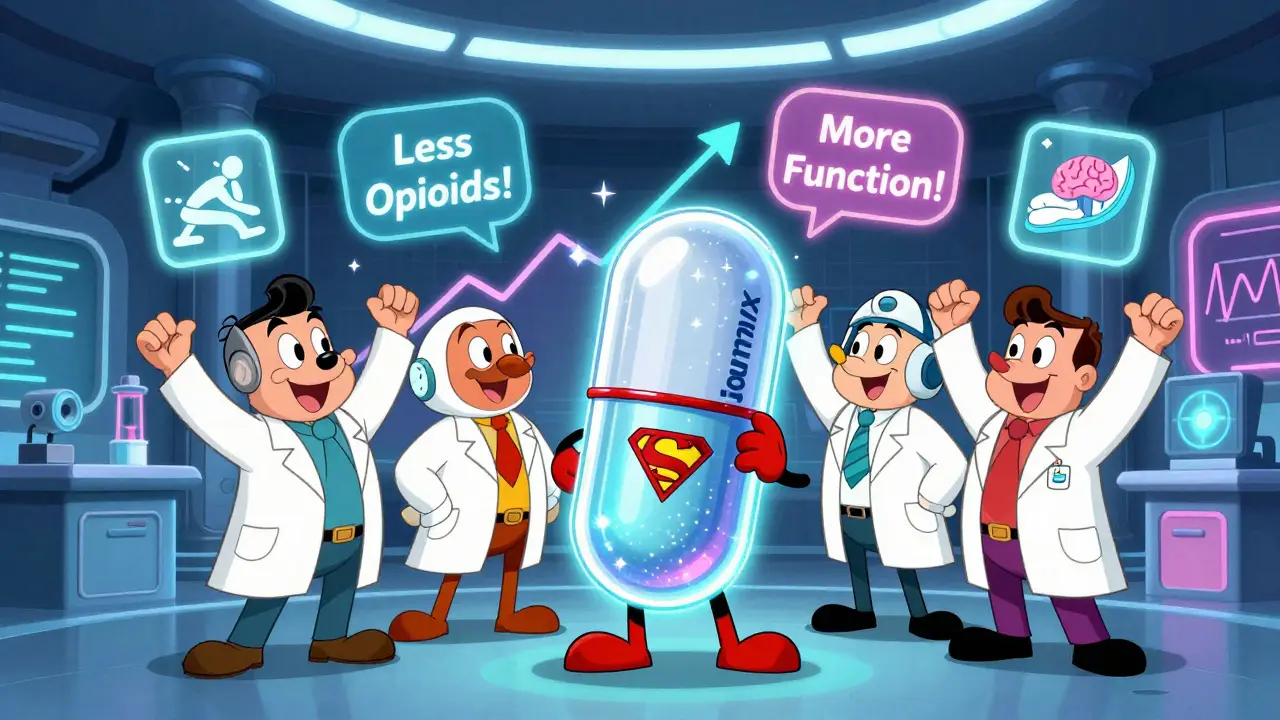
What to Do If You’re in Pain Right Now
You don’t need to wait for the next breakthrough. Start here:- For acute pain: Try ice, heat, NSAIDs, and rest before reaching for a prescription.
- For ongoing pain: Talk to your doctor about CBT, physical therapy, or acupuncture. Ask if topical NSAIDs or low-dose antidepressants might help.
- Move-even a little. Walking 20 minutes a day reduces inflammation and improves nerve function.
- Track your triggers. What makes your pain worse? Stress? Sleep? Weather? Journaling helps you and your provider spot patterns.
- Ask: “Is this the safest option?” If you’re prescribed an opioid, ask if you can try a non-opioid combination first.
Common Concerns and Myths
Isn’t acetaminophen dangerous?
It can be-but only if you exceed 4,000 mg per day. Most people don’t. Stick to the label. Avoid combining it with alcohol or other liver-stressing meds.Is acupuncture just placebo?
No. Multiple high-quality studies show it activates pain-inhibiting pathways in the brain and spinal cord. It’s not magic, but it’s science.Will insurance cover all this?
Many plans now cover CBT, physical therapy, and acupuncture under mental health or chronic condition benefits. Call your insurer and ask for “non-opioid pain management coverage.”What if nothing works?
That’s rare. Most people find relief with a combination of two or three approaches. If you’ve tried everything, seek out a pain specialist who focuses on multimodal care-not just pills.Are non-opioid pain treatments really as effective as opioids?
For many types of pain-especially chronic low back pain, osteoarthritis, and migraines-non-opioid approaches match or exceed opioid effectiveness without the risks. For acute severe pain, like after major surgery, opioids may still be used briefly, but multimodal protocols can cut opioid needs by 50-70%. The new drug suzetrigine (Journavx) has shown comparable pain relief to opioids in trials, without addiction or respiratory risks.
Can I stop my opioid medication and switch to non-opioid options?
Yes-but not on your own. Stopping opioids abruptly can cause withdrawal. Work with a pain specialist or your doctor to create a tapering plan while introducing non-opioid therapies like physical therapy, CBT, or medications like gabapentin or duloxetine. Many patients find their pain improves over time as their body adjusts to non-addictive treatments.
What’s the most cost-effective non-opioid pain treatment?
Group exercise programs-like water aerobics or walking groups-are among the most cost-effective. Studies show they reduce low back pain and improve function as well as expensive individual physical therapy sessions, at a fraction of the cost. Free or low-cost apps for guided yoga or CBT exercises also offer strong value.
Why isn’t everyone using non-opioid methods if they’re better?
Several reasons: many providers still default to prescribing opioids out of habit or lack of training. Patients often expect a quick fix, and non-opioid methods require time and effort. Insurance coverage gaps also exist-though they’re improving. The shift is happening, but it’s a cultural and systemic change, not just a medical one.
Is there a risk with non-opioid medications too?
Yes. Long-term NSAID use can cause stomach bleeding or kidney issues. Acetaminophen can damage the liver if taken in excess. Tricyclic antidepressants may cause drowsiness or dry mouth. But these risks are far lower than those from opioids. The key is using them wisely, under supervision, and combining them with non-drug approaches to minimize doses.
Nupur Vimal
December 16, 2025 AT 12:45So you're telling me I can just ice my back and walk more instead of popping oxy? Sounds like something my grandma would say while knitting blankets and judging my life choices
But honestly? I tried it after my herniated disc and it worked better than the script my doctor gave me. No more zombie mode. Just me, my yoga mat, and a whole lot of less nausea
Jake Sinatra
December 17, 2025 AT 22:38The shift toward multimodal pain management represents a significant evolution in clinical practice, grounded in robust evidence-based guidelines from the CDC and supported by emerging pharmacologic agents such as suzetrigine. The emphasis on nonpharmacologic interventions-including cognitive behavioral therapy and structured exercise-is not merely preferable; it is clinically imperative for long-term functional outcomes and public health safety.
Melissa Taylor
December 19, 2025 AT 04:11I used to think pain meds were the only way to get through my fibro flare-ups. Then I found a local water aerobics class for $12 a session. Three months in, I’m sleeping through the night. No pills. Just me, the warm water, and a whole lot of less fear. If you’re stuck in pain, try moving-even a little. Your body remembers how to heal.
John Brown
December 21, 2025 AT 01:23Man, I used to think acupuncture was just fancy placebo until my buddy’s mom got relief from her sciatica after 8 sessions. Now I’m the one dragging my coworkers to the clinic. It’s not magic, but it’s not nonsense either. Just slow, quiet science that actually works when you stick with it
Also, walking 20 minutes a day? Game changer. No joke.
Christina Bischof
December 21, 2025 AT 19:32Been dealing with chronic back pain for 8 years. Tried everything. Pills made me sleepy. Surgery scared me. Then I started doing yoga twice a week and journaling my triggers. Not perfect. But better. Real better. Like, I can pick up my kid without wincing better
Just saying-you don’t need a miracle. You just need to try one thing and keep doing it
Jocelyn Lachapelle
December 22, 2025 AT 19:31My mom’s a nurse and she told me once that pain isn’t a bug to be fixed-it’s a feature of the body trying to tell you something
Most doctors just hand out pills like candy. But real healing? That’s a team sport. Movement. Sleep. Stress management. Therapy. Sometimes even just talking to someone who gets it
It’s not sexy. But it’s real
Michelle M
December 23, 2025 AT 23:47Pain is the body’s last language before it gives up. Opioids silence it. But silence isn’t healing. Healing is listening. It’s showing up for yourself even when it’s boring. Even when you’re tired. Even when the world tells you to just take the pill and shut up
That’s why I love these non-opioid paths-they don’t ask you to disappear. They ask you to show up. And that’s the bravest thing you can do
Lisa Davies
December 25, 2025 AT 20:14Just tried topical diclofenac gel for my knee arthritis. No more stomach upset from pills. No drowsiness. Just relief. And guess what? I didn’t even need a prescription-bought it at CVS like toothpaste 😊
Why are we still treating pain like it’s a monster to be drowned in chemicals? We’ve got better tools now. Use them.
Cassie Henriques
December 27, 2025 AT 09:02NaV1.8 channel inhibition is the real breakthrough here. Suzetrigine’s mechanism bypasses the mu-opioid receptor entirely, eliminating the reward pathway activation that drives dependence. Combined with CBT-induced neuroplasticity and low-dose tricyclics for central sensitization, this is the future of pain neuroscience
Why are we still clinging to outdated pharmacologic paradigms when we have precision tools?
Raj Kumar
December 29, 2025 AT 00:49in india we dont have access to all this fancy stuff. no acupunture, no journavx, no cbt sessions. but we do have yoga, turmeric milk, and family who massage your back when you cry. maybe the real answer is not in pills or tech but in people who care enough to sit with you in pain
John Samuel
December 30, 2025 AT 02:26The paradigm shift toward multimodal, non-opioid pain management constitutes nothing short of a medical renaissance-one that reorients the physician-patient relationship from passive consumption to active co-creation of healing. The integration of behavioral, physical, and pharmacological modalities reflects a mature understanding of pain as a biopsychosocial phenomenon, not a mere physiological symptom to be extinguished.
Sai Nguyen
December 31, 2025 AT 01:57Why are we giving up on real painkillers? Opioids work. People get addicted? That’s their fault. Stop coddling weak people. If you can’t handle pain, you shouldn’t be running marathons or lifting weights. Just take the pill and stop whining.
RONALD Randolph
January 1, 2026 AT 13:20According to the CDC’s 2022 Clinical Practice Guideline, nonopioid pharmacologic therapies are recommended as first-line treatment for subacute and chronic pain. Furthermore, the FDA’s 2023 draft guidance mandates that new analgesic trials must measure opioid-sparing effects. The NIH’s HEAL Initiative has allocated $1.9 billion annually to fund non-addictive alternatives. This is not opinion. This is policy. This is science. And anyone who still prescribes opioids as first-line treatment is either negligent or ignorant.