
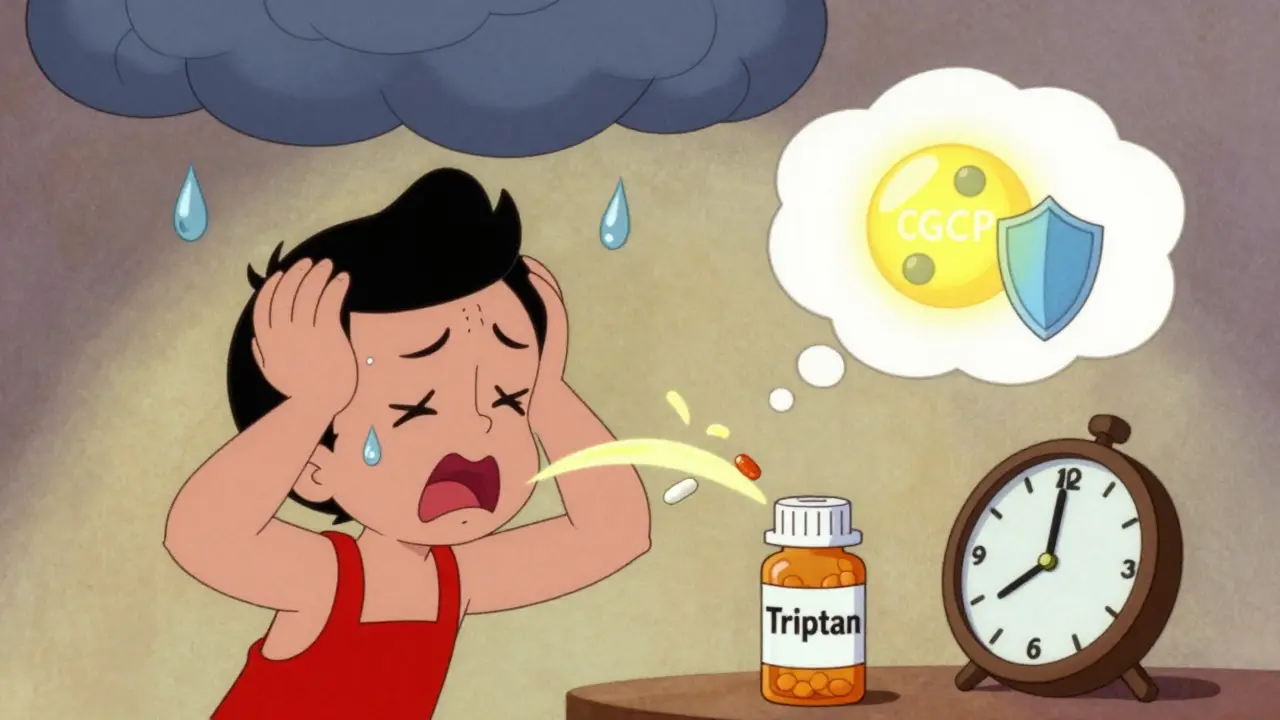
Chronic migraines aren’t just bad headaches. They’re neurological events that can knock you out for hours or days-often with nausea, sensitivity to light, and a pounding pain that feels like a drill behind your eye. If you’ve been there, you know no amount of rest or ibuprofen always fixes it. The good news? We now have more targeted, effective ways to stop attacks before they wreck your life-and to keep them from coming back in the first place.
How Abortive Medications Work (and When to Take Them)
Abortive meds are your first line of defense during a migraine attack. They don’t prevent migraines-they stop them in their tracks. But timing matters. If you wait until the pain is at its worst, these drugs lose a lot of their power. Studies show taking them within an hour of the first sign of pain cuts recurrence rates nearly in half. That’s why experts say: act fast.For mild to moderate attacks, over-the-counter NSAIDs like ibuprofen (400mg) or naproxen sodium (550mg) work for many people. They block the inflammatory chemicals that make your head throb. A combination of aspirin, acetaminophen, and caffeine (like Excedrin Migraine) has solid evidence behind it too. But if you’ve got nausea or vomiting, swallowing a pill might not help. Migraines slow down your stomach. That’s called gastric stasis. If your meds sit there undigested, they won’t work. That’s when nasal sprays, injections, or suppositories become better choices.
For moderate to severe migraines, triptans are the gold standard. Sumatriptan, rizatriptan, zolmitriptan-they all target serotonin receptors to narrow inflamed blood vessels and quiet nerve signals. About 42% to 76% of people get pain-free results within two hours, depending on the drug and dose. But triptans aren’t for everyone. If you have heart disease, high blood pressure, or a history of stroke, they’re off-limits. That’s where newer options come in.
The Rise of CGRP Medications for Acute Attacks
In the last few years, a new class of drugs has changed the game: CGRP inhibitors. These block a molecule called calcitonin gene-related peptide, which plays a key role in triggering migraine pain. Unlike triptans, they don’t affect blood vessels, so they’re safer for people with cardiovascular risks.Ubrogepant (Ubrelvy) and rimegepant (Nurtec ODT) are oral pills taken at the first sign of a migraine. Clinical trials show about 20% to 30% of users are pain-free within two hours. Rimegepant has an added perk-it’s also approved for preventive use, meaning one pill can do double duty. Lasmiditan (Reyvow) is another option for triptan-resistant cases. It works differently, targeting a serotonin receptor that doesn’t affect the heart. In studies, it was 1.56 times more likely to relieve pain than a placebo. But it can cause dizziness or fatigue, so don’t drive after taking it.
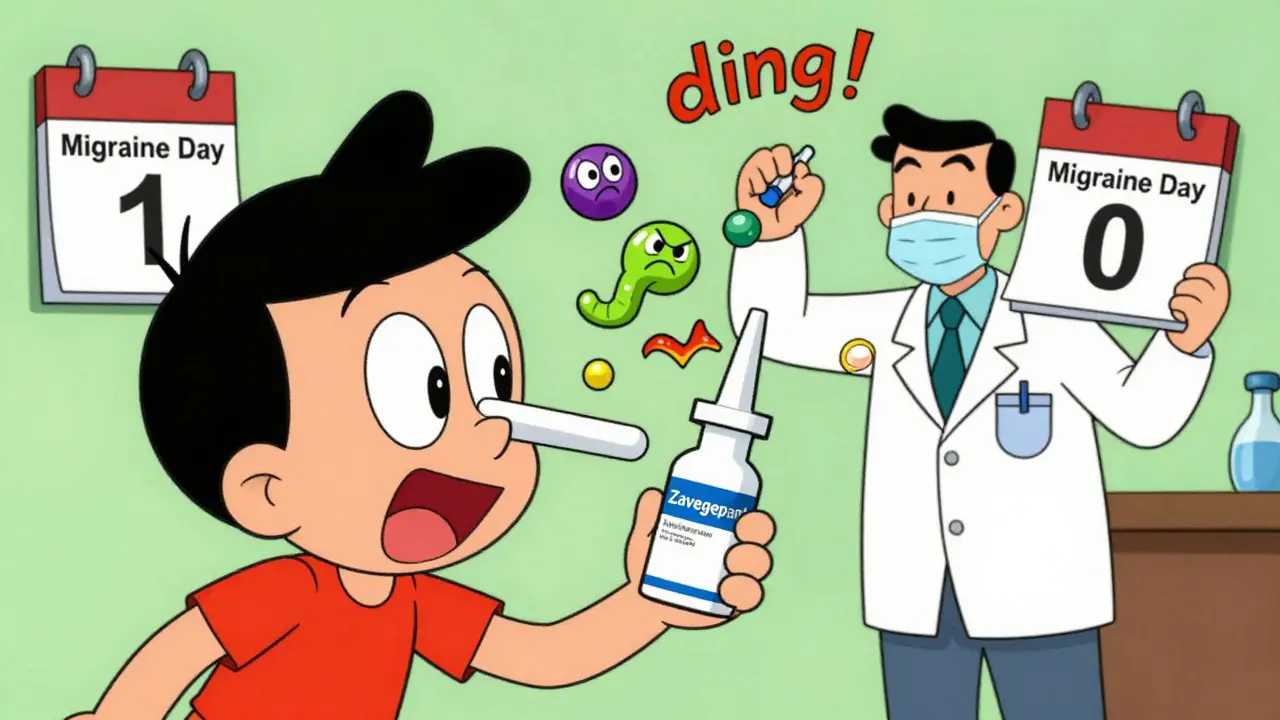
And now there’s zavegepant (Zavzpret), a nasal spray approved in late 2023. It’s the first CGRP blocker you can inhale. In trials, 24% of users were pain-free after two hours-better than placebo and faster than some pills. For people who can’t swallow or who need rapid relief, this is a game-changer.
Preventive Medications: Stopping Migraines Before They Start
If you get migraines 4 or more days a month, or if abortive meds aren’t enough, it’s time to think about prevention. These aren’t pills you take when you feel a headache coming. You take them every day, rain or shine, to reduce how often and how badly migraines hit.Traditional options include beta-blockers like propranolol and metoprolol, antiseizure drugs like topiramate and valproate, and older antidepressants like amitriptyline. These have been around for decades. They work for many, but side effects can be tough-brain fog, weight gain, fatigue. Topiramate, for example, can cause tingling in fingers and trouble with memory. Not everyone can stick with it.
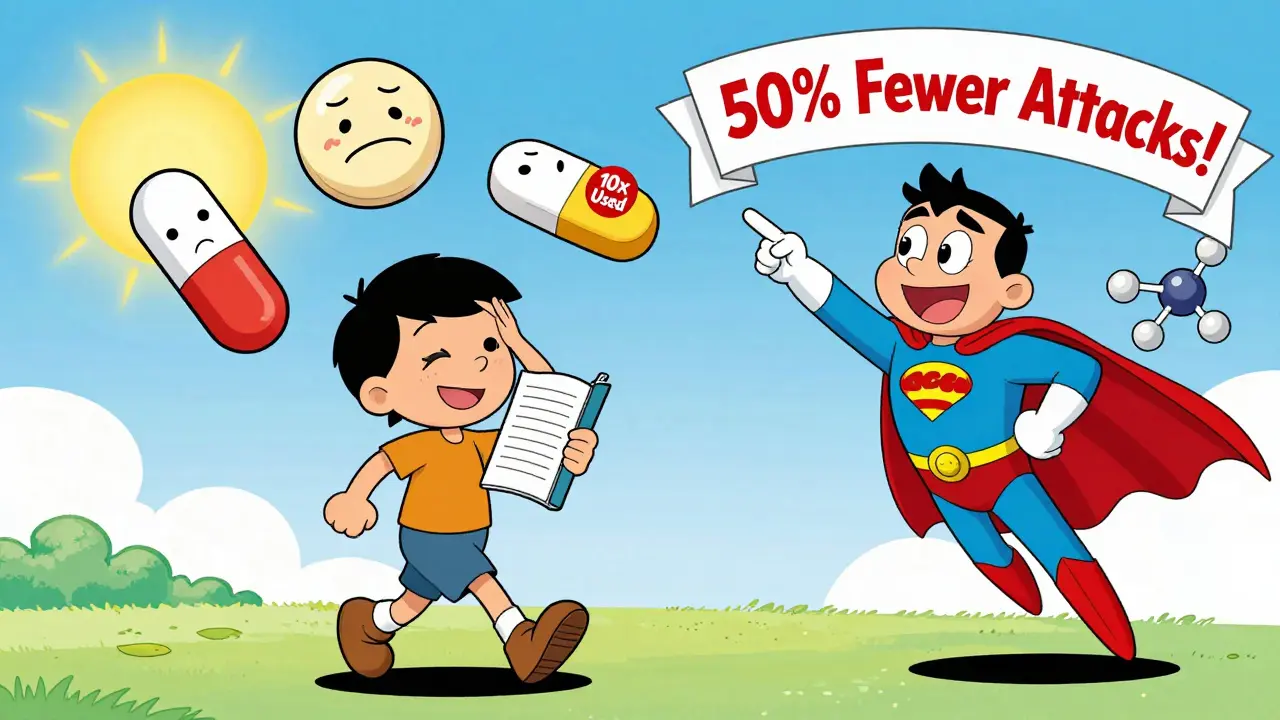
Then came the CGRP monoclonal antibodies. These are monthly or quarterly injections-erenumab (Aimovig), fremanezumab (Ajovy), galcanezumab (Emgality). They’re not pills. They’re lab-made antibodies that lock onto the CGRP molecule before it can trigger pain. In trials, people saw 50% fewer migraine days per month. Some even cut their attacks in half. And because they’re targeted, side effects are mild: injection site reactions, constipation, or occasional muscle cramps.
The American Academy of Neurology gave these drugs the highest level of evidence in 2020-meaning they’re proven to work. And they’re especially helpful for people who’ve tried everything else. But they’re expensive. Without insurance, a single injection can cost over $1,000. Most insurers require you to fail at least two older drugs first. That’s called step therapy. It’s frustrating, but common.
Combination Therapy: Why Mixing Treatments Works Better
Sometimes, one drug isn’t enough. That’s where combining treatments shines. For example, taking a triptan with naproxen boosts pain relief more than either drug alone. One study showed 32% of people were pain-free at two hours with the combo-compared to just 22% with triptan alone. The NSAID tackles inflammation, the triptan calms the nerves. Together, they cover more bases.For menstrual migraines-those that hit around your period-long-acting triptans like frovatriptan taken every day for a few days before and during your period can cut attacks by up to 70%. That’s a game-changer for women who know exactly when their migraines are coming.
Even non-drug methods help. Ice packs on the neck, dark quiet rooms, and hydration make abortive meds work better. A 2021 survey found 63% of migraine sufferers who used these alongside meds reported better outcomes. It’s not magic-it’s physics. Cooling nerves, reducing light input, and keeping fluids balanced help your body recover faster.
What Doesn’t Work (and Why It’s Still Prescribed)
Here’s the uncomfortable truth: too many people still get opioids or barbiturates for migraines. Narcotics like oxycodone or hydrocodone are sometimes prescribed because they’re fast-acting and familiar. But they don’t treat the root cause. They just numb the pain-and they’re addictive. Worse, using them more than 10 times a month can cause medication-overuse headaches (MOH), turning episodic migraines into daily ones.Studies show 15.2% of migraine visits still end with a narcotic prescription. That’s nearly one in six. Meanwhile, only about 18.9% of patients get evidence-based abortive meds like triptans or CGRP inhibitors. That’s a huge gap. Doctors aren’t always up to date. Patients don’t always know to ask. And insurance doesn’t always cover the best options.
MOH is real. If you’re taking triptans more than 10 days a month, or NSAIDs more than 15 days, you’re at risk. The fix? Stop the overuse. It’s hard. You’ll get worse before you get better. But with proper support-like a headache specialist and a written plan-you can break the cycle.
What’s Coming Next
The migraine treatment landscape is changing fast. Atogepant (Qulipta), an oral CGRP blocker already approved for prevention, is being studied for episodic migraine. Early data looks strong. A new 5-HT1F agonist called lorecivivint is in early trials. And researchers are exploring genetic markers to predict who will respond best to which drug. The goal? Personalized migraine care.By 2028, CGRP-targeted drugs could make up 65% of the migraine market. That’s up from just 10% in 2022. The future isn’t just about more drugs-it’s about smarter, safer, more tailored options. And for the first time, we’re seeing real hope for people who’ve struggled for years.
Practical Tips for Managing Migraines
- Keep a headache diary for at least 8 weeks. Note timing, triggers, meds taken, and symptoms. It’s the most accurate way to track patterns.
- Take abortive meds early-don’t wait for the pain to peak.
- If you’re vomiting or nauseated, try nasal sprays, injections, or suppositories instead of pills.
- Hydrate. Dehydration worsens migraines. Water isn’t optional.
- Use non-drug tools: ice packs, dark rooms, relaxation techniques.
- Ask your doctor about CGRP inhibitors if triptans don’t work or aren’t safe for you.
- Never use opioids regularly. They make migraines worse over time.
Can I take triptans every day to prevent migraines?
No. Triptans are for acute attacks only. Taking them more than 10 times a month increases your risk of medication-overuse headaches. For daily prevention, use drugs like topiramate, propranolol, or CGRP monoclonal antibodies instead.
Are CGRP inhibitors safe for long-term use?
So far, yes. CGRP inhibitors have been used clinically for about five years, and data shows they’re well-tolerated. Side effects are usually mild-injection site reactions, constipation, or occasional muscle cramps. Long-term safety beyond 5-10 years is still being studied, but no major red flags have emerged.
Why won’t my insurance cover Nurtec or Ubrelvy?
Most insurers require step therapy-you must try and fail at least two older, cheaper drugs first. CGRP inhibitors are expensive. If your insurer denies coverage, ask your doctor to file an appeal with clinical evidence. Many patients get approved after appealing.
Can I use abortive and preventive meds at the same time?
Absolutely. In fact, it’s often the best approach. Preventive meds reduce frequency, while abortive meds handle breakthrough attacks. Many patients take a CGRP antibody monthly and keep rimegepant on hand for bad days.
What’s the best way to track my migraine triggers?
Use a simple app or paper diary. Record the date, time, duration, intensity, meds taken, sleep, food, stress levels, and weather. After 8 weeks, patterns emerge-like skipping meals triggering attacks, or caffeine helping early but worsening later. Most people find 3-5 consistent triggers. Managing those cuts attacks by up to 50%.
Is there a cure for migraines?
Not yet. But we’re getting closer. With today’s tools-preventive CGRP drugs, targeted abortive therapies, and lifestyle adjustments-many people reduce their migraine days by 70% or more. For the first time, chronic migraine sufferers are living full, active lives. That’s not a cure, but it’s close enough to be life-changing.
Next Steps
If you’re still struggling with migraines, talk to a headache specialist-not just your GP. Neurologists who focus on headaches know the latest guidelines and can help you navigate insurance, side effects, and combo therapies. Most major cities have headache clinics. If you’re in Australia, the National Headache Foundation offers free nurse-led support lines. You don’t have to suffer in silence anymore.
Donny Airlangga
January 8, 2026 AT 13:48I’ve been on Nurtec for six months now and it’s the first thing that actually works without making me feel like a zombie. No more lying in a dark room for 48 hours. Just take one pill, nap for an hour, and get back to life. Game changer.
swati Thounaojam
January 9, 2026 AT 06:48triptans made me dizzy af. switched to ubrelvy and now i can actually drive home from work. thank god.
Aubrey Mallory
January 9, 2026 AT 16:50People still get prescribed opioids for migraines? That’s not just outdated-that’s criminal. We’ve got targeted CGRP drugs that don’t turn you into a junkie, and doctors are still handing out oxycodone like candy. It’s not laziness-it’s systemic failure.
Manish Kumar
January 11, 2026 AT 00:43You know, in ancient India, migraines were seen as the gods whispering through the temples of the skull. We used cold stones, fasting, and chanting to align the prana. Now we have pills that block peptides-fascinating how far we’ve come, yet how little we’ve truly understood the soul behind the pain. Is it medicine… or just another way to silence the message?
Molly Silvernale
January 11, 2026 AT 05:37It’s not just about blocking CGRP-it’s about reclaiming your life from a hijacked nervous system. Every pill, every spray, every injection is a tiny rebellion against the chaos that once ruled your days. You’re not just treating a headache-you’re reassembling your identity, one pain-free hour at a time. And yeah, the cost? It’s a moral tax on survival. But you pay it anyway. Because you’re not a patient. You’re a warrior with a calendar full of stolen moments.
Ken Porter
January 12, 2026 AT 09:22U.S. healthcare is broken. Insurance makes me try 3 generics before they’ll cover the drug that actually works. Meanwhile, my buddy in Canada gets Aimovig with no hassle. Why are we still doing this?
Kristina Felixita
January 13, 2026 AT 18:58my mom used to rub peppermint oil on my temples when i was a kid… i didn’t know it was science until now. the coolness, the quiet, the dark room-those aren’t just ‘tips,’ they’re ancient neuro-therapy. we’re just now catching up to what grandmas knew.
Joanna Brancewicz
January 15, 2026 AT 05:30CGRP antagonists inhibit calcitonin gene-related peptide signaling via monoclonal antibody binding, effectively downregulating neurogenic inflammation in the trigeminovascular system. Side effect profile remains favorable.
Prakash Sharma
January 15, 2026 AT 07:18Why are we letting American pharma charge $1,000 for a shot? In India, we get similar results with ayurvedic herbs and acupuncture for under $20. This isn’t medicine-it’s capitalism with a stethoscope.
Annette Robinson
January 17, 2026 AT 03:29If you’re reading this and you’re still on opioids-please, reach out. You don’t have to do this alone. There are specialists who get it. There are support groups. There’s hope. And you deserve to live without the shadow of pain every single day.
Dave Old-Wolf
January 19, 2026 AT 01:01Wait so if I take rimegepant for prevention, can I still use ubrelvy if I get a bad one? Or does that count as overuse?