
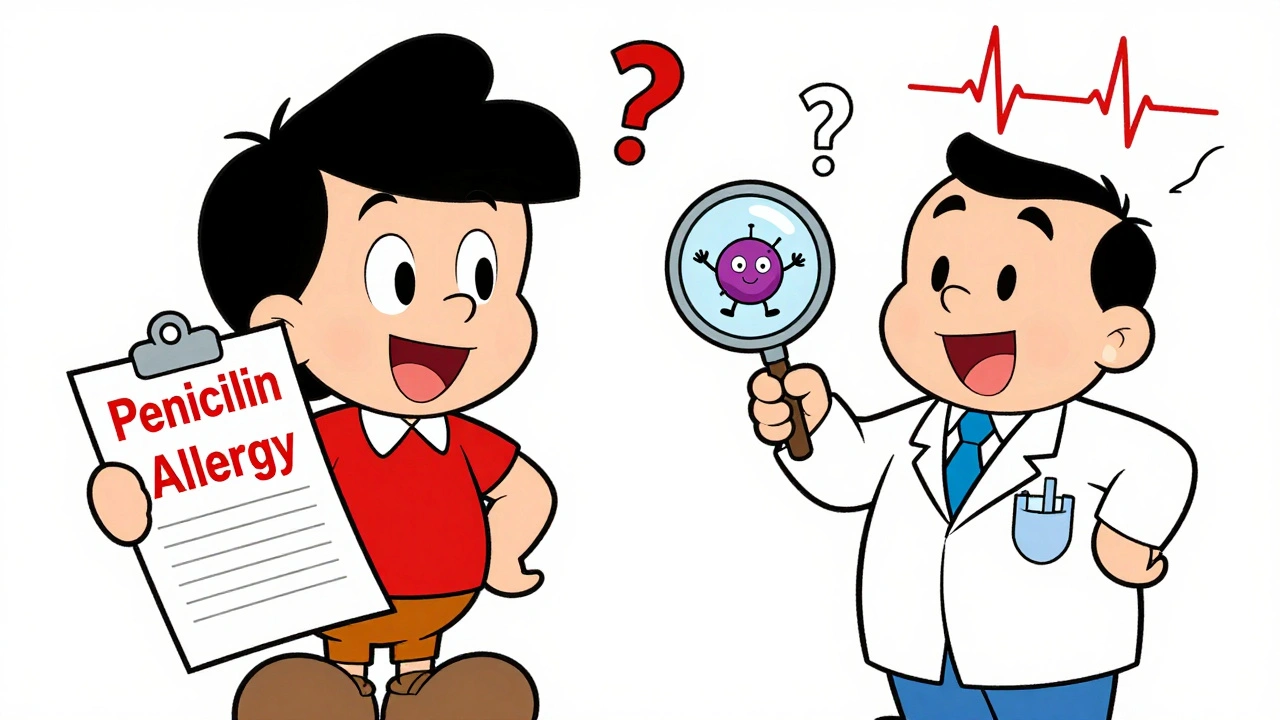
More than 1 in 10 people say they’re allergic to penicillin. But here’s the surprising truth: 90% of them aren’t. That’s not a typo. Most people who think they have a penicillin allergy either never had one to begin with, or outgrew it years ago. And yet, that label sticks - in medical records, in pharmacy systems, in emergency rooms. It changes what drugs doctors can prescribe, how long you stay in the hospital, and even how much your treatment costs.
What Really Counts as a Drug Allergy?
A true drug allergy isn’t just a stomach ache or a rash after taking medicine. It’s your immune system overreacting, treating a harmless drug like a dangerous invader. That means your body releases chemicals like histamine, which can cause hives, swelling, trouble breathing, or even a life-threatening drop in blood pressure called anaphylaxis. Most reactions people call "allergies" aren’t allergies at all. Nausea from antibiotics? That’s a side effect. A mild rash after taking penicillin as a kid? That’s often just a viral rash that happened to appear around the same time. True IgE-mediated penicillin allergies - the kind that cause anaphylaxis - make up only about 10% of all reported cases. Yet, because of how medical records work, even a vague childhood rash gets labeled as "penicillin allergy," and it stays there forever.Why Mislabeling Matters More Than You Think
When you’re labeled allergic to penicillin, doctors avoid it. They reach for alternatives like vancomycin, clindamycin, or fluoroquinolones. These drugs aren’t just more expensive - they’re broader-spectrum. That means they kill more types of bacteria, good and bad. And that’s where the real danger lies. Studies show patients with a mislabeled penicillin allergy are 69% more likely to get a broad-spectrum antibiotic. That increases their risk of getting a Clostridium difficile infection - a severe, sometimes deadly gut infection - by 26%. They also stay in the hospital 30% longer. In the U.S. alone, this mislabeling adds $1.2 billion in extra healthcare costs every year. And it’s not just about cost or infection risk. Sometimes, those alternatives don’t work as well. For example, if you have syphilis and you’re pregnant, penicillin is the only treatment that works. If you’re labeled allergic, you might be denied the safest, most effective option - unless you go through a specialized desensitization process.How to Know If You’re Really Allergic
If you think you’re allergic to penicillin or another drug, don’t assume. Get tested. The gold standard is skin testing, done by an allergist. It involves tiny pricks or injections of the drug’s components to see if your skin reacts. If the test is negative, you’re usually given a small oral dose under supervision to confirm safety. The CDC and NICE guidelines agree: anyone with a history of penicillin allergy should be evaluated. Especially if the reaction happened more than 10 years ago, or was just a rash without swelling, breathing trouble, or low blood pressure. Skin testing is safe, quick, and accurate - with a 95% success rate in identifying who can safely take penicillin again. Even if you’ve had a serious reaction in the past, desensitization might still be an option. This is a controlled process where you’re given tiny, increasing doses of the drug over several hours under close medical watch. Success rates exceed 80% for penicillin. It’s not for everyone - but for people who need penicillin to treat life-threatening infections, it’s life-saving.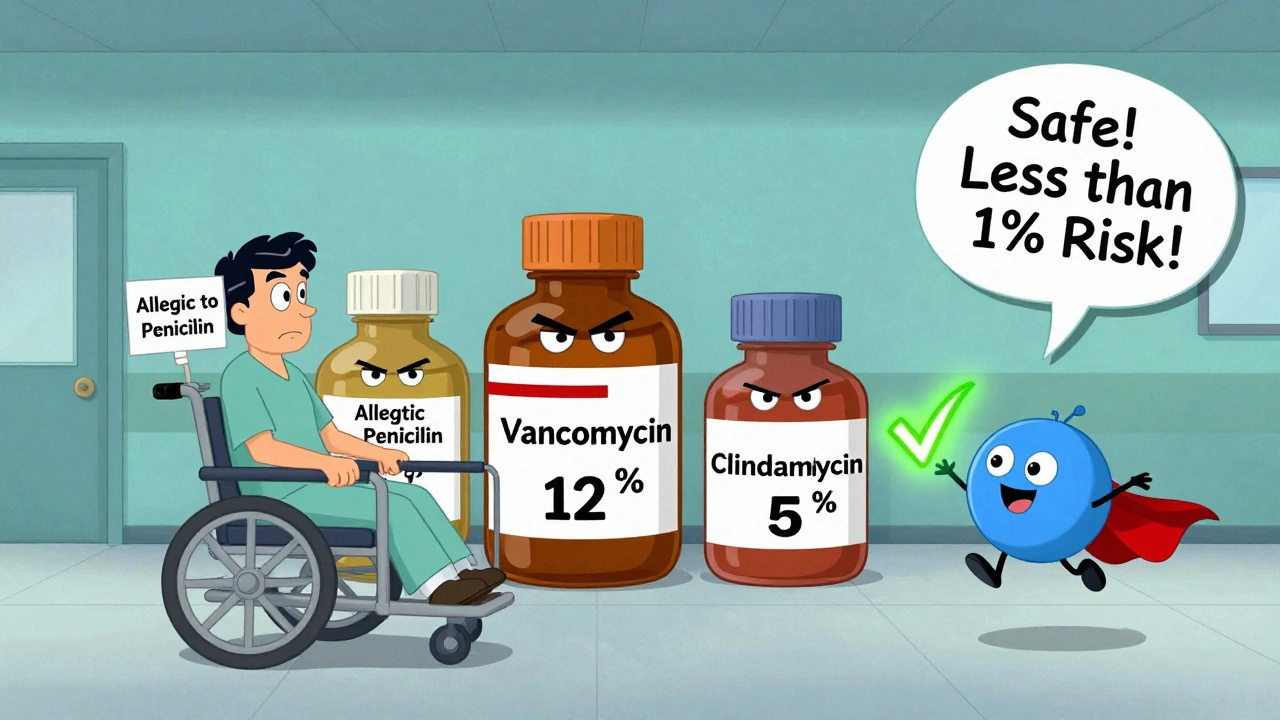
Safe Alternatives When You’re Truly Allergic
If testing confirms a real allergy, you need alternatives. But not all alternatives are equal. Here’s what works when penicillin is off the table:- Macrolides: Azithromycin and clarithromycin are common for respiratory and skin infections. They’re effective, but more expensive - a 5-day course of azithromycin costs about $26, while penicillin is under $4.
- Tetracyclines: Doxycycline is great for acne, Lyme disease, and some pneumonia. It’s cheap and widely available, but not for kids under 8 or pregnant women.
- Fluoroquinolones: Levofloxacin and moxifloxacin cover a wide range of infections. But they carry risks like tendon damage and nerve issues, so they’re not first-line anymore.
- Cephalosporins: Many people assume these are unsafe if you’re allergic to penicillin. But modern third-generation ones like ceftriaxone have less than 1% cross-reactivity. For most patients, they’re safe to use.
What to Do Right Now
You don’t have to wait for a crisis to fix this. Here’s what to do today:- Check your records. Look at your medical chart. Does it just say "penicillin allergy"? Or does it say what happened - rash, swelling, trouble breathing - and when?
- Ask for a review. Talk to your GP or pharmacist. Say: "I think I might have been mislabeled. Can you refer me to an allergist for testing?"
- Carry proof. If you’ve been tested and cleared, keep a wallet card or digital note with your allergist’s letter. Many hospitals still don’t update records across systems.
- Teach your family. If you’ve had a severe reaction, make sure your partner or kids know the signs of anaphylaxis and where your epinephrine auto-injector is.
What’s Changing in 2025
The tide is turning. In 2023, the American Academy of Allergy, Asthma & Immunology launched the "Choose Penicillin" campaign. Twelve pilot hospitals cut unnecessary antibiotic use by 65% just by offering free allergy testing to patients with old labels. More hospitals are hiring dedicated drug allergy specialists. Primary care clinics are starting to offer skin testing - not just in big cities, but in regional centers too. By 2027, half of all penicillin allergy evaluations are expected to happen in your local doctor’s office, not a specialist clinic. Electronic health records are also improving. New federal guidelines are pushing for standardized allergy documentation - not just "allergic to penicillin," but exactly what happened, when, and how severe. That’s a big deal. It means fewer mistakes when you move between clinics or end up in the ER.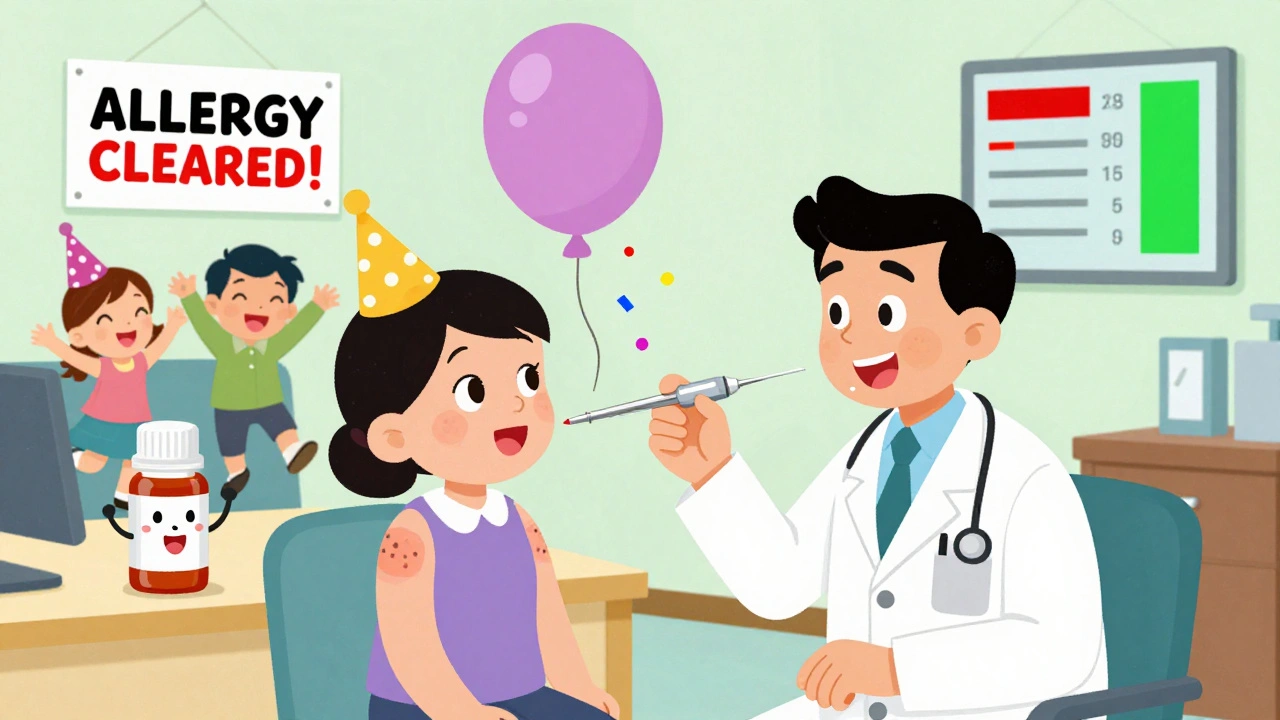
Don’t Let a Label Control Your Health
A medication allergy label isn’t just a note in a file. It shapes your treatment, your recovery, your cost, even your survival. Too many people live with unnecessary restrictions because no one ever checked. You don’t need to wait until you’re sick again. If you’ve been told you’re allergic to a drug - especially penicillin - ask for a proper evaluation. It’s safe, it’s simple, and it could change everything. You might find out you can take the best, cheapest, most effective drug for your condition. And that’s not just better medicine. It’s better health.What to Do If You Have a Reaction
If you think you’re having an allergic reaction:- Stop taking the drug immediately.
- For mild symptoms - hives, itching, mild swelling - take an antihistamine like diphenhydramine (Benadryl).
- For serious symptoms - trouble breathing, swelling of the throat, dizziness, rapid pulse - use your epinephrine auto-injector if you have one, and call emergency services right away.
- Even if symptoms go away after epinephrine, you still need to go to the hospital. A second wave of reaction can happen hours later.
Where to Get Help
If you’re unsure where to start:- Ask your doctor for a referral to an allergist.
- Use the American Academy of Allergy, Asthma & Immunology’s "Find an Allergist" tool - it lists over 6,500 certified specialists across the country.
- Look for hospitals with dedicated drug allergy clinics. Many academic centers offer free or low-cost testing.
Don’t assume your allergy is permanent. Don’t let outdated records dictate your care. With the right testing, you might be able to take back control - and the most effective treatment you’ve been missing.
Can you outgrow a penicillin allergy?
Yes, many people outgrow penicillin allergies over time. Studies show that 80% of people who had a true penicillin allergy as children lose their sensitivity after 10 years. Even if you were allergic decades ago, it doesn’t mean you still are. Skin testing can confirm whether you’ve outgrown it.
Is a rash always a sign of a drug allergy?
No. Many rashes that appear after taking antibiotics are not allergic reactions. Viral infections, especially in kids, often cause rashes around the same time as antibiotic use. True allergic rashes usually come with itching, swelling, or other symptoms like wheezing or hives. A simple flat or bumpy rash without other signs is rarely a true allergy.
Can I take cephalosporins if I’m allergic to penicillin?
For most people, yes. The risk of cross-reactivity between penicillin and modern third-generation cephalosporins like ceftriaxone is less than 1%. Older studies suggested higher risk, but newer data shows it’s safe for the vast majority. Your doctor can check your specific reaction history to determine if it’s safe for you.
What’s the difference between an allergy and a side effect?
An allergy involves your immune system and can cause symptoms like hives, swelling, or trouble breathing. Side effects are predictable, non-immune reactions - like nausea, dizziness, or diarrhea. Side effects are common and don’t mean you’re allergic. For example, stomach upset from antibiotics is a side effect, not an allergy.
How long does drug allergy testing take?
Skin testing usually takes about 30-60 minutes. If the skin test is negative, you’ll be given a small oral dose of the drug and monitored for another 1-2 hours. The whole process typically takes 2-3 hours. It’s done in an allergist’s office or hospital setting where they can treat a reaction if one occurs.
Is drug desensitization safe?
Yes, when done by trained allergists in a controlled setting. Desensitization involves gradually increasing doses of the drug over several hours under close monitoring. Success rates are over 80% for penicillin. It’s used when the drug is essential - like for syphilis in pregnancy - and no safe alternative exists.
Can I get tested for allergies to other drugs besides penicillin?
Yes. While penicillin is the most common, testing is available for other drugs like sulfa antibiotics, NSAIDs (like ibuprofen), and some chemotherapy agents. However, skin tests aren’t available for all drugs. For some, doctors use oral challenges under supervision instead. Talk to an allergist about your specific situation.
What should I do if my allergy is still listed after I’ve been cleared?
Carry a copy of your test results and allergy clearance letter from your allergist. Show it to every doctor, pharmacist, and hospital you visit. Ask your primary care provider to update your electronic health record. If they refuse, request a formal amendment to your medical record under patient rights laws. Don’t let outdated records put you at risk.
ian septian
December 8, 2025 AT 20:32Just got tested last year - turns out I never had a penicillin allergy. My mom said I broke out in a rash as a kid, so they just labeled it. Turned out it was roseola. Now I take amoxicillin like it's candy. Saved me $800 on a sinus infection.
Tejas Bubane
December 8, 2025 AT 21:19Of course 90% of people are mislabeled. Medicine is a guessing game with a spreadsheet. You get a rash, they throw a label on you like it's a barcode. No one cares enough to verify. It's not ignorance - it's institutional laziness.
Ajit Kumar Singh
December 10, 2025 AT 14:00Listen here in India we dont even have access to skin testing most of the time and still we know penicillin is safe for most people because our grandmas used to give it to kids with fever and nobody died and now we pay 10x for vancomycin because some doctor wrote allergy on a form 20 years ago
Angela R. Cartes
December 12, 2025 AT 11:40Ugh. Another ‘you’re not really allergic’ post. 🙄 I had anaphylaxis. Twice. Don’t reduce my trauma to a statistic. Not everyone’s ‘rash’ is a viral coincidence.
Andrea Beilstein
December 13, 2025 AT 19:56What does it mean to be allergic if not to have your body respond in a way that signals danger? The label may be outdated but the fear is real. We’re not just data points. We’re people who’ve been told to stop breathing and lived through it.
Courtney Black
December 14, 2025 AT 14:14So let me get this straight. You’re telling me I can just walk into a clinic, get pricked with some penicillin, and suddenly I’m ‘cured’? Like a software update? What if I’m allergic to the test? What if the allergist is tired? What if the vial expired? It’s not magic. It’s a gamble with your life. And now they want us to trust it because it’s ‘95% accurate’? That’s not science. That’s a casino.
Lauren Dare
December 15, 2025 AT 09:39Oh wow. A 69% increased risk? That’s statistically significant. Let me grab my p-value calculator. Also, the CDC says this. So I guess we’re all just supposed to trust the algorithm now? No wonder people are dying - because we’ve outsourced medical judgment to bullet points and compliance forms.
Taya Rtichsheva
December 16, 2025 AT 07:57so i got mislabeled too… like 15 years ago i had a rash after amoxicillin and now every doc i see acts like i’m gonna keel over if they so much as whisper penicillin. i just say ‘yeah i think i outgrew it’ and they nod like i said the weather. no one ever follows up. lazy.
Mona Schmidt
December 17, 2025 AT 04:14If you’ve been told you have a penicillin allergy, you have a right to know whether that label is accurate. This isn’t about convenience - it’s about autonomy. Your body, your history, your future treatments. Don’t let a chart note from 1998 decide your healthcare. Advocate for testing. It’s not just smart - it’s your right.
Sarah Gray
December 18, 2025 AT 18:25Of course you’re not allergic. Everyone’s allergic to penicillin these days. It’s the new ‘gluten-free’ trend. People want to feel special about their medical labels. You didn’t have an allergy - you had bad timing and a doctor who didn’t know the difference between a rash and a reaction.
Michael Robinson
December 20, 2025 AT 14:35People think allergies are permanent. But bodies change. Skin heals. Immune systems forget. If you were scared of penicillin as a kid, you might not be now. Just ask a doctor. It’s not that hard.
Kathy Haverly
December 22, 2025 AT 10:11And what about the 10% who actually are allergic? Are they just supposed to be quiet? You act like mislabeling is the only problem - but what if I’m one of the ones who *actually* died because someone ignored my real allergy? You don’t get to erase my trauma with a statistic and a skin test.
Brianna Black
December 23, 2025 AT 05:39This is the most important public health message I’ve read in years. I work in a hospital. I’ve seen patients suffer because of outdated allergy tags. I’ve watched nurses scramble for expensive, less effective drugs because a 12-year-old rash was never updated. This isn’t theoretical - it’s life and death. Thank you for writing this.
Iris Carmen
December 23, 2025 AT 20:59i had a rash after penicillin when i was 7 and now im 34 and every time i go to the er they act like im gonna explode. i just want a simple antibiotic for my UTI not a 3 hour consult. pls make this easier.