
Immunosuppressant Risk Calculator
Your Treatment Risk Assessment
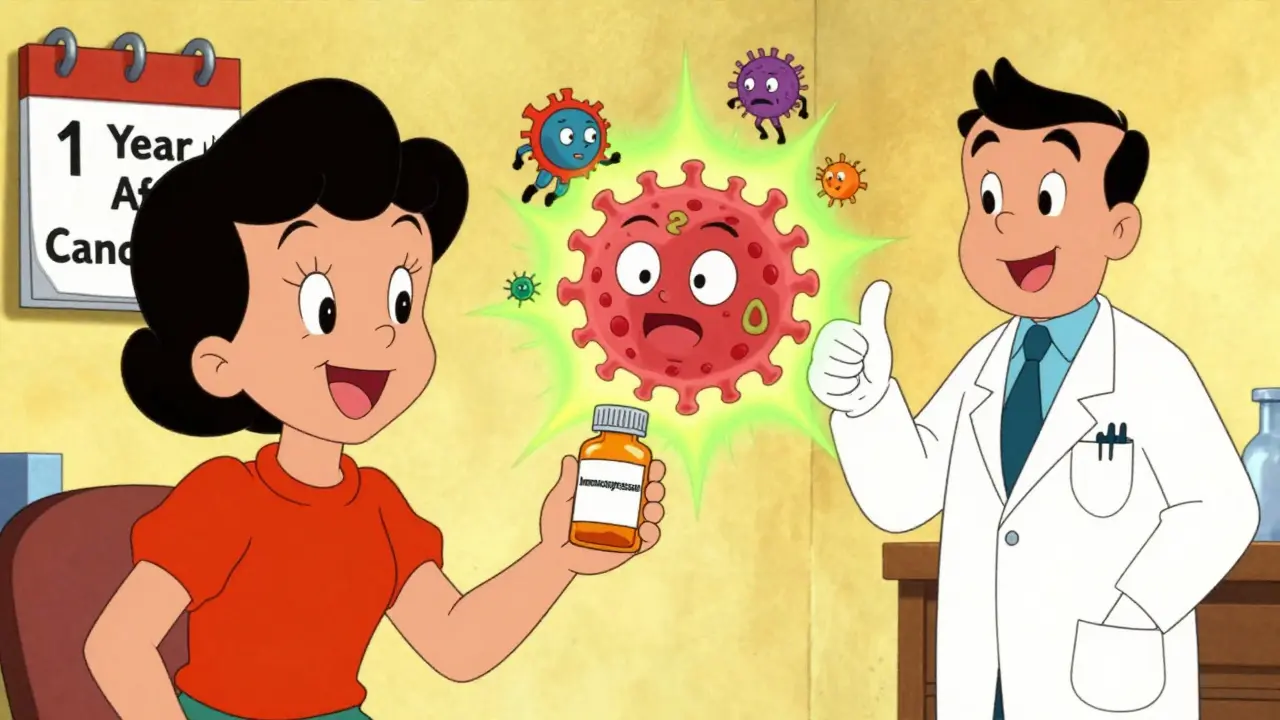
Based on the latest medical evidence, most patients with cancer history can safely restart immunosuppressants without increased recurrence risk.
Your Risk Assessment
For years, doctors told patients with a history of cancer who also had autoimmune diseases like rheumatoid arthritis, Crohn’s disease, or psoriasis: wait five years before restarting immunosuppressants. The fear was simple - if your immune system is turned down, it might not catch cancer coming back. But that advice was never backed by solid data. Now, after reviewing tens of thousands of patients over decades, the science has flipped. You don’t need to wait. Not necessarily. And holding off on treatment might be doing more harm than good.
Why the Fear Existed
The immune system doesn’t just fight colds and flu. It’s also your body’s built-in cancer patrol. T-cells scan for abnormal cells and destroy them before they grow into tumors. When you take drugs like methotrexate, azathioprine, or infliximab, you’re deliberately lowering that patrol’s strength. That’s why, in the early 2000s, oncologists and rheumatologists assumed: less immune surveillance = more cancer coming back. That logic made sense on paper. But real-world data didn’t match the theory. Many patients with autoimmune diseases were stuck in a terrible spot - their joints or guts were screaming for treatment, but they were terrified to start it because of their cancer history. Some stayed in pain. Others had flare-ups that led to hospitalizations. And all the while, they were told to wait, even if their disease was getting worse.The Big Study That Changed Everything
In 2016, a massive review published in Gastroenterology looked at 11,702 patients with autoimmune diseases who had survived cancer. They compared those who took no immunosuppressants, those on anti-TNF drugs like adalimumab or etanercept, those on older drugs like methotrexate, and those on combinations of all of them. The results? No difference in cancer recurrence rates. - No treatment: 37.5 cases per 1,000 person-years - Anti-TNF therapy: 33.8 cases per 1,000 person-years - Traditional immunomodulators: 36.2 cases per 1,000 person-years - Combination therapy: 54.5 cases per 1,000 person-years Even the highest number - combination therapy - wasn’t statistically different from the others. The P-values? All above 0.1. That means the differences were likely random, not real. And here’s the kicker: timing didn’t matter. Whether patients restarted treatment six months after cancer treatment or six years later, the recurrence risk stayed the same. The old rule - wait five years - had no scientific basis.What About Newer Drugs?
By 2024, another study doubled the sample size to over 24,000 patients and added newer biologics: ustekinumab, vedolizumab, and JAK inhibitors like tofacitinib. These drugs target different parts of the immune system than anti-TNF agents. Some doctors thought they might be safer. Others worried they could be riskier. The answer? Again, no increased risk. In fact, some newer biologics showed slightly lower recurrence numbers - not enough to be called statistically better, but certainly not worse. This means if you’ve had cancer and your doctor suggests a newer drug, you’re not trading safety for innovation. You’re just getting a different tool.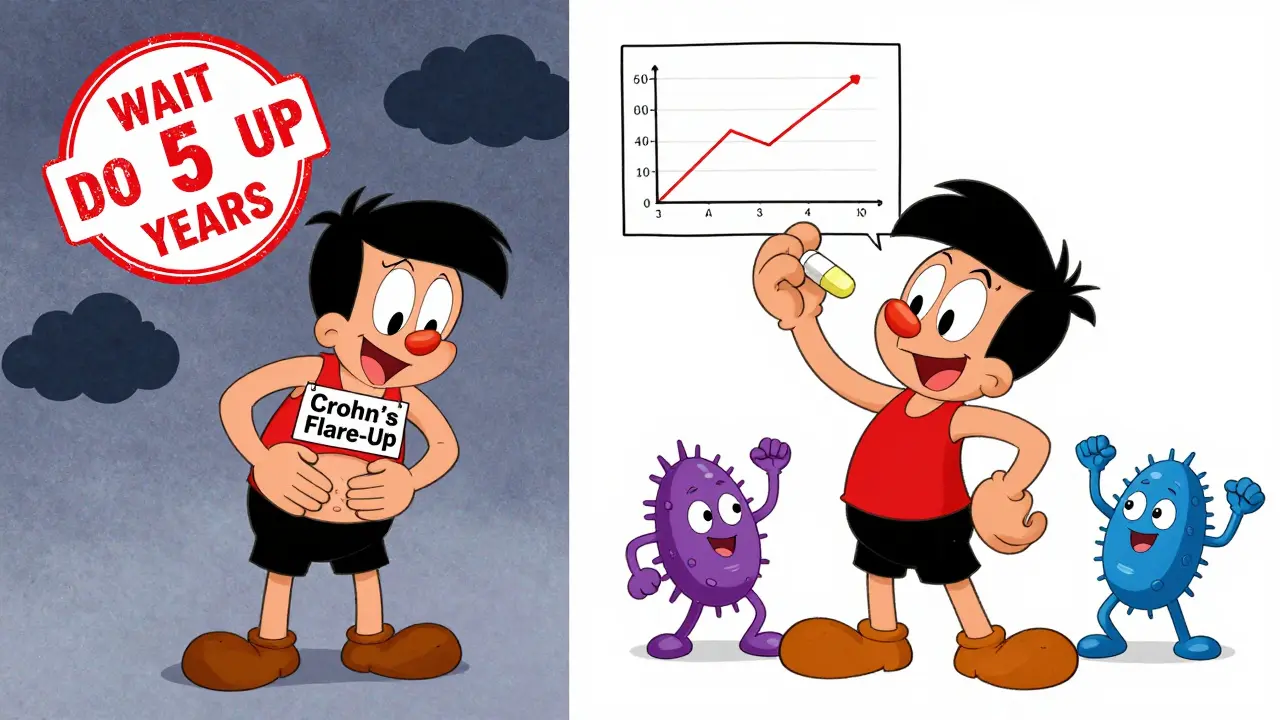
What About Specific Cancers?
Not all cancers are the same. Melanoma, for example, is highly visible to the immune system. Blood cancers like lymphoma rely on immune control too. So, do these cancers behave differently? The data says: mostly no. The studies looked at breast cancer, lung cancer, colon cancer, melanoma, and more. For most, recurrence rates stayed flat regardless of treatment. But experts still advise caution with two situations:- Active hematologic cancers - like leukemia or lymphoma still being treated - where immune surveillance is critical.
- Recent melanoma - especially if it was stage II or higher and diagnosed within the last year. Here, some doctors still prefer to delay immunosuppressants until the cancer is clearly stable for at least 12 months.
What Does This Mean for Your Treatment Plan?
If you’ve had cancer and now need immunosuppressants, your doctor shouldn’t say: “Wait five years.” They should say: “Let’s talk about your specific cancer, how long ago you were treated, and how badly your autoimmune disease is affecting your life.” Here’s what a smart treatment plan looks like:- Know your cancer type and stage. Early-stage, low-risk cancers (like stage I melanoma or localized breast cancer) are less likely to come back. You’re probably safe to start treatment sooner.
- Check how long since treatment ended. If it’s been over a year and you’re in remission, the risk of recurrence is already falling fast.
- Assess your autoimmune disease. If you’re in constant pain, on steroids, or missing work because of flare-ups, the harm of untreated disease may outweigh the tiny, unproven risk of cancer returning.
- Choose the right drug. Anti-TNF agents, JAK inhibitors, and newer biologics all appear safe. Your doctor can pick based on your condition, not fear.
What About Monitoring?
Just because immunosuppressants don’t raise recurrence risk doesn’t mean you stop watching for cancer. You still need regular screenings.- Continue mammograms, colonoscopies, skin checks - exactly as your oncologist recommended before you started immunosuppressants.
- Don’t skip follow-ups. Your cancer doctor should still see you annually, even if you’re now seeing a rheumatologist or gastroenterologist.
- Report new symptoms fast - unexplained weight loss, new lumps, persistent fatigue, or unusual bleeding. These aren’t side effects of the drugs. They’re red flags.
Why This Matters Beyond the Numbers
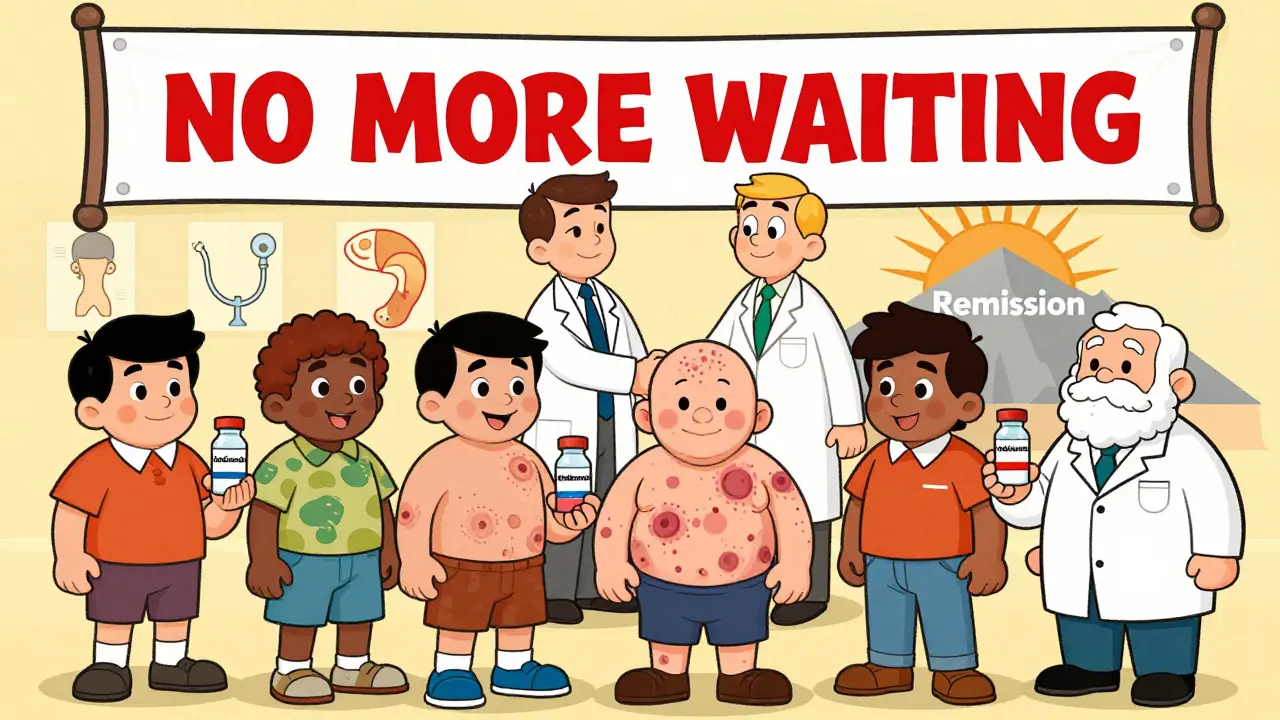
This isn’t just about statistics. It’s about quality of life. About not living in pain. About not being told you have to choose between feeling well today and risking cancer tomorrow. Before these studies, many patients were forced into a false choice. Now, we know: you can treat your arthritis, your Crohn’s, your psoriasis - and still live a long, cancer-free life. The market has responded. Since 2017, prescriptions for biologics in cancer survivors have jumped 18.7%. The FDA and EMA updated drug labels in 2022 to reflect this. Insurance companies now approve these drugs for patients with prior cancer - because the evidence says they can.What’s Next?
Research is still ongoing. The RECOVER study (NCT04567821) and RHEUM-CARE (NCT04321987) are tracking thousands more patients. They’ll give us even clearer answers - especially for rare cancers and specific drug combinations. But right now? The message is clear. You don’t need to wait. You don’t need to suffer. You just need a thoughtful, individualized plan.Frequently Asked Questions
Can I start immunosuppressants after cancer if I’ve only been in remission for six months?
Yes, in most cases. The data shows no increased cancer recurrence risk based on how soon you restart treatment. However, for high-risk cancers like melanoma or blood cancers, many doctors prefer to wait at least one year after treatment ends to ensure the cancer is truly stable. Your oncologist and specialist should work together to decide what’s right for you.
Do anti-TNF drugs cause cancer to come back?
No. Large studies involving over 24,000 patients found no link between anti-TNF drugs like adalimumab or infliximab and increased cancer recurrence. In fact, recurrence rates were slightly lower in patients taking these drugs compared to those on no treatment - but the difference wasn’t statistically significant. The bottom line: these drugs are safe to use after cancer.
Is it safer to use methotrexate instead of biologics after cancer?
No. Methotrexate and other traditional immunomodulators carry the same risk - which is essentially no increased risk - as newer biologics. Some studies even suggest newer drugs like ustekinumab or vedolizumab may have slightly lower recurrence rates, but the difference is too small to be meaningful. Choose based on your condition, not fear of older drugs.
Should I avoid combination therapy if I’ve had cancer?
Combination therapy (like adalimumab + methotrexate) had the highest numerical recurrence rate in studies - 54.5 per 1,000 person-years - but it wasn’t statistically higher than other treatments. That means the difference could be due to chance or other factors, like patients on combo therapy having more severe disease. If your doctor recommends it for better disease control, it’s still considered safe.
What if I develop a new cancer while on immunosuppressants?
If you develop a new cancer while on immunosuppressants, your treatment team will pause the drugs while you undergo cancer therapy. This isn’t because the drugs caused it - it’s because your body needs its full immune strength to fight the new cancer. Once treatment ends and you’re in remission, you can often restart your autoimmune medication, depending on the cancer type and timing.
Malik Ronquillo
January 21, 2026 AT 16:08Finally someone says it loud enough. I was told to wait 5 years after my skin cancer. My joints were screaming. I started methotrexate at 8 months. Still here. No cancer. No regrets. Stop scaring people with ghost stories.
They didn’t even have the guts to tell me the truth until I googled it myself.
Brenda King
January 22, 2026 AT 11:03This is such an important update in clinical practice. For years, patients with autoimmune conditions were left in limbo because of outdated guidelines. The data is clear: recurrence risk isn't increased by immunosuppressants in most cases. What matters is individualized care and ongoing surveillance. Thank you for sharing this.
Let’s hope more providers catch up.
Daphne Mallari - Tolentino
January 23, 2026 AT 08:42While the statistical findings are indeed compelling, one must remain cognizant of the methodological limitations inherent in retrospective cohort analyses. Selection bias, confounding variables related to disease severity, and differential surveillance intensity among cohorts may subtly skew outcomes. The absence of statistical significance does not equate to clinical equivalence. Caution, albeit nuanced, remains warranted.
Neil Ellis
January 25, 2026 AT 05:25Imagine living in a world where you’re told you can’t feel better because of a fear that doesn’t hold up under scrutiny. This isn’t just science - it’s liberation. People with Crohn’s, RA, psoriasis - they’ve been held hostage by outdated dogma. Now, they can breathe again. They can live again.
These drugs aren’t the enemy. Fear was the enemy. And now? Fear’s losing.
Rob Sims
January 25, 2026 AT 19:27Oh wow, another study that says ‘don’t worry, it’s fine.’ Meanwhile, the FDA is still putting black box warnings on JAK inhibitors for blood clots and heart attacks. You really think they’re gonna ignore cancer risk? Come on. This is just pharma’s PR team in lab coats.
Wait till someone dies and then we’ll see who’s laughing.
Patrick Roth
January 26, 2026 AT 01:59Wait - you’re telling me the 2016 study didn’t adjust for smoking status or BMI? And the 2024 one didn’t stratify by chemotherapy exposure? You’re basing medical guidelines on a bunch of observational data with zero RCTs? That’s not science, that’s a meme.
Also, Ireland’s been doing this since 2015 and no one died. So maybe your ‘data’ is just American overreaction.
Kenji Gaerlan
January 26, 2026 AT 03:21so wait u mean i dont have to wait 5 years? like at all? wow. my doc kept telling me to wait till 2028. i started humira last year. still alive. no new tumors. maybe he was just scared? or just lazy? idk. but i feel way better now. also my cat is happy.
Tatiana Bandurina
January 27, 2026 AT 23:33Let’s not forget that combination therapy had the highest recurrence rate - 54.5 per 1,000. That’s not noise. That’s a signal. And if you’re on two immunosuppressants, you’re probably sicker. That’s confounding, not safety data.
Also, who funded these studies? Same companies that make the drugs. Coincidence? I think not.
Ryan Riesterer
January 29, 2026 AT 05:04Population-level hazard ratios for cancer recurrence across biologic classes show HRs clustered near 1.0 (95% CI: 0.8–1.2), with no significant trend across drug classes or timing of initiation. The lack of dose-response relationship further undermines causal inference. Surveillance bias remains a persistent confounder, particularly in cohorts with differential imaging frequency.
Conclusion: clinical decision-making must remain individualized, not protocolized.
Akriti Jain
January 31, 2026 AT 04:48They’re hiding something. The real reason they’re pushing this? The government is running out of money for cancer care. So they’re telling people it’s ‘safe’ so they don’t have to pay for more chemo. You think they care if you get cancer back? Nah. They just want you to stop asking for help.
Also, I saw a TikTok that said the CDC knows the truth. 😳
Mike P
January 31, 2026 AT 17:07Y’all act like this is new news. My uncle had colon cancer in 2010. Started Humira in 2012. Still alive, still working, still hiking. He’s 72 now. The doctors who scared him? They’re all retired. Meanwhile, I’ve got RA and I’m not waiting till I’m 80 to get off prednisone.
USA still thinks ‘wait five years’ is gospel? Bro, we’re in 2024. Time to grow up.
Jasmine Bryant
February 1, 2026 AT 20:36Wait, so if I had breast cancer in 2021 and I’m in remission, I can start a biologic now? I’ve been scared to even ask my rheum doc. I’m in so much pain I can’t hold my kid. I just need to know if it’s safe…
Also, is there a checklist I can print to bring to my appointment?
Margaret Khaemba
February 2, 2026 AT 02:53Thank you for writing this. I’m a nurse and I’ve seen so many patients suffer needlessly because their doctors were too scared to update their knowledge. I had a patient with lupus and lymphoma in remission - she cried when I told her she could start hydroxychloroquine again. We need more of this kind of info out there.
Let’s keep spreading the word. No one should choose between pain and fear.
Keith Helm
February 3, 2026 AT 11:54It is imperative that clinical decision-making be predicated upon a comprehensive risk-benefit analysis, inclusive of patient-specific variables, oncologic history, and pharmacodynamic profiles. The cessation of arbitrary temporal mandates is both scientifically and ethically justified. However, vigilant longitudinal surveillance remains non-negotiable.