
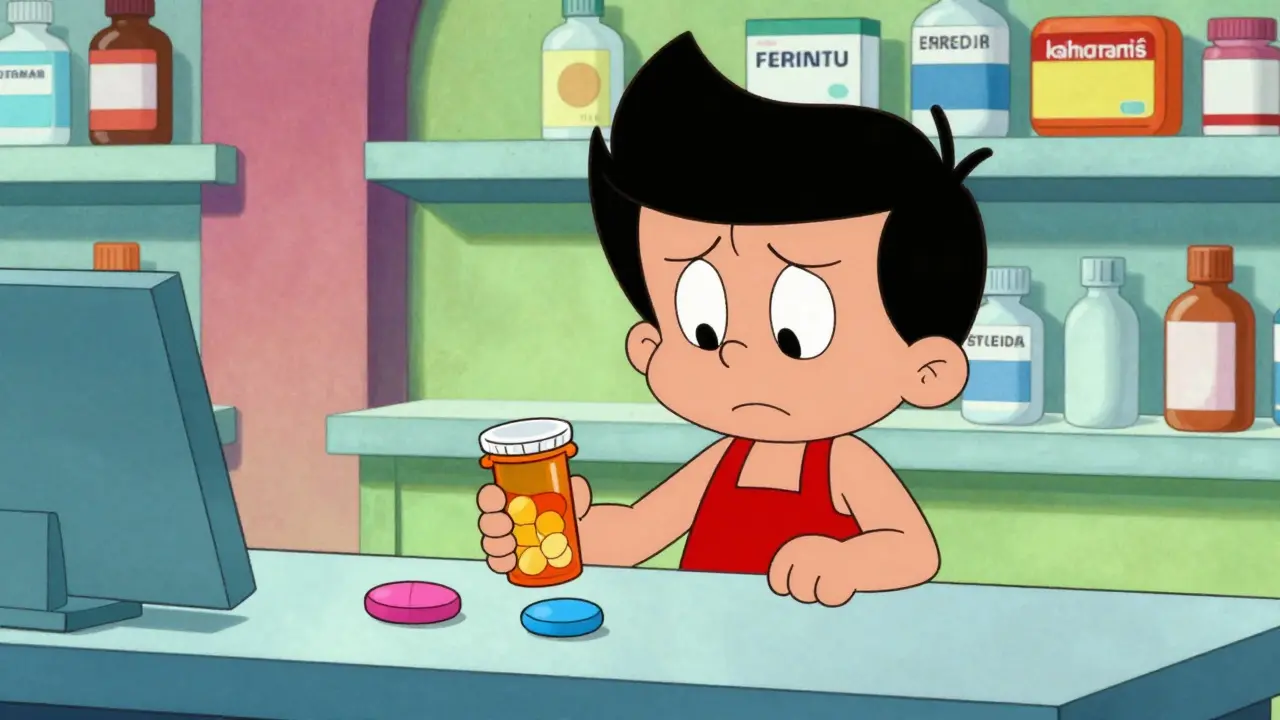
When you switch to a generic, you aren't just saving money-though the savings are huge. According to FDA data, generics make up about 90% of all prescriptions filled in the U.S. but only account for 23% of the cost. To make sure you're getting a real medication and not a dangerous counterfeit, you need to know what to look for and, more importantly, what to avoid.
The Gold Standard: What Makes a Generic "Legitimate"?
Before we talk about the physical pills, we need to understand what's happening behind the scenes. A legitimate generic isn't just a "cheap copy." It is a pharmaceutical product that must prove it is bioequivalent to the brand-name drug. Bioequivalence is a regulatory requirement ensuring that a generic drug delivers the same amount of active ingredient to the bloodstream at the same rate as the brand-name version.
The FDA (Food and Drug Administration) requires that the generic's pharmacokinetic profile falls within a tight 80-125% confidence interval. In plain English: the drug has to work almost exactly the same way. A 2021 study in JAMA Internal Medicine found that 98.7% of approved generics hit these strict standards, with a median concentration ratio of 99.7% compared to the brand.
Spotting the Difference: Generics vs. Brand Names vs. Counterfeits
Here is the part that confuses most people: legitimate generics often look different from the brand-name version. This isn't because they are lower quality; it's usually because of patent laws. Brand-name companies often own the patent on the specific color or shape of their pill, so generic makers have to change it.
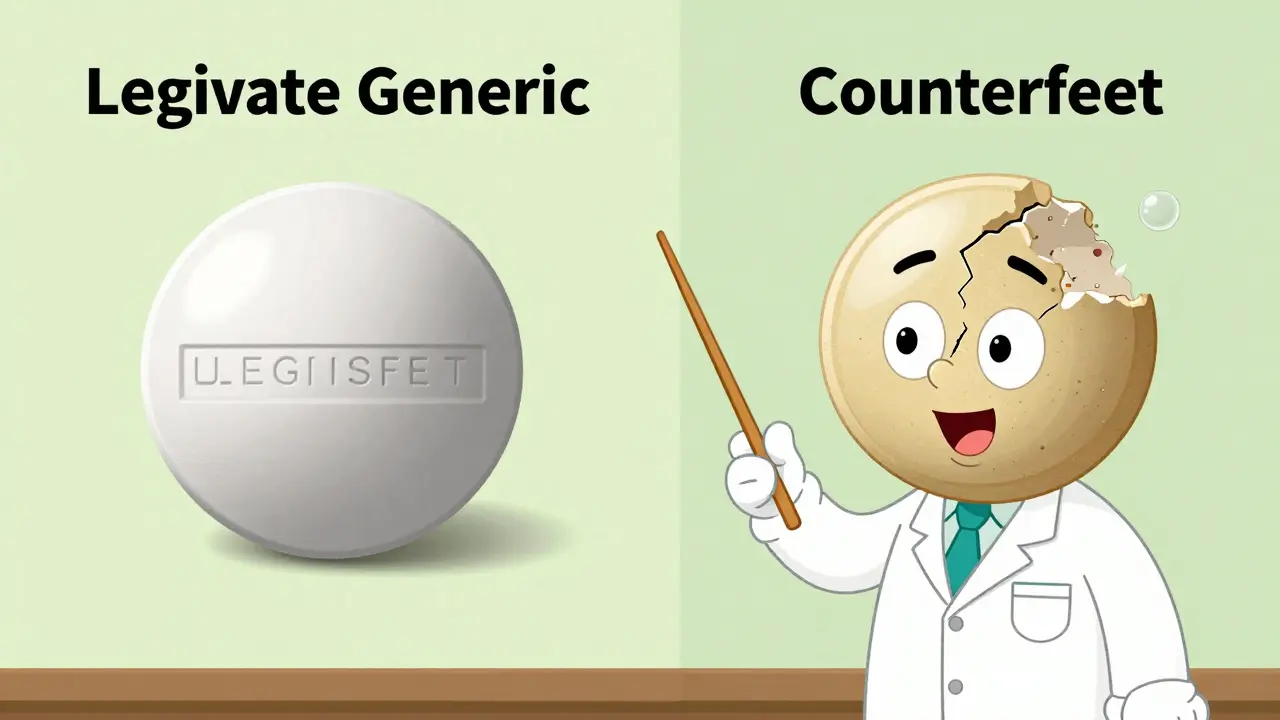
While a legitimate generic might be blue instead of pink, it will still have a professional, factory-made appearance. You should look for consistent coloring and sharp, clear imprinting. On the other hand, counterfeits are often amateurish. Watch out for these red flags:
- Texture issues: Tablets that feel crumbly or have a chalky residue.
- Coating flaws: Bubbled-up coatings or cracked tablet surfaces.
- Visual glitches: Inconsistent scoring (the little line used for splitting pills) or uneven colors.
- Strange smells: Any unusual odor that wasn't there in your previous refills.
| Feature | Legitimate Generic | Counterfeit Drug |
|---|---|---|
| Appearance | Consistent, factory-made | Cracked, bubbled, or crumbly |
| Imprinting | Clear and uniform | Smudged or missing |
| Active Ingredient | Identical to brand (80-125% range) | Often 30-60% deviation from label |
| Packaging | Professional, clear lot/expiry | Crooked labels or generic baggies |
The Pharmacy Checklist: How to Verify Your Medication
The safest way to ensure your medication is legitimate is to control where you buy it. If you are getting your meds from a licensed pharmacy, the risk is incredibly low. However, with the rise of online pharmacies, you need a system to verify what you're receiving.
Start by checking the pharmacy's credentials. The National Association of Boards of Pharmacy (NABP) provides a .pharmacy verification that tells you if a site is legitimate. If you're buying online, look for the VIPPS (Verified Internet Pharmacy Practice Sites) accreditation. If a website offers you prescription drugs without requiring a valid script, walk away immediately. According to an NABP investigation, 97% of such websites operate outside legal supply chains.
Once the medication arrives, perform a quick visual audit:
- Check the Label: Ensure it has the manufacturer's name, the correct drug name, strength, a lot number, and a clear expiration date.
- Inspect the Container: Look for crooked labels or foreign language text on a product intended for your local market.
- Verify the Lot: You can check the lot number against the FDA's Orange Book or recall databases to ensure the batch is safe.
- Confirm the Pharmacy: Did it come in a proper prescription container? Medications delivered in generic plastic baggies are a major red flag, appearing in 63% of counterfeit reports.
Advanced Tech: The Future of Drug Verification
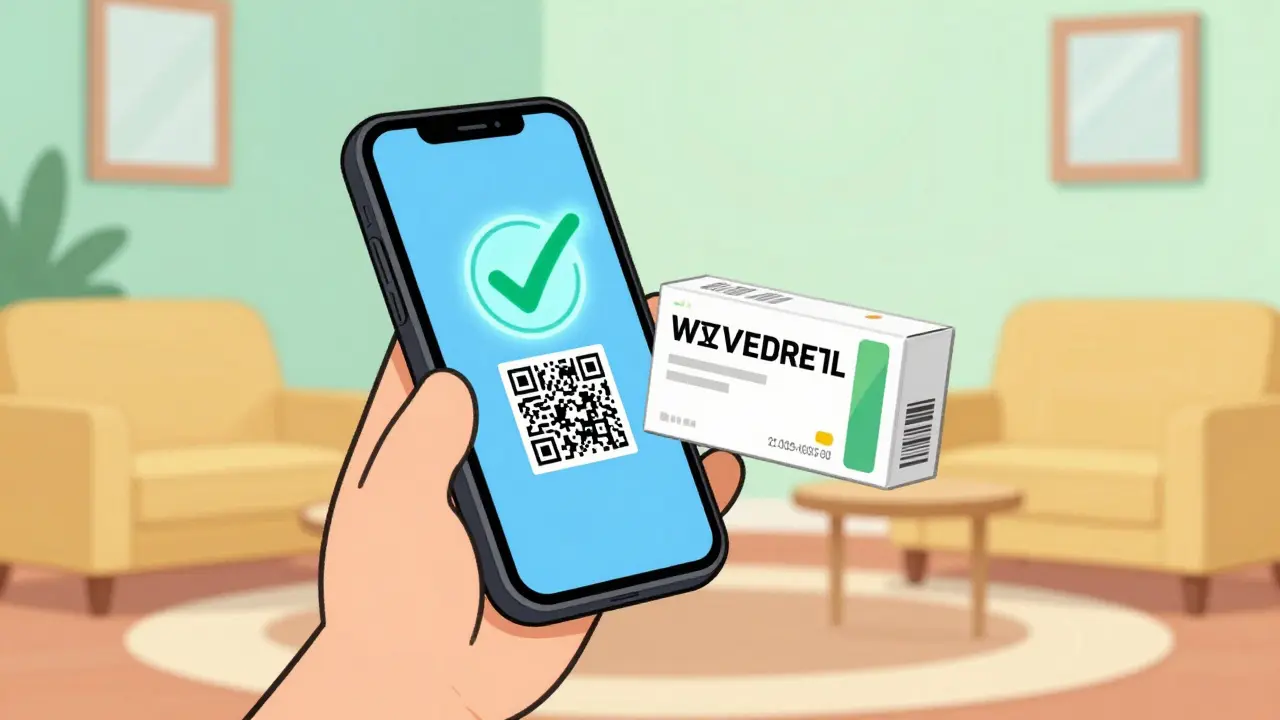
We are moving toward a world where you can verify your meds with a smartphone. The Drug Supply Chain Security Act (DSCSA) has pushed the industry toward serialized tracing. This means almost every prescription drug now carries a unique serial number.
Major manufacturers like Teva and Viatris use 2D data matrix codes. You can use apps like MediSafe to scan these codes and verify the product's journey from the factory to your pharmacy. Some pharmacies are even piloting blockchain technology, which can cut the time it takes to verify a drug's pedigree from days down to under 15 minutes.
What to Do If Something Feels Wrong
If you notice an unusual aftertaste, a sudden loss of effectiveness, or any of the physical red flags mentioned earlier, do not take another dose. Instead, follow these steps:
- Contact your pharmacist: Ask them to verify the lot number and the manufacturer's pedigree.
- Keep the packaging: Do not throw away the bottle or the blister pack, as these contain the critical lot numbers needed for investigation.
- Report it: Use the FDA's MedWatch program. Reporting discrepancies helps the government track counterfeit rings and protect other patients.
Why does my generic pill look different from the brand name?
This is completely normal. Because of patent laws, generic manufacturers cannot make their pill look exactly like the brand-name one. They can use different colors, shapes, and inactive ingredients (fillers), as long as the active pharmaceutical ingredient is identical and the drug is bioequivalent.
Are generic drugs less effective than brand-name drugs?
No. Legitimate generics must prove they are bioequivalent, meaning they work the same way in the body. Studies show that the vast majority of approved generics have a nearly 1:1 match in concentration and absorption rates compared to the brand version.
How can I tell if an online pharmacy is a scam?
The biggest red flag is any pharmacy that sells prescription-only medication without requiring a prescription from a doctor. Also, check for .pharmacy verification or VIPPS accreditation. Avoid sites with poorly designed interfaces, crooked labels in photos, or prices that seem too good to be true.
What is the "Orange Book" and how do I use it?
The Orange Book is an FDA database that lists all approved drug products. You can use it to search for a brand-name drug and see which generic versions have been rated as therapeutically equivalent, giving you peace of mind that the generic you're taking is approved.
What should I do if my generic medication stops working?
If you experience a sudden loss of effect, it could be a sign of a counterfeit drug or a change in the manufacturer's formulation. Immediately stop using the medication and contact your doctor and pharmacist. Report the batch number to FDA MedWatch to help identify potentially dangerous products.
Sam Hayes
April 4, 2026 AT 01:04The Orange Book is a lifesaver for anyone who wants to double check their meds without paying for a brand name version just for peace of mind
Rob Newton
April 5, 2026 AT 20:12FDA standards are just suggestions.
Aysha Hind
April 6, 2026 AT 14:51Oh honey, you really think a "government agency" is just casually letting 98% of these chemical cocktails pass through without a sinister agenda? This whole "bioequivalence" fairy tale is just a glossy curtain to hide the fact that they're swapping out our medicine for cheap sludge from overseas labs that probably don't even have running water. I've seen these pills and the colors are practically neon, absolutely garish, and honestly just reeks of a corporate money-grab to keep us docile. It's an absolute circus of incompetence and greed, and if you trust a .pharmacy link, you're basically handing your health over to a shredder. Wake up and smell the chalky residue, people, because the system is rigged to fail us while they profit off our desperation for a basic cure.
Lawrence Rimmer
April 7, 2026 AT 08:11The duality of a pill is just an extension of the duality of man. We crave the brand name for the illusion of security while accepting the generic for the reality of cost. It's all just a social construct of "quality" anyway.
Mark Zhang
April 7, 2026 AT 16:31I totally get why seeing a different color pill can be scary. It happened to me a few years ago and I actually called my doctor because I was so anxious about it. Once I learned about the patent laws mentioned here, I felt a lot better. Just take it one step at a time and trust your pharmacist!
Joseph Rutakangwa
April 9, 2026 AT 03:11check the lot numbers if you feel off
Will Baker
April 9, 2026 AT 17:03Imagine actually believing that a 2D data matrix code makes a drug safe. That's some top-tier optimism right there. Maybe we can just blockchain our way to immortality while the actual pharmacies go bankrupt lol.
Joey Petelle
April 10, 2026 AT 11:55Only in this glorious country could we turn pharmacy visits into a DIY forensic investigation. "Look for bubbled coatings!" Truly a peak civilization moment when we're basically expected to be chemists just to make sure our blood pressure meds aren't actually powdered sugar from a basement in some third-world slum. It's just so quaint how we pretend the FDA is some omnipotent deity of safety when the reality is just a bureaucratic nightmare of paperwork and lobbying. Absolutely precious.
Dipankar Das
April 11, 2026 AT 21:08It is absolutely imperative that every single citizen utilizes the MedWatch program to report discrepancies without exception! We must maintain the highest standards of pharmacological integrity to ensure the safety of our global community! Do not be complacent in the face of counterfeit operations!
Hope Azzaratta-Rubyhawk
April 12, 2026 AT 02:23I strongly urge everyone to follow the VIPPS accreditation guidelines immediately! There is no room for error when it comes to medical safety! Any site that ignores the requirement for a valid prescription is a criminal enterprise and must be avoided at all costs!
Vicki Marinker
April 12, 2026 AT 21:49The insistence that a "professional appearance" denotes safety is intellectually lazy and frankly quite naive.
Dee McDonald
April 14, 2026 AT 06:18Let's get proactive about this! If you've never used the Orange Book, now is the time to start. It empowers the patient and puts the control back in our hands. We can't just sit back and hope for the best, we have to verify everything ourselves to keep our families safe!