
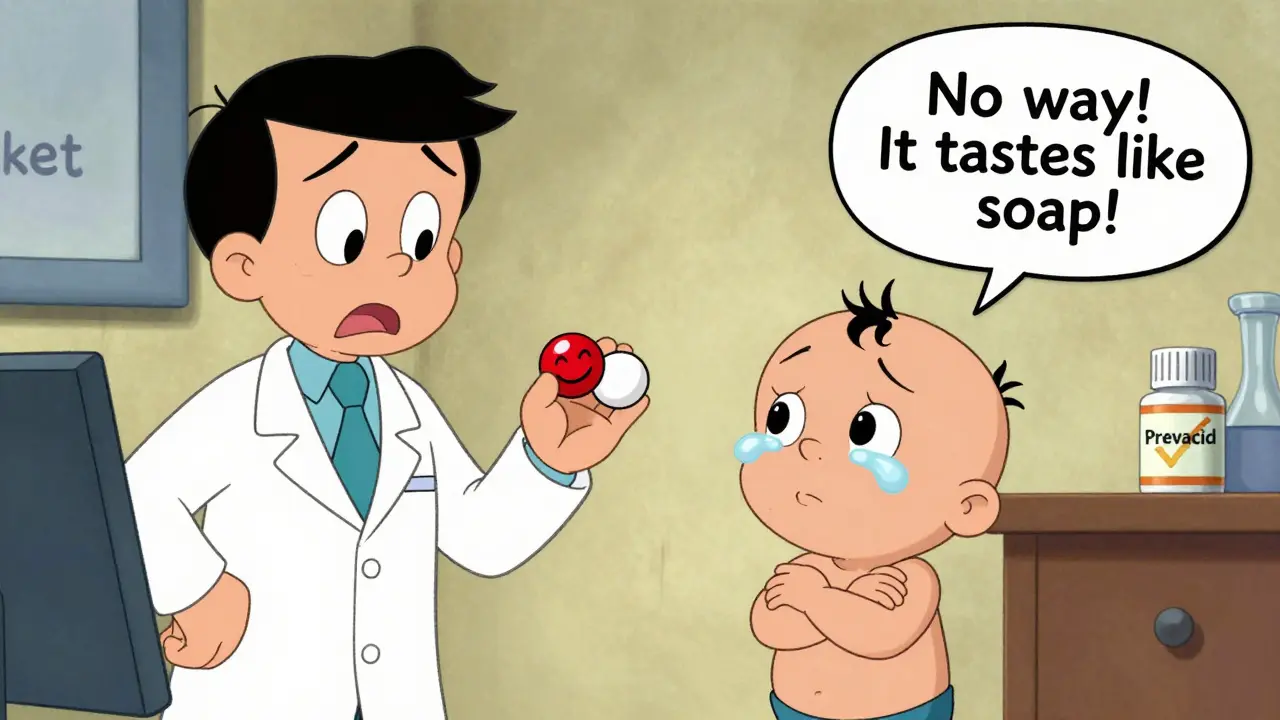
When a pharmacist hands you a pill that looks different from what you’ve been taking for years, it’s natural to wonder: Is this the same thing? For kids and older adults, this question isn’t just about cost-it’s about safety, trust, and whether the medicine will still work. Generic drugs are legally required to be bioequivalent to brand-name versions, meaning they contain the same active ingredient, strength, and dosage form. But in real life, especially for children and seniors, that legal definition doesn’t always match the lived experience.
Why Generic Substitution Feels Different
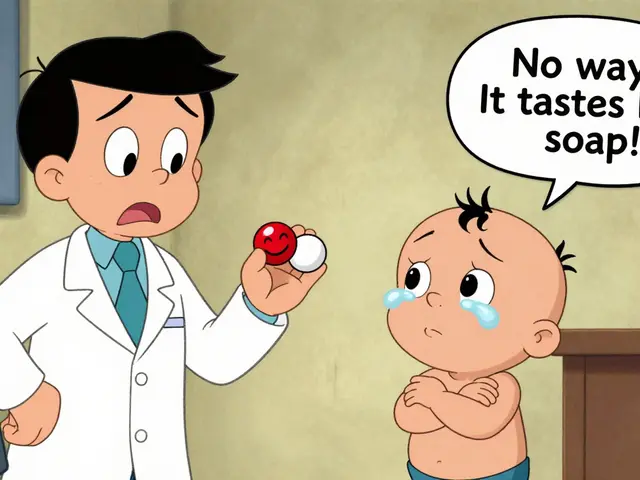
The FDA says generics must deliver 80% to 125% of the brand-name drug’s absorption rate in the bloodstream. That sounds precise, but for a 3-month-old with acid reflux or an 80-year-old on blood thinners, even a small shift in how the drug is absorbed can mean the difference between control and crisis. Brand-name pediatric formulations are often designed with taste, texture, and ease of swallowing in mind-liquid suspensions, chewable tablets, or flavored syrups. Generic versions? Many don’t match. A 2019 FDA analysis found only 32% of generic pediatric medications come in child-friendly forms, compared to 68% of brand-name ones. Parents report kids refusing to take the generic amoxicillin because it tastes bitter, even though the active ingredient is identical. One mother on Reddit said her toddler went from happily taking his medicine to gagging and spitting it out after the switch. She had to go back to the more expensive brand-because adherence mattered more than savings. For seniors, the problem is layered. Many take four or more medications daily. When a blood pressure pill changes color, shape, or size every few months, it’s easy to think you’re getting a new drug. A 78-year-old man in a 2023 AARP survey stopped taking his medication altogether after his generic pill changed shape three times in six months. He thought he’d been given the wrong drug. His doctor had to explain each change individually. That’s not just confusion-it’s a safety risk.The Nocebo Effect: When Belief Hurts
It’s not just about physical differences. There’s a psychological force at play called the nocebo effect. If you’re told, "This is just a cheaper version," your brain might start looking for problems. A 2021 study in Frontiers in Pharmacology found that 58% of seniors reported new side effects after switching to a generic-even though no chemical change occurred. They blamed the new pill for dizziness, nausea, or fatigue. The same study showed younger adults were far less likely to report this. For seniors who’ve been on the same medication for decades, the change feels like a betrayal. And for parents, the fear is real: "Will this make my child sicker?"How to Talk to Parents About Pediatric Substitutions
Don’t just say, "This is the same." That’s not enough. Parents are skeptical. A 2020 Pediatrics study showed 62% of them hesitate before accepting a generic for their child. Here’s what works:- Explain why the change is happening. "Your insurance requires us to use a generic to keep costs down. It’s not less effective-it’s the same medicine, just made by a different company."
- Check the formulation. "The brand came as a cherry-flavored liquid. The generic is unflavored. Would you like us to try a different generic that’s flavored?"
- Use the teach-back method. Ask: "Can you tell me how you’ll give this to your child?" If they say, "I’ll mix it with juice," but the instructions say "take on an empty stomach," you’ve caught a mistake before it happens.
- Offer alternatives. If the generic causes refusal or vomiting, don’t force it. Work with the prescriber to find a generic that matches the taste or texture of the original. Sometimes, a different manufacturer’s version works better.
The American Academy of Pediatrics recommends discussing substitution before the change, not after. That way, parents feel involved, not surprised.
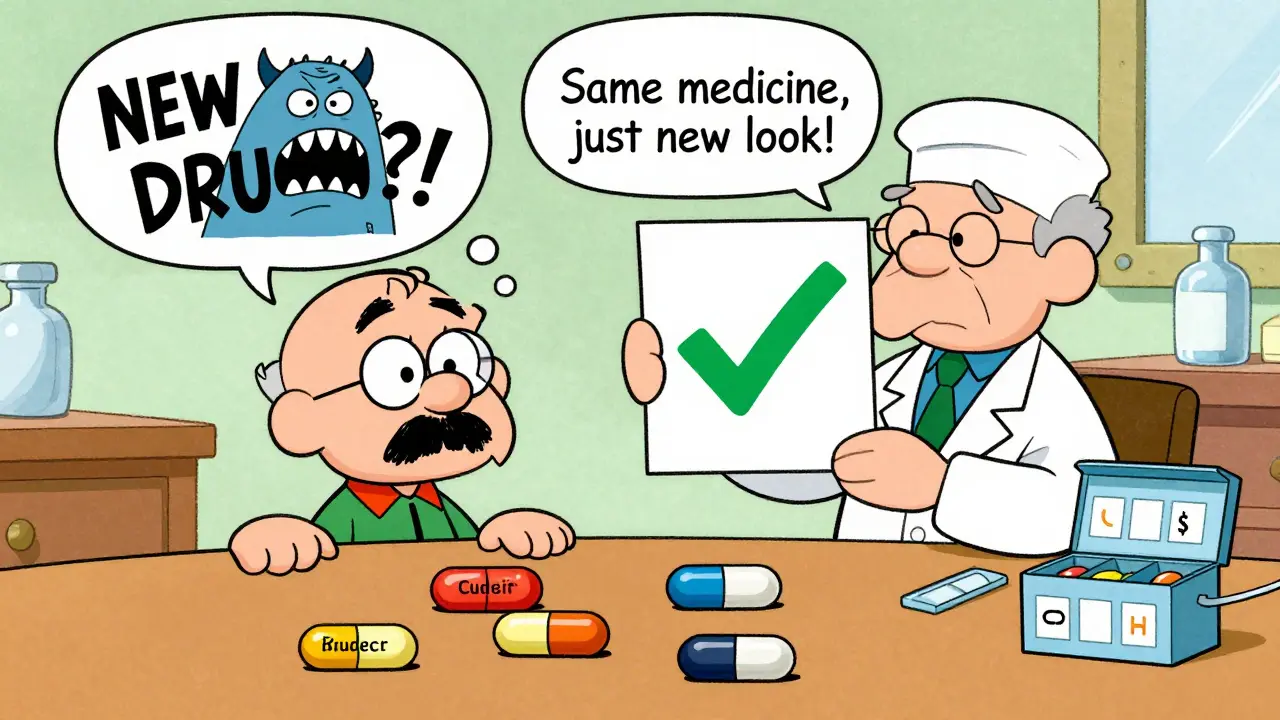
How to Talk to Seniors About Generic Changes
Seniors aren’t just older adults-they’re often managing memory loss, vision issues, or hearing challenges. A 2022 study in the Journal of the American Pharmacists Association found that using the teach-back method improved medication adherence by 32% in seniors. Here’s how to adapt:- Use large-print labels. If the pharmacy prints the name and dose in tiny font, it’s not helpful. Ask for a label with 14-point font or higher.
- Use pictures. Show them a photo of the pill before and after the change. "This was your old pill. This is the new one. Same medicine, different look."
- Involve caregivers. If a family member helps manage meds, include them in the conversation. A daughter or grandson can reinforce the message.
- Preempt the shock. Don’t wait until they notice the change. Call or send a note: "Your blood pressure pill will look different next refill. It’s still the same drug. Here’s what to expect."
- Address cost myths. Many seniors think generics are "lesser." Say clearly: "The FDA requires generics to work the same way. They’re tested to be just as effective. The only difference is the price."
One senior in a 2021 CMS survey believed generics were "cheap medicine"-until a pharmacist showed her the FDA bioequivalence data on a simple chart. She started taking hers again.
What Pharmacists and Doctors Can Do Right Now
There’s no one-size-fits-all solution, but these steps make a difference:- Track formulation changes. Keep a log of which generic version each patient is on. If a child’s liquid changes flavor or a senior’s pill changes color, note it. Revert if problems arise.
- Use the teach-back method every time. Ask: "What will you do if the pill looks different next time?" Their answer tells you if they really understand.
- Don’t assume consent. In 7 states and Washington, DC, pharmacists must get patient consent before substituting. Even where it’s not required, asking-"Would you like to stick with the brand?"-builds trust.
- Know your state’s rules. Thirty-one states require pharmacists to notify patients of substitution. But many don’t. Check your local laws.
- Use digital tools. Apps that let seniors scan their pills and get a photo match have helped 67% of users feel more confident about substitutions, according to a 2023 University of Florida study.
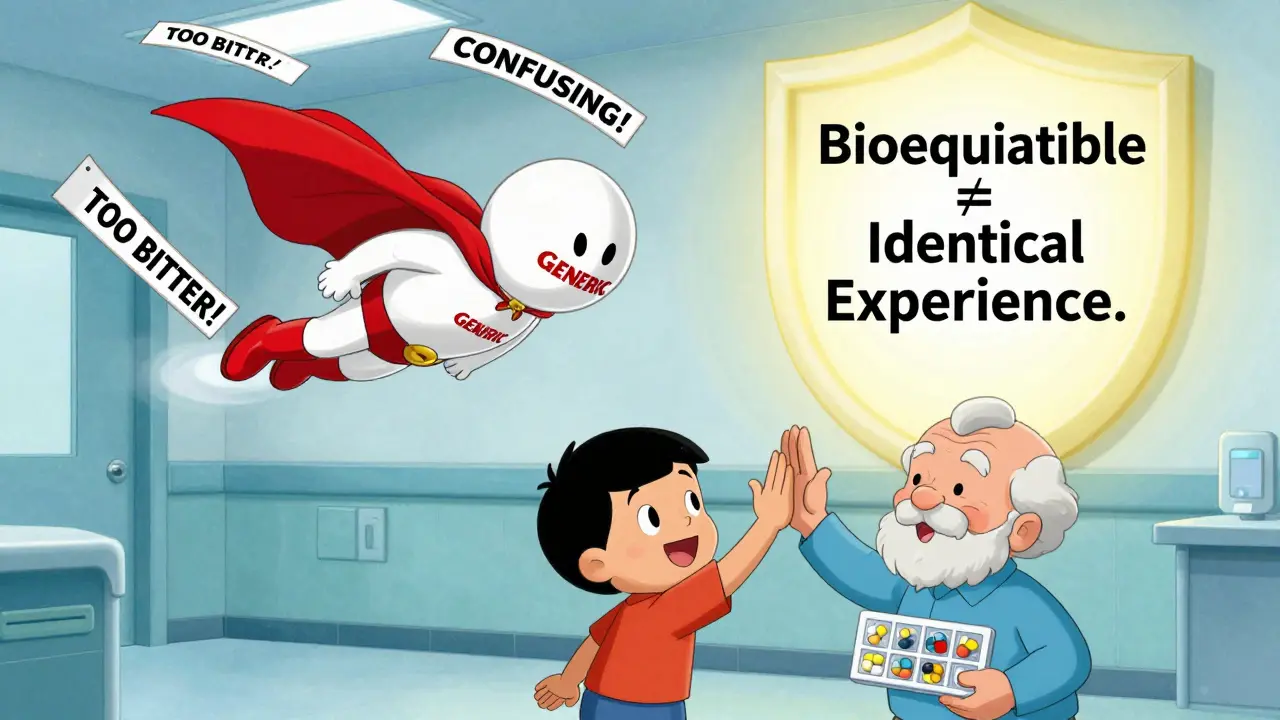
When You Should Avoid Substitution
Not all drugs are safe to switch. For children and seniors, avoid substitution if:- The drug has a narrow therapeutic index-like seizure meds (phenytoin), blood thinners (warfarin), or thyroid meds (levothyroxine). Even small changes in absorption can cause seizures or strokes.
- The original formulation had pediatric or geriatric labeling, and the generic doesn’t. For example, omeprazole suspension wasn’t tested in infants under 1 year. Substituting it for Prevacid in a baby is risky.
- The patient has had a bad reaction to a previous generic switch.
- The patient or caregiver expresses strong preference for the brand. Cost savings shouldn’t override trust.
The FDA’s 2023 Generic Drug Communications Initiative now requires manufacturers to include formulation differences in patient materials. That’s a step forward. But until every generic comes with clear, simple guidance for kids and seniors, the burden falls on clinicians and pharmacists to bridge the gap.
What Patients Can Do
You have power, too:- Keep a list of all your medications, including the shape and color of each pill.
- Ask: "Is this a generic? What’s the difference from the last one?"
- If a new pill makes you feel worse, don’t stop it-call your pharmacist or doctor.
- Ask if there’s another generic version available that looks or tastes more familiar.
- Use a pill organizer with clear labels. It helps both seniors and parents track changes.
Generic drugs save the U.S. healthcare system $373 billion a year. But for children and seniors, the goal isn’t just savings-it’s safety, consistency, and peace of mind. The best medicine isn’t the cheapest one. It’s the one the patient will take, every day, without fear.
Are generic drugs really the same as brand-name drugs?
Yes, legally. The FDA requires generics to have the same active ingredient, strength, dosage form, and route of administration as the brand-name drug. They must also prove they’re bioequivalent-meaning they deliver 80% to 125% of the brand’s absorption rate in the bloodstream. But "the same" doesn’t always mean "the same experience." Generic versions may differ in color, shape, taste, or inactive ingredients, which can affect how children accept them or how seniors recognize them.
Why do some children refuse to take generic medications?
Many brand-name pediatric medications are specially formulated with appealing flavors, smooth textures, or easy-to-swallow forms. Generic versions often lack these features. For example, a cherry-flavored amoxicillin suspension might be replaced with an unflavored one that tastes bitter. A 2020 study found that 64% of parents on parenting forums reported their kids refused the generic due to taste, even though the active ingredient was unchanged.
Can switching to a generic cause side effects in seniors?
Not because of the active ingredient-but because of the nocebo effect. When seniors expect a cheaper pill to be less effective, they may notice normal body changes as side effects. A 2021 study found 58% of seniors reported new symptoms after switching, even though the drug’s chemistry was unchanged. Changes in pill appearance can also cause confusion, leading seniors to stop taking their medication altogether.
Which medications should not be switched to generics for kids or seniors?
Drugs with a narrow therapeutic index are risky to switch. These include antiseizure drugs like phenytoin, blood thinners like warfarin, and thyroid meds like levothyroxine. Even small changes in how the body absorbs these drugs can lead to serious consequences. Also avoid switching if the original had pediatric or geriatric labeling and the generic doesn’t-like omeprazole suspension for infants under 1 year.
What should I do if my child or elderly parent refuses a generic?
Don’t force it. Talk to the prescriber or pharmacist. Ask if another generic version exists with a better taste or appearance. In some cases, staying on the brand-name drug-even if it costs more-is the safest choice. Patient adherence matters more than cost savings. The goal is consistent, safe use-not just the lowest price.
Kenzie Goode
February 22, 2026 AT 11:21It’s wild how much we underestimate the power of color and shape in medicine. I never thought about how a pill change could make someone stop taking their blood pressure med-until my grandma did exactly that. She swore the new one was "fake." We had to show her side-by-side photos. Now she keeps a little notebook. Simple. Human. Effective.
And for kids? Taste isn’t a luxury-it’s the difference between life and a crying toddler at 2 a.m. I wish pharmacists came with a flavor guide.
Christina VanOsdol
February 24, 2026 AT 06:03THE NOCEBO EFFECT IS REAL AND IT’S KILLING PEOPLE. 🚨
58% of seniors report "new side effects" after switching generics? That’s not pharmacology-that’s psychological warfare. And nobody’s talking about how insurance companies force these switches WITHOUT CONSULTATION. It’s not about cost-it’s about control. 💔
Also, why do pharmacies still print labels in 8-point font?? Are we assuming seniors are reading through a microscope?? 🤦♀️
Brooke Exley
February 25, 2026 AT 04:51Thank you for writing this. I’m a pediatric nurse, and I’ve seen parents cry because their child won’t take the generic amoxicillin. Not because they’re being difficult-because it tastes like battery acid. We had one mom who switched to a different generic manufacturer just because it had a hint of cherry. It cost $12 more. She paid it. Her kid’s health > her deductible.
Small changes. Big impact. Always ask. Always listen.
Christopher Brown
February 25, 2026 AT 21:45Maranda Najar
February 27, 2026 AT 10:18Oh, my heart. Just… my heart.
I read this and I thought of my mother, who took levothyroxine for 22 years. Then, one month, the pill went from a tiny, pale yellow capsule to a large, white, oval tablet. She stopped taking it. Not because she didn’t trust science-but because she didn’t trust the system. She said, "They changed it. They changed me."
She didn’t know it was the same drug. She thought she’d been poisoned. I spent three weeks convincing her otherwise. I printed FDA charts. I held her hand. I cried with her.
This isn’t about generics. It’s about dignity. It’s about being seen. And we’ve forgotten that.
Every pill should come with a story. Not just a barcode.
Alfred Noble
March 1, 2026 AT 01:08Khaya Street
March 1, 2026 AT 07:31While I appreciate the intent here, let’s be honest: the real issue is the lack of standardization across generic manufacturers. Why should a senior have to memorize five different versions of the same pill? Why isn’t there a national database with images, taste profiles, and inactive ingredients for every generic formulation? This isn’t a communication problem-it’s a systemic failure.
Also, if we’re going to mandate substitution, we need to mandate clarity. Not just labels. Visual guides. QR codes. Voice assistants. Anything.
Sanjaykumar Rabari
March 2, 2026 AT 06:25Matthew Brooker
March 3, 2026 AT 00:19