
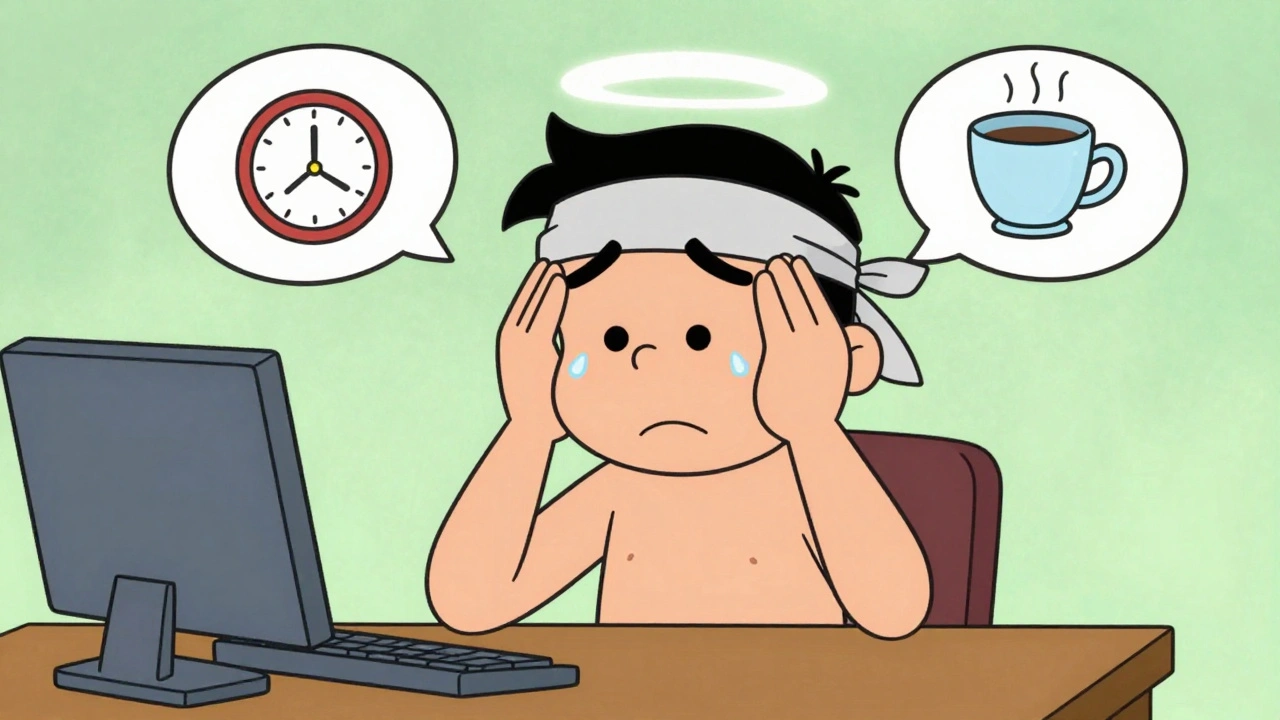
Not all headaches are the same. If you’ve ever woken up with a dull pressure around your forehead, spent a day curled up in a dark room with nausea, or felt like your eye is being drilled from the inside-you’re not imagining it. These are three completely different conditions, each with its own cause, pattern, and treatment. Yet, people often lump them all together as "just a headache." That misunderstanding delays real relief. Here’s what actually sets tension headaches, migraines, and cluster headaches apart-based on real clinical criteria, patient experiences, and what works in practice.
Tension-Type Headache: The Pressure That Won’t Quit
Tension-type headaches are the most common. About 42% of people worldwide get them at some point. They don’t come with warning signs or fancy symptoms. Just a steady, dull ache, like a tight band wrapped around your head. It’s often felt on both sides-forehead, temples, or the back of the neck. The pain is mild to moderate, never pounding. You can still go to work, cook dinner, or scroll on your phone. It doesn’t make you throw up or flinch at light. That’s the key.
According to the International Classification of Headache Disorders, an episode lasts anywhere from 30 minutes to seven days. If it hits 15 or more days a month for three months straight, it’s called chronic tension-type headache. Women are about 1.4 times more likely to get them than men. Stress, poor posture, or staring at screens too long can trigger them, but not always. Sometimes, they just show up.
What helps? Over-the-counter painkillers like ibuprofen or acetaminophen work for about 70% of people. No fancy meds needed. Stretching your neck, taking a walk, or even a hot shower often eases it. The pain doesn’t get worse when you move around-which is a big clue. If physical activity makes your headache worse, it’s probably not this one.
Migraine: More Than a Bad Headache
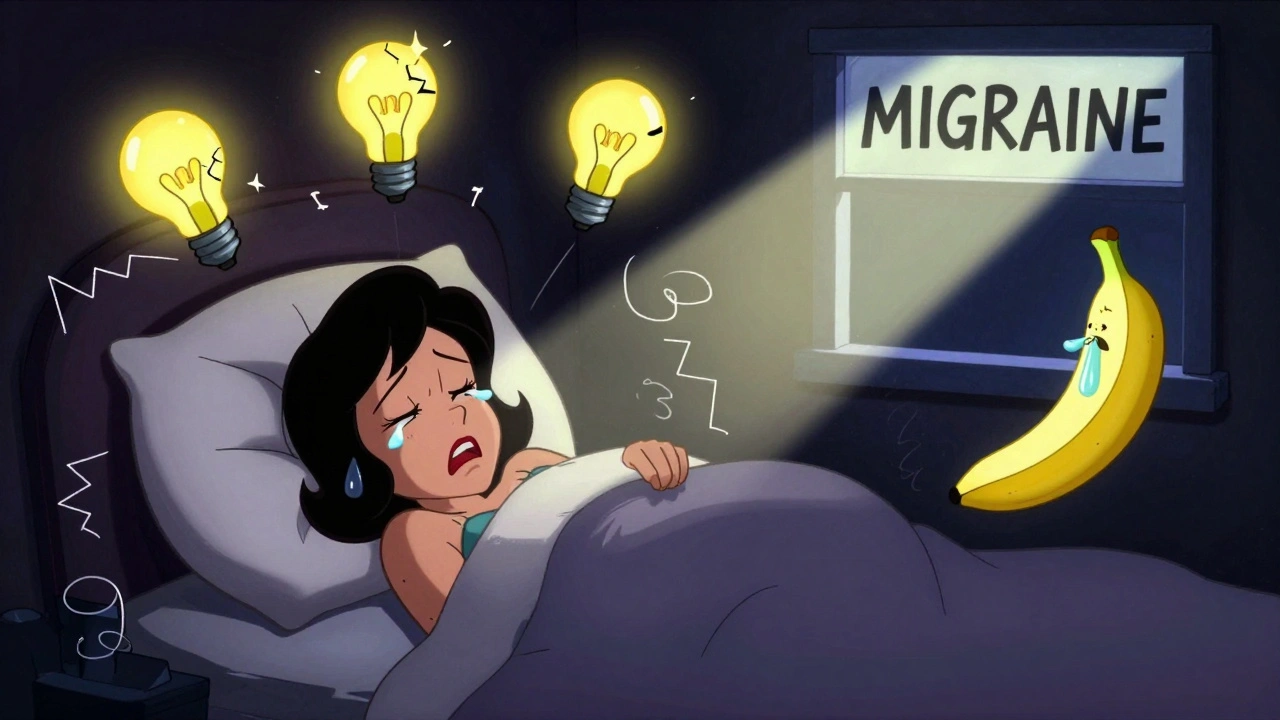
Migraine isn’t just a headache. It’s a neurological event. About 1 in 5 women and 1 in 10 men experience it. The pain is usually one-sided and throbbing, though nearly 40% of people feel it on both sides. It’s moderate to severe, and it knocks you out. You can’t function. You need silence. You need darkness. You might feel nauseous-90% of migraine sufferers do. Light and noise hurt. You might even vomit.
Attacks last between 4 and 72 hours if untreated. Around 25-30% of people get an aura first. That’s the visual warning: zigzag lines, blind spots, flashing lights. It starts 5 to 60 minutes before the headache and fades as the pain kicks in. Some people get tingling or numbness in their hands or face. These aren’t seizures. They’re part of the migraine brain misfiring.
What triggers it? Not always the same. Stress, skipped meals, sleep changes, strong smells, weather shifts, or even certain foods like aged cheese or red wine can set it off. But triggers vary wildly from person to person. The real issue? Misdiagnosis. Many people think they have sinus headaches or tension headaches when it’s actually migraine. A 2021 Mayo Clinic study found that nearly half of all headache patients are misdiagnosed-and migraines are the most common mistake.
Treatment isn’t just about popping a pill. Triptans (like sumatriptan) work for about 50-70% of people if taken early. Newer drugs called CGRP inhibitors (like atogepant) prevent attacks and are taken daily. For chronic cases, Botox injections or nerve stimulation devices are options. The key is stopping it before it hits full force. Waiting until you’re in agony makes treatment harder.
Cluster Headache: The Pain That Comes in Waves
Cluster headaches are rare-only about 1 in 1,000 people get them. But if you’ve had one, you’ll never forget it. The pain is described as the worst on Earth. Patients say it’s worse than childbirth. It’s not a throb. It’s a burning, drilling, stabbing pain right behind one eye or on one side of the face. It hits hard and fast. Each attack lasts 15 to 180 minutes-most around 45 to 90 minutes. And they don’t come alone.
During a cluster period-which lasts 6 to 12 weeks-you can get 1 to 8 attacks a day. Often, they happen at the same time every day. Some people wake up at 2 a.m. with the same pain, night after night. Seasonal patterns are common: spring and fall are peak times for many.
And here’s the giveaway: your body reacts. On the same side as the pain, you’ll get a watery eye, redness in the white of the eye, a stuffy or runny nose, a drooping eyelid, or even a sweaty forehead. These aren’t side effects-they’re part of the headache. That’s why cluster headaches are called trigeminal autonomic cephalalgias (TACs). The hypothalamus, a deep brain region that controls your body clock, is firing off signals. That’s why they’re so timed.
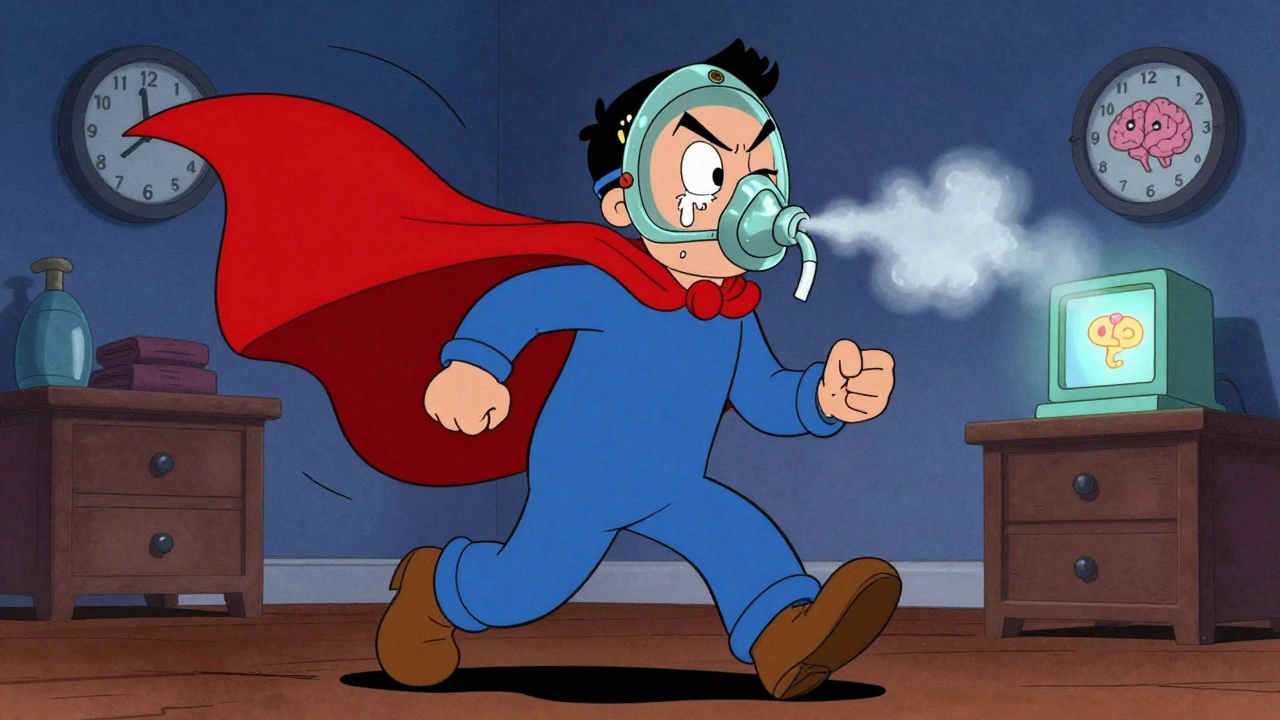
There’s no cure. But there’s fast relief. Breathing pure oxygen through a mask for 15 minutes stops the pain in 70-80% of cases. Subcutaneous sumatriptan (an injection) works in about 75% of attacks. Oral meds don’t help fast enough. Prevention involves verapamil or lithium, and now, for the first time in 2023, the FDA approved atogepant for cluster headache prevention. That’s a big deal-it’s the first oral drug specifically approved for this.
People with cluster headaches often pace, rock, or scream during attacks. They can’t lie still. That’s the opposite of migraine, where people curl up in silence. This isn’t just pain-it’s a full-body panic response. Misdiagnosis is common. Emergency rooms often mistake them for migraines, especially if the patient has eye watering or nasal congestion. But migraines don’t come with this intensity, timing, or autonomic symptoms. A headache specialist will know the difference.
How to Tell Them Apart: The Quick Guide
Here’s a simple way to sort them out:
| Feature | Tension-Type | Migraine | Cluster |
|---|---|---|---|
| Pain location | Bilateral (both sides) | Usually one side, sometimes both | Always one side |
| Pain quality | Pressure, tightness | Pulsating, throbbing | Excruciating, burning, stabbing |
| Pain intensity | Mild to moderate (2-6/10) | Moderate to severe (5-10/10) | Severe to extreme (8-10/10) |
| Duration | 30 min - 7 days | 4 - 72 hours | 15 - 180 minutes |
| Frequency during attack period | Variable | 1-4 per month | 1-8 per day |
| Associated symptoms | None or mild | Nausea, vomiting, light/sound sensitivity | Watery eye, red eye, stuffy nose, drooping eyelid |
| Response to activity | No worsening | Worsens with movement | Restlessness, pacing |
| First-line treatment | NSAIDs (ibuprofen) | Triptans, CGRP inhibitors | High-flow oxygen, sumatriptan injection |
Don’t rely on memory. Keep a headache diary for at least four weeks. Write down:
- Date and time the headache started
- How long it lasted
- Where the pain was and what it felt like
- Any symptoms (nausea, light sensitivity, eye watering)
- What you did or ate before it started
- What helped (or didn’t)
This isn’t busywork. It’s your best tool for getting the right diagnosis. Doctors see hundreds of headache patients. Your diary cuts through the noise.
Why Misdiagnosis Hurts
Up to 50% of people with headaches are misdiagnosed. That’s not a small number. It means someone with cluster headaches might get told they have migraines-and given a pill that takes hours to work. By then, the attack is over, and the next one is coming in an hour. Or someone with chronic migraine is told they just have stress headaches and told to relax. Their life gets worse.
One of the biggest traps? Thinking "cluster migraine" is a real thing. It’s not. Some migraine patients get eye symptoms during attacks-like tearing or nasal stuffiness. That doesn’t make it cluster headache. Dr. Shivang Joshi, a leading headache specialist, says this mix-up happens in about 20% of ER visits. The difference? Cluster headaches are shorter, more frequent, and come with a whole set of physical signs that migraines don’t. If your eye is watering and your nose is running on one side, and the pain is unbearable, it’s probably cluster. If you’re nauseous and need to lie down for a day, it’s migraine.
Another myth: tension headaches are "just stress." They’re not. They’re a real neurological condition with clear diagnostic criteria. And while stress can trigger them, so can muscle tension, poor sleep, or even dehydration. You don’t need to be "anxious" to get one.
What’s New in Treatment
There’s real progress. In 2023, the FDA approved atogepant (Qulipta) for preventing cluster headaches. That’s huge. Before, prevention options were limited to blood pressure meds or lithium-drugs not designed for this. Now, there’s a targeted option.
For migraines, CGRP inhibitors (like erenumab, fremanezumab, atogepant) are changing lives. They’re monthly shots or daily pills that stop attacks before they start. They’re not magic, but they work for 50-70% of people who haven’t responded to other treatments.
For cluster headaches, non-invasive vagus nerve stimulation devices are in late-stage trials. These handheld gadgets zap a nerve in the neck to block pain signals. Early results show promise. Deep brain stimulation is also being tested for the most severe, treatment-resistant cases-with 68% of patients seeing full relief after a year.
But the biggest barrier isn’t lack of drugs. It’s lack of training. The average U.S. medical student gets only 4 hours of headache education. That’s less than one lecture. No wonder so many people get sent home with a prescription for Tylenol when they need oxygen or triptans.
What to Do Next
If you’ve been suffering for months and no one’s figured it out:
- Start a headache diary. Don’t skip days. Even if you feel fine, write it down.
- See a neurologist who specializes in headaches. General doctors aren’t trained for this.
- Bring your diary. Don’t rely on memory.
- Ask: "Could this be cluster? Could this be migraine?" Don’t let them dismiss it as stress.
- If oxygen helps you feel better in 15 minutes, tell your doctor. That’s a major clue.
Headaches are not a one-size-fits-all problem. Getting the right diagnosis isn’t about being dramatic. It’s about getting the right treatment. And that can mean the difference between living with pain and living your life.
Can tension headaches turn into migraines?
No, tension headaches don’t "turn into" migraines. They’re separate conditions with different causes. But someone can have both. It’s common for people with chronic tension headaches to also get migraines, especially under stress or with poor sleep. The key is tracking symptoms carefully. If you start getting nausea, light sensitivity, or visual disturbances with your headaches, it’s likely a new migraine pattern-not a worsening tension headache.
Is it possible to have cluster headaches without the eye symptoms?
Rarely. The autonomic symptoms-like tearing, redness, or nasal congestion-are part of the official diagnostic criteria for cluster headaches. If you have the severe one-sided pain but none of those signs, it’s probably not cluster. It could be a rare variant or another condition like trigeminal neuralgia. A specialist will need to rule out other causes.
Why do cluster headaches happen at the same time every day?
Because they’re tied to your body’s internal clock. The hypothalamus, which controls sleep-wake cycles and hormone release, becomes overactive during cluster periods. That’s why attacks often strike at night-around 2 a.m.-or right after waking up. Seasonal patterns (spring/fall) also link to changes in daylight, which affects the hypothalamus. This is unique to cluster headaches and doesn’t happen with migraines or tension headaches.
Can I treat migraines with the same meds as tension headaches?
Sometimes, yes-but not reliably. Over-the-counter painkillers like ibuprofen might help mild migraines if taken at the very first sign. But once the pain builds, they rarely work. Triptans or CGRP inhibitors are designed to stop migraine attacks in progress. If you’re taking NSAIDs daily and your headaches are getting worse, you might be masking a migraine that needs targeted treatment.
Are cluster headaches genetic?
There’s a strong link. About 10% of cluster headache patients have a close relative with the condition. That’s much higher than with migraines or tension headaches. Researchers are looking at genes tied to the hypothalamus and circadian rhythm. But it’s not simple inheritance-it’s complex. Having a family member with cluster headaches increases your risk, but doesn’t mean you’ll get them.
Final Thought
You’re not crazy. You’re not exaggerating. And you’re not alone. Tension, migraine, and cluster headaches are three different diseases that happen to share one symptom: head pain. The difference between them isn’t subtle-it’s life-changing. Getting the right label isn’t about labels. It’s about getting the right treatment. And that’s the only thing that matters.
Audrey Crothers
December 12, 2025 AT 11:11Stacy Foster
December 14, 2025 AT 07:39sandeep sanigarapu
December 15, 2025 AT 22:18Nathan Fatal
December 17, 2025 AT 00:29Rob Purvis
December 18, 2025 AT 04:54Reshma Sinha
December 19, 2025 AT 14:08Lawrence Armstrong
December 20, 2025 AT 18:17Donna Anderson
December 21, 2025 AT 18:26Levi Cooper
December 22, 2025 AT 03:17Adam Everitt
December 23, 2025 AT 19:00Ashley Skipp
December 24, 2025 AT 16:33Robert Webb
December 26, 2025 AT 00:32nikki yamashita
December 27, 2025 AT 12:45wendy b
December 29, 2025 AT 05:31