
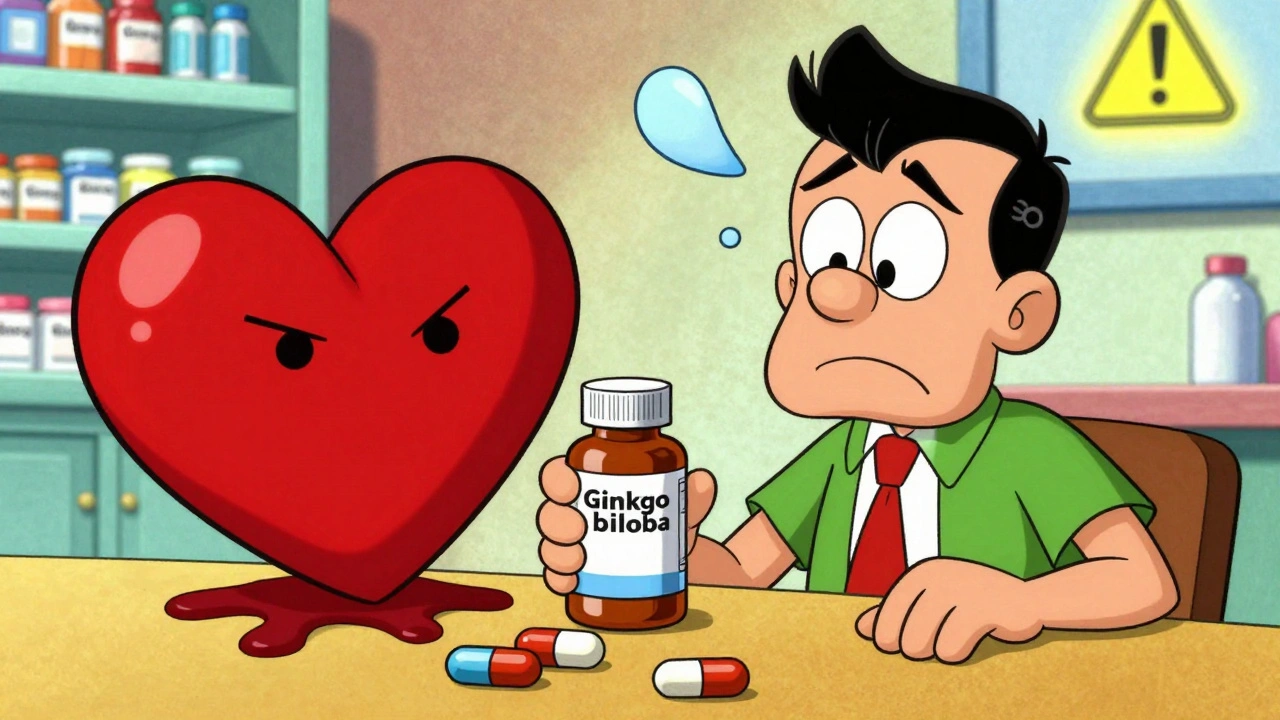
If you’re taking a blood thinner-whether it’s warfarin, aspirin, clopidogrel, or one of the newer direct oral anticoagulants (DOACs)-and thinking about adding Ginkgo biloba for memory or circulation, you’re not alone. Millions of people do. But here’s the problem: Ginkgo biloba might increase your risk of bleeding, and no one can say for sure how much. Some studies say it’s safe. Others warn of serious, even life-threatening, bleeding events. So what should you actually do?
What Is Ginkgo Biloba, Anyway?
Ginkgo biloba comes from the leaves of the Ginkgo tree, one of the oldest living tree species on Earth-dating back over 270 million years. It’s been used in traditional Chinese medicine for centuries to improve memory, circulation, and breathing. In the West, it became popular in the 1980s as a supplement, especially in standardized form called EGb 761. This version contains 24% flavonol glycosides and 6% terpene lactones, which are the compounds believed to give it its effects.
Today, about 12 million Americans take Ginkgo supplements each year. The global market is worth nearly $2 billion and growing. But here’s the catch: most of the safety data comes from studies using this one specific extract, EGb 761. Many store-bought supplements aren’t standardized. They might have more or less of the active ingredients-or even contaminants. That’s important because the risk of bleeding seems to be tied to product quality.
How Ginkgo Might Interact With Blood Thinners
Blood thinners work in two main ways: some stop your blood from clotting (anticoagulants like warfarin), and others stop platelets from sticking together (antiplatelets like aspirin and clopidogrel). Ginkgo biloba appears to affect both systems.
First, it may reduce platelet aggregation-meaning your blood platelets are less likely to clump together to form clots. One study showed Ginkgo blocks a key enzyme (tyrosine kinase) involved in platelet activation. That sounds helpful if you’re trying to prevent clots, but dangerous if you’re already on a medication that does the same thing.
Second, Ginkgo may interfere with the liver enzyme CYP2C9, which breaks down warfarin. If this enzyme slows down, warfarin builds up in your blood, making you more prone to bleeding. This isn’t just theory-there are documented cases of people on warfarin who started taking Ginkgo and ended up in the hospital with internal bleeding, including brain bleeds.
But here’s where it gets messy. Controlled clinical trials-where people are randomly assigned to take Ginkgo or a placebo-have mostly found no significant increase in bleeding. A 2008 review of these studies concluded that Ginkgo doesn’t meaningfully affect clotting when used with aspirin or warfarin. So why do case reports keep showing bleeding?
The Case for Caution: Why Experts Warn Against It
Despite the clinical trial data, major medical institutions are telling people to avoid combining Ginkgo with blood thinners. The Mayo Clinic, Cleveland Clinic, and GoodRx all list Ginkgo as a potential risk. GoodRx even calls warfarin a "high-risk" interaction-meaning they recommend avoiding it entirely.
Why the disconnect? Because real-world use isn’t the same as a controlled study. People don’t always take standardized Ginkgo. They might buy it from a corner store, take it with other herbs like garlic or danshen, or suddenly stop their blood thinner before surgery. In one 2020 study, nearly half of patients taking Ginkgo along with blood thinners were at risk of a dangerous interaction.
Also, the FDA has received 18 reports of possible bleeding events linked to Ginkgo between 2008 and 2020. While they couldn’t prove Ginkgo caused them, they couldn’t rule it out either. That’s enough for safety agencies to treat it as a real concern.
Pharmacists are the first line of defense here. A 2022 survey found that 78% of pharmacists routinely warn patients about Ginkgo-blood thinner interactions. And electronic health record systems from Epic and Cerner now flag this combination automatically. That’s not something they’d do unless they believed the risk was real enough to warrant attention.
What the Guidelines Actually Say
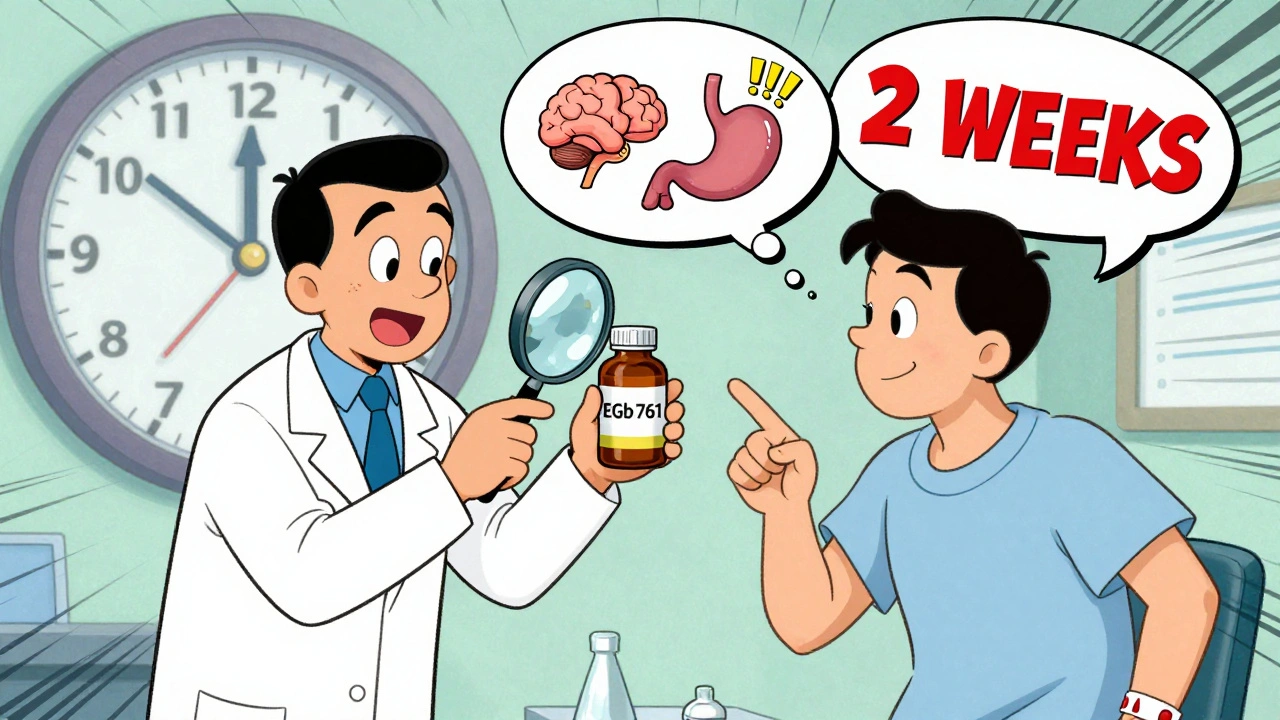
The American College of Chest Physicians says routine discontinuation of Ginkgo before surgery isn’t necessary because evidence is lacking. But the American Society of Anesthesiologists says to stop it at least two weeks before any procedure. The Institute for Safe Medication Practices lists Ginkgo as a high-alert herbal product. The Natural Medicines Database rates the interaction as "Moderate-Be cautious." So who’s right?
It’s not about who’s right-it’s about what’s safer. Even if the risk is small, the consequences are huge. A brain bleed or gastrointestinal hemorrhage can be fatal. And unlike prescription drugs, herbal supplements aren’t held to the same safety standards. There’s no guarantee what’s in the bottle.
That’s why most experts agree: if you’re on a blood thinner, don’t start Ginkgo without talking to your doctor. If you’re already taking it, don’t stop suddenly-especially if you’re preparing for surgery. Abruptly stopping Ginkgo could affect your blood flow, and suddenly stopping your blood thinner could cause a clot.
What You Should Do Right Now
If you’re taking a blood thinner:
- Don’t start Ginkgo biloba without talking to your doctor or pharmacist. Even if you’ve taken it before, your medication or health status might have changed.
- If you’re scheduled for surgery, stop Ginkgo at least two weeks before. This is the most common recommendation from anesthesiologists and surgeons. Some doctors say 36 hours is enough-but that’s based on theoretical risk, not evidence. Two weeks is the safe bet.
- Tell every healthcare provider you see-including dentists-that you take Ginkgo. A simple dental cleaning can cause bleeding if your blood doesn’t clot properly.
- Check your supplement label. Look for "EGb 761" or "standardized extract." Avoid products that don’t list the extract type or dosage.
- Watch for signs of bleeding. Unusual bruising, nosebleeds that won’t stop, blood in urine or stool, or headaches that feel different than usual could be warning signs.
If you’re not on a blood thinner but considering Ginkgo for memory or circulation, still talk to your doctor. Ginkgo can interact with other medications too-like antidepressants, diabetes drugs, and seizure medications. It’s not a harmless herb just because it’s "natural."
What About Other Herbs?
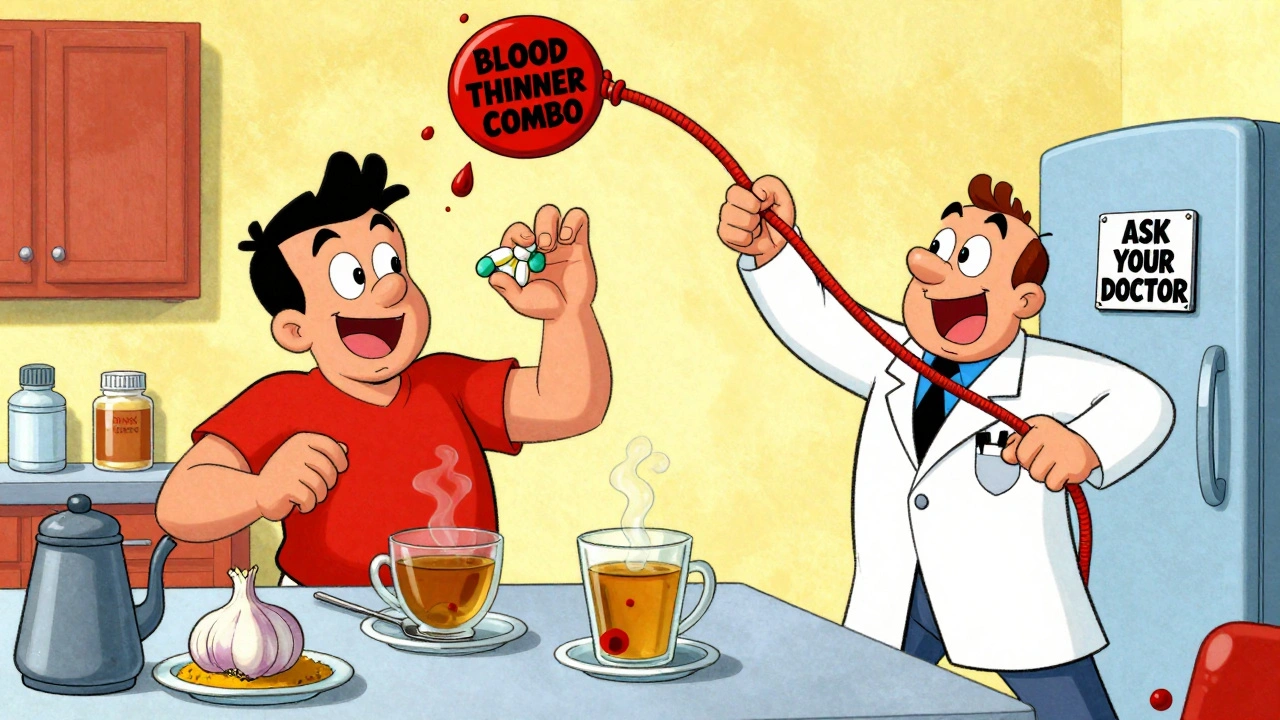
You’re not alone if you’re using multiple supplements. Garlic, ginger, danshen, turmeric, and evening primrose oil all have similar bleeding risks. Many people take them together thinking they’re "natural" and therefore safe. But combining them can multiply the risk.
A 2020 study found that 21% of patients on blood thinners were also taking at least one herbal product with bleeding potential. Nearly half of those combinations carried a high risk. If you’re on a blood thinner, you’re already in a high-risk group. Adding more herbs doesn’t make you healthier-it makes you more vulnerable.
Bottom Line: Play It Safe
There’s no clear-cut answer. Science is divided. But the stakes are too high to gamble. The evidence isn’t strong enough to say Ginkgo is safe with blood thinners-and it’s strong enough to say it might not be.
So here’s what you do: if you’re on a blood thinner, don’t take Ginkgo biloba unless your doctor says it’s okay. And even then, monitor yourself closely. If you’re already taking it, don’t quit cold turkey-talk to your doctor about how to stop safely.
Your health isn’t a guessing game. When it comes to blood thinners and herbs, caution isn’t overreaction-it’s survival.
Can I take Ginkgo biloba with aspirin?
Some studies say yes, others say no. Controlled trials haven’t shown a major increase in bleeding when Ginkgo is taken with aspirin, but case reports have linked the combination to serious bleeding events. Because aspirin already thins your blood and Ginkgo may add to that effect, most doctors recommend avoiding the combination. If you’re taking aspirin for heart protection, don’t add Ginkgo without talking to your doctor first.
Does Ginkgo biloba thin your blood like warfarin?
Ginkgo doesn’t work the same way as warfarin, but it has a similar effect. Warfarin blocks vitamin K, which your body needs to make clotting factors. Ginkgo works by reducing platelet stickiness and possibly slowing how fast your liver breaks down warfarin. So while it’s not a direct substitute, it can make your blood thinner more powerful-increasing your bleeding risk without you realizing it.
How long before surgery should I stop Ginkgo biloba?
Most guidelines recommend stopping Ginkgo biloba at least two weeks before any surgical procedure, including dental work. This gives your body time to clear the compound and reduces the risk of excessive bleeding during or after surgery. Some doctors may say 36 hours is enough, but that’s based on theory, not real-world safety. Two weeks is the standard for safety.
Are all Ginkgo biloba supplements the same?
No. The only Ginkgo extract with consistent research backing is EGb 761, a specific 50:1 leaf extract. Many store-bought supplements are not standardized and may contain different amounts of active ingredients-or even harmful contaminants. Always look for "EGb 761" or "standardized extract" on the label. If it’s not listed, assume it’s not safe to use with blood thinners.
Can I take Ginkgo biloba if I have a bleeding disorder?
No. If you have a diagnosed bleeding disorder-like hemophilia, von Willebrand disease, or thrombocytopenia-you should avoid Ginkgo biloba entirely. Even small amounts can worsen your condition and lead to spontaneous bleeding. Always consult your hematologist before taking any herbal supplement if you have a clotting disorder.
Michael Dioso
December 4, 2025 AT 17:09Look, I’ve been taking Ginkgo for 12 years with warfarin and I’m fine. My INR’s stable, no bleeds, no hospital trips. If you’re scared of every herb because some sketchy supplement label says ‘natural,’ you’re gonna die of fear before you die of a clot. The studies don’t back this panic. Stop listening to pharmacists who’ve never even tried it.
Krishan Patel
December 5, 2025 AT 09:44It is not merely a matter of pharmacological interaction-it is a metaphysical betrayal of the body’s innate wisdom. Modern medicine, blinded by its own algorithmic arrogance, dismisses millennia of Ayurvedic and TCM knowledge because it cannot be patented. Ginkgo is not a drug. It is a messenger from the Earth. To fear it is to fear the pulse of life itself. And yet, you still swallow your synthetic anticoagulants like obedient drones. Pathetic.
sean whitfield
December 6, 2025 AT 10:02So let me get this straight. The FDA gets 18 reports of possible bleeding, and suddenly we’re all supposed to panic? Meanwhile, 12 million Americans take it and no one’s dropping dead. The real danger? The FDA. The real villain? Big Pharma’s fear-mongering. Ginkgo’s been around since the dinosaurs. Your pill? Made in a lab by a guy who hates trees.
Mellissa Landrum
December 7, 2025 AT 09:51They’re hiding the truth. Ginkgo’s been used by the CIA since the 80s to mess with blood clotting in covert ops. That’s why they’re so scared. You think they want you to know how easy it is to make someone bleed out quietly? That’s why your doctor won’t tell you. And that’s why your supplement bottle says ‘EGb 761’-it’s coded. They want you to think it’s safe. It’s not.
Mark Curry
December 8, 2025 AT 18:52I’ve been on aspirin for years and took Ginkgo for a few months for focus. No issues. But I stopped when I started feeling weird bruising. Not because I was scared of the science-I just listened to my body. Sometimes the quietest signals are the most important. Just… pay attention. 🙏
an mo
December 10, 2025 AT 03:16Let’s deconstruct the risk-benefit ratio. Ginkgo’s mechanism: PDE inhibition + CYP2C9 modulation. Warfarin’s therapeutic index: narrow. Platelet aggregation suppression: additive. Ergo, the interaction isn’t ‘possible’-it’s statistically inevitable in a population of 12M. The clinical trials are underpowered. Case reports are signals, not noise. Your ‘it’s fine’ anecdote? N=1. The data says caution. End of story.
aditya dixit
December 11, 2025 AT 05:10I’ve seen many people in India take Ginkgo with no issue, especially when sourced from trusted Ayurvedic shops. But I also know people who combine it with garlic, turmeric, and aspirin and wonder why they bleed after a nosebleed. It’s not the herb-it’s the combo. Take one thing at a time. Know your body. Talk to someone who knows herbs, not just a pharmacist reading a screen. Peace.
Lynette Myles
December 11, 2025 AT 15:26Don’t take it. Ever. With anything. Even if you’re not on blood thinners. It’s not worth it.
Jimmy Jude
December 12, 2025 AT 18:57My uncle had a brain hemorrhage after taking Ginkgo with his blood thinner. He was 68. He loved his supplements. Thought he was ‘detoxing.’ Now he can’t speak. Can’t walk. And the bottle? No warning. Just ‘natural energy booster.’ I’m not mad. I’m just… heartbroken. Don’t be the next story.
Marvin Gordon
December 12, 2025 AT 21:49Listen-I get it. You want to feel sharp. You want to be alive. But your brain’s not a battery you can upgrade with a bottle from the health store. If you’re on a blood thinner, you’re already playing with fire. Don’t toss gasoline on it. Talk to your doc. Get your INR checked. Be smart. You’re worth more than a quick fix.
Deborah Jacobs
December 14, 2025 AT 13:56I took Ginkgo for years because my grandma swore by it. Then I started getting nosebleeds that wouldn’t stop-like, 20 minutes of tissue and ice. I stopped it. Didn’t even think to connect it. My pharmacist called me two weeks later asking if I’d been taking anything new. I almost cried. I didn’t know. I thought ‘natural’ meant ‘safe.’ Turns out, nature doesn’t care if you’re on warfarin. It just does its thing. I’m sorry I didn’t listen sooner. You guys? Don’t make my mistake.