
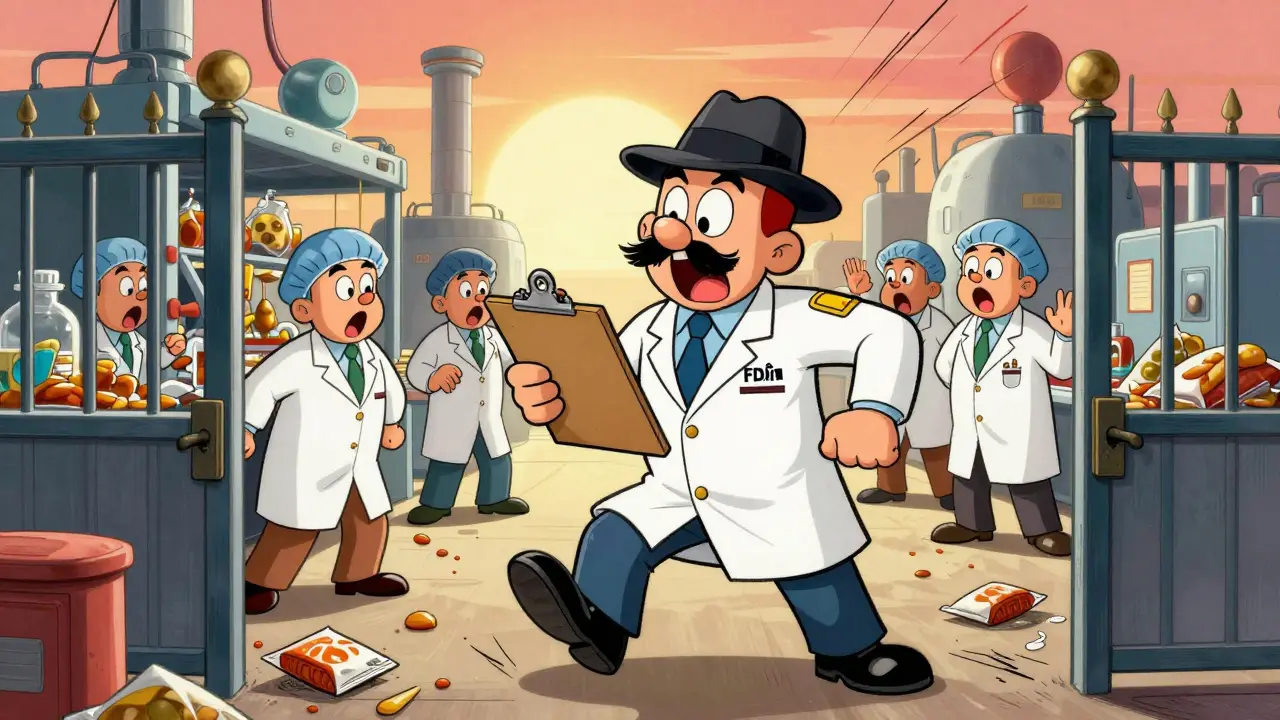
Why the FDA is showing up unannounced at your overseas factory
If you run a food or supplement plant outside the U.S. and ship products to American stores, your life just got a lot more complicated. Starting in 2024, the FDA stopped giving foreign facilities advance notice before inspections. No more warning calls. No more time to clean up, rearrange paperwork, or hire translators on short notice. If you’re not ready at 8 a.m. on a Tuesday, you’re already in violation.
This isn’t a drill. The FDA made this change because it saw a double standard: U.S. factories get inspected anytime, no warning. Foreign factories? They got a heads-up. That meant inspections often showed what the facility wanted them to see-not what was really happening. The FDA’s goal is simple: make sure every bite of imported food meets the same safety rules as food made in America. And with 15% of the U.S. food supply coming from overseas, that’s not just policy-it’s public health.
How the FDA picks which foreign plants to inspect
The FDA doesn’t inspect every one of the 300,000 registered foreign facilities each year. That’s impossible. Instead, they use a risk-based system. Three things decide if your plant gets flagged:
- What you make-Some foods are riskier. Raw sprouts, seafood, nut butters, and infant formula get top priority. Low-risk items like canned goods or dry snacks are lower on the list.
- How you make it-If your process involves complex steps like fermentation, pasteurization, or mixing allergens, you’re more likely to be inspected. Simple packing or bottling? Less scrutiny.
- Your history-If your products have been denied entry into the U.S. before, you’re on the watchlist. Repeated refusals? You’ll be first in line for an inspection.
Under the Food Safety Modernization Act (FSMA), passed in 2011, the FDA was supposed to double foreign inspections every year for five years. That didn’t happen consistently-budget cuts in the late 2010s dropped inspections to historic lows. But since 2023, funding has increased, and inspections are climbing again. The agency is now focusing on high-risk facilities with poor track records.
What happens during an unannounced FDA inspection
When FDA inspectors arrive, they don’t ask for coffee. They ask for access. Here’s what they’re legally allowed to do:
- Walk through your entire facility-production, storage, packaging, waste areas-without warning
- Review any record related to food safety: sanitation logs, supplier approvals, testing results, training files
- Take photos or videos of equipment, conditions, or processes
- Interview staff directly, even without a translator present
- Collect samples of your product or raw materials
You can’t delay them. You can’t limit where they go. You can’t redact parts of documents. You can’t shut down production to hide something. The FDA’s Investigations Operations Manual makes it clear: any attempt to obstruct an inspection is a federal crime.
And yes-that means criminal charges. The U.S. Department of Justice can prosecute foreign companies for obstruction. Penalties include fines, asset forfeiture, and being barred from exporting to the U.S. ever again. This isn’t a warning letter. This is a federal case.
The new rules that caught many factories off guard
Before 2024, foreign facilities often arranged for FDA inspectors to stay in hotels, ride in company cars, or even have meals provided. That’s over. The FDA now bans inspectors from accepting any travel perks from regulated companies-not even a taxi ride. The goal is to remove any appearance of favoritism or influence.
That’s a big deal for small factories in countries where local customs involve hospitality. But the FDA isn’t making exceptions. Inspectors now pay for their own flights, hotels, and meals. They’re also required to use their own translators or rely on FDA-provided ones, not ones hired by your company.
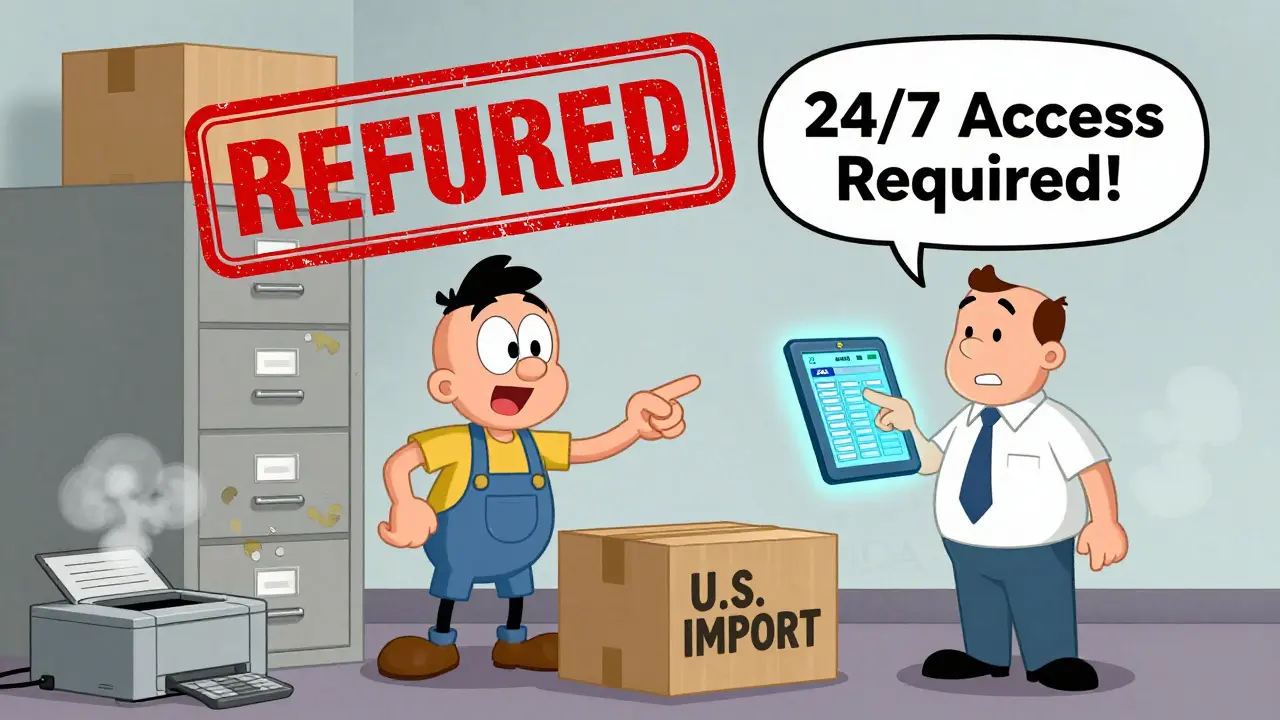
Another change: inspectors now have the right to demand immediate access to digital records. If your quality control logs are stored on a server that only works during business hours, you’re in trouble. They need 24/7 access. Cloud-based systems with secure login credentials are now the baseline expectation.
What foreign factories are doing to get ready
Companies that survived the transition have made three big changes:
- Permanent bilingual staff-No more hiring translators on call. They now have at least one full-time employee who speaks English and understands FDA terminology. This person is trained to handle inspections, not just translate words.
- Digital record systems-Paper files are gone. Everything-temperature logs, cleaning schedules, test results-is stored in a cloud-based system with audit trails, timestamps, and role-based access. No more lost notebooks.
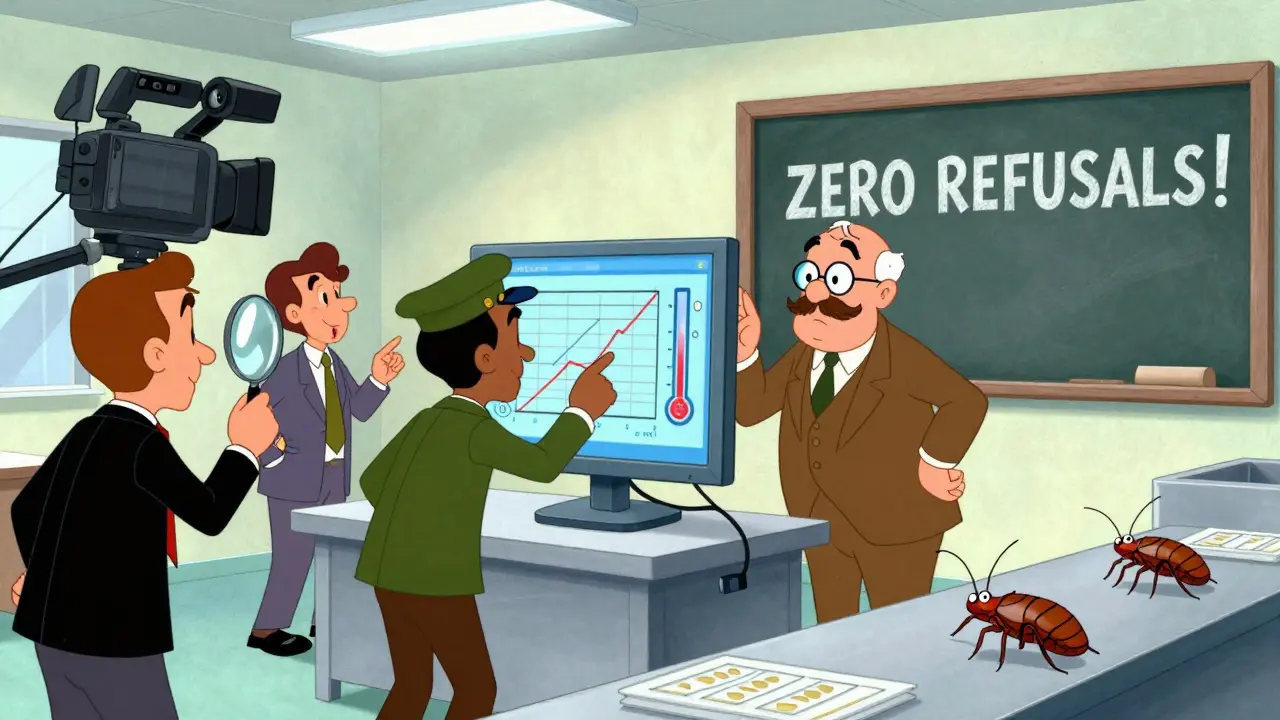
- Monthly mock inspections-They don’t wait for the FDA. They run surprise audits on themselves. One plant in India does a full inspection simulation every month. They bring in a former FDA inspector as a consultant. They’ve had zero refusals since.
Some factories are even installing live cameras in key areas-like packaging lines or storage rooms-with recording capabilities. It’s not mandatory, but it’s becoming common. Why? Because if an inspector sees something questionable, you can show them the video from that day. It proves you weren’t hiding anything.
What gets you denied entry-and how to avoid it
The FDA doesn’t just inspect. They decide if your product can enter the U.S. Here are the top reasons shipments get refused:
- Failure to provide requested records within 24 hours
- Observation of unsanitary conditions (mold, pest droppings, unclean equipment)
- Missing or falsified allergen controls
- Use of unapproved additives or contaminants above legal limits
- Refusal to let inspectors photograph or access any area of the facility
One factory in Vietnam lost three shipments in a row because their pest control logs didn’t match what the inspectors saw on-site. The logs said “treatment completed,” but the inspectors found live cockroaches near the packaging line. The company claimed it was an accident. The FDA didn’t buy it. They refused all future shipments until the facility passed a re-inspection.
Don’t assume your local health standards are enough. U.S. rules are stricter. For example, the FDA limits lead in candy to 0.1 ppm. In some countries, the limit is 0.5 ppm. If you’re making candy for the U.S. market, you must meet the lower standard-even if it’s not required at home.
Is the FDA’s approach fair?
Some industry groups say the new rules are too harsh. They argue that small family-run factories in developing countries can’t afford 24/7 digital systems or full-time bilingual staff. They’re right-but the FDA isn’t offering grace periods.
What the FDA says: “We’re not asking for perfection. We’re asking for readiness.”
They’ve made it clear: if you’re exporting to the U.S., you’re subject to U.S. law. That’s not negotiable. The alternative? Stop selling here.
For big companies, this isn’t a shock. Multinational brands already had U.S.-style quality systems. But for small exporters, this is a wake-up call. The FDA isn’t trying to punish them. They’re trying to protect American families from contaminated food. And if your factory can’t meet those standards, you’re not just risking your business-you’re risking lives.
What’s next for FDA foreign inspections
The FDA is already testing new tools:
- Using AI to analyze inspection data and predict which facilities are most likely to violate rules
- Partnering with trusted third-party auditors in countries like India and Mexico to conduct inspections under FDA supervision
- Launching a portal where foreign facilities can submit digital inspection prep checklists before inspectors arrive
Expect more unannounced inspections in 2025. The agency is also pushing for stronger international cooperation-working with regulators in the EU, Canada, and Japan to share inspection data and avoid duplication.
The message is clear: if you want to sell food to Americans, you have to play by American rules. No exceptions. No shortcuts. No advance notice.
What you should do right now
If you’re a foreign manufacturer exporting to the U.S., here’s your checklist:
- Review your registration with the FDA. Is it up to date? Did you certify that you’ll allow inspections?
- Ensure all food safety records are digital, backed up, and accessible 24/7.
- Train at least one staff member to handle inspections in English.
- Run a mock inspection this week. Don’t wait. Pretend the FDA is coming tomorrow.
- Stop using local customs as an excuse. The FDA doesn’t care if it’s “how things are done here.”
This isn’t about compliance. It’s about survival. If you can’t meet these standards, your products won’t reach U.S. shelves. And once you’re blocked, it’s harder to get back in than it is to stay out.
Diana Alime
December 24, 2025 AT 10:40Andrea Di Candia
December 25, 2025 AT 23:32bharath vinay
December 26, 2025 AT 13:11Dan Gaytan
December 27, 2025 AT 02:25Usha Sundar
December 27, 2025 AT 11:19Wilton Holliday
December 29, 2025 AT 08:04Harsh Khandelwal
December 29, 2025 AT 22:03Delilah Rose
December 31, 2025 AT 11:35Spencer Garcia
December 31, 2025 AT 21:08Bret Freeman
January 1, 2026 AT 07:41EMMANUEL EMEKAOGBOR
January 3, 2026 AT 04:46CHETAN MANDLECHA
January 4, 2026 AT 12:57Jillian Angus
January 6, 2026 AT 00:39Ajay Sangani
January 6, 2026 AT 13:27