
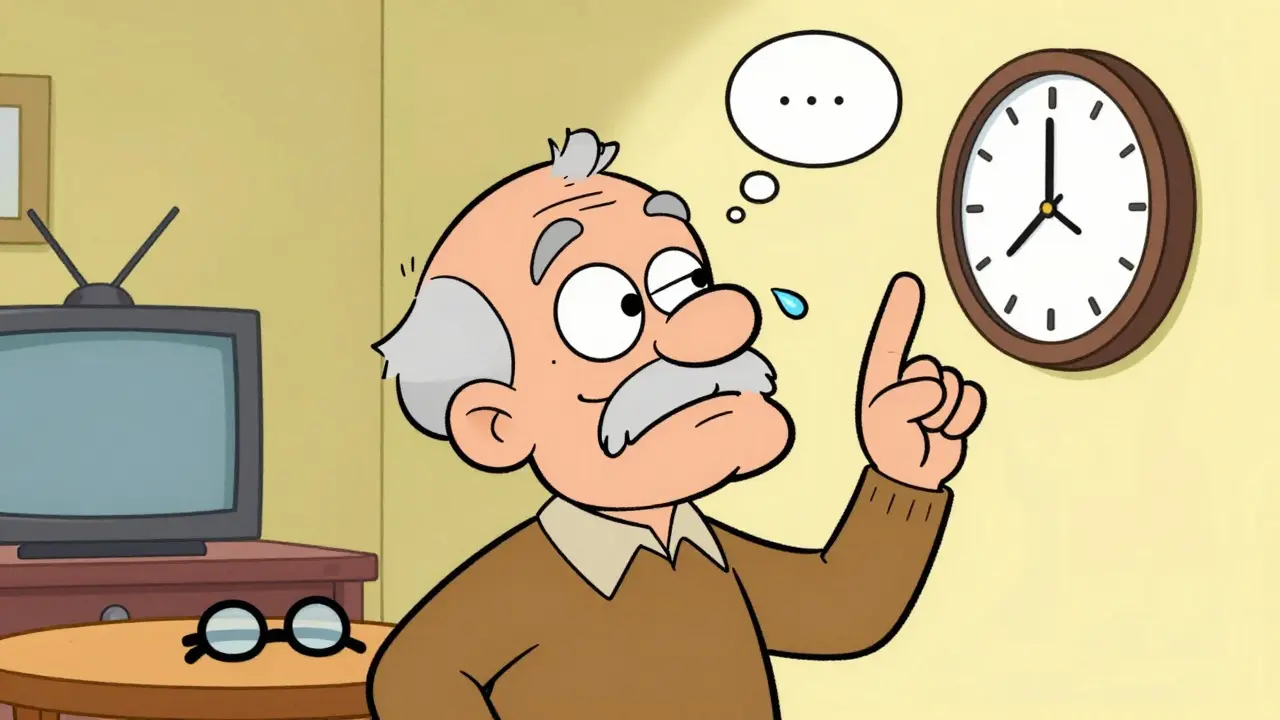
When your eyelid starts to droop or turn inward, it’s not just a cosmetic issue-it can block your vision, scratch your cornea, and even threaten your sight. Two of the most common eyelid disorders, ptosis and entropion, affect hundreds of thousands of adults every year, especially those over 60. Many people dismiss these changes as normal aging, but they often need medical attention. Left untreated, they can lead to permanent eye damage.
What Is Ptosis and How Does It Affect Vision?
Ptosis is the medical term for a drooping upper eyelid. It can happen in one or both eyes and ranges from barely noticeable to completely covering the pupil. The eyelid doesn’t just sag-it actively blocks your line of sight. People with ptosis often tilt their head back, raise their eyebrows, or even use their fingers to lift their eyelids just to see clearly. This constant effort leads to headaches and eye fatigue. The main cause is age-related weakening of the levator muscle, the one responsible for lifting the eyelid. Over time, the tissue stretches, and the muscle loses strength. Other causes include nerve damage, trauma, or congenital issues. Contact lens wearers have a 30% higher risk due to repeated eyelid manipulation. If you notice sudden drooping-especially if it happens over days or weeks-see a doctor immediately. Rapid onset can signal a neurological problem like a stroke or aneurysm. Doctors measure ptosis using the margin reflex distance (MRD), which checks how far the eyelid edge is from the center of the pupil. A normal MRD is 4 to 5 millimeters. Mild ptosis is a 1-2mm droop, moderate is 2-3mm, and severe is more than 3mm. If the eyelid covers more than a third of the pupil, surgery is usually recommended.Entropion: When Your Eyelid Turns Inward
Entropion is the opposite problem: the eyelid rolls inward, causing eyelashes to rub against the cornea. This is most common in the lower eyelid and affects about 97% of entropion cases. The constant friction feels like sand in your eye. You’ll notice redness, tearing, mucus discharge, and a burning sensation. Left unchecked, it leads to corneal abrasions, ulcers, and even vision loss. About 80% of entropion cases in Western countries are involutional-meaning they come from aging. The eyelid’s supporting structures loosen, and the muscle that normally holds the lid in place weakens. Other types include cicatricial entropion (from scarring due to burns, trauma, or infections like trachoma), spastic entropion (temporary, caused by inflammation), and rare congenital forms. Trachoma, a bacterial infection spread in areas with poor sanitation, is still a leading cause globally. Chronic blepharitis-where oil glands at the eyelid margins get clogged-often contributes to both entropion and trichiasis, a condition where eyelashes grow inward due to damaged follicles. This creates a cycle: irritation causes inflammation, which worsens eyelid position, which causes more irritation.Surgical Repair: What Works for Ptosis
Surgery is the only permanent fix for significant ptosis. The type of procedure depends on how well your levator muscle still works. If it has decent strength (more than 4mm of movement), a levator resection is used. The surgeon tightens the muscle to lift the lid. For patients with very weak levator function, a frontalis sling connects the eyelid to the forehead muscle, using your brow to lift the lid. This is common in children with congenital ptosis or adults with nerve damage. For mild cases, a Müller’s muscle-conjunctival resection may be enough. It’s less invasive and works best if the eyelid responds to a phenylephrine eye drop test. Success rates for primary ptosis surgery are 85-95%. But complications happen: 5-10% of patients end up with an overcorrected lid (too high), 3-8% have undercorrection (still droopy), and 5-15% get asymmetry between the two eyes. Dry eyes are also common after surgery, affecting up to 20% of patients. Newer techniques like adjustable sutures, introduced in 2018, let surgeons fine-tune the eyelid height right after surgery. This reduces the need for revision surgery by about 25%. Recovery usually takes 1-2 weeks, with swelling and bruising fading over time.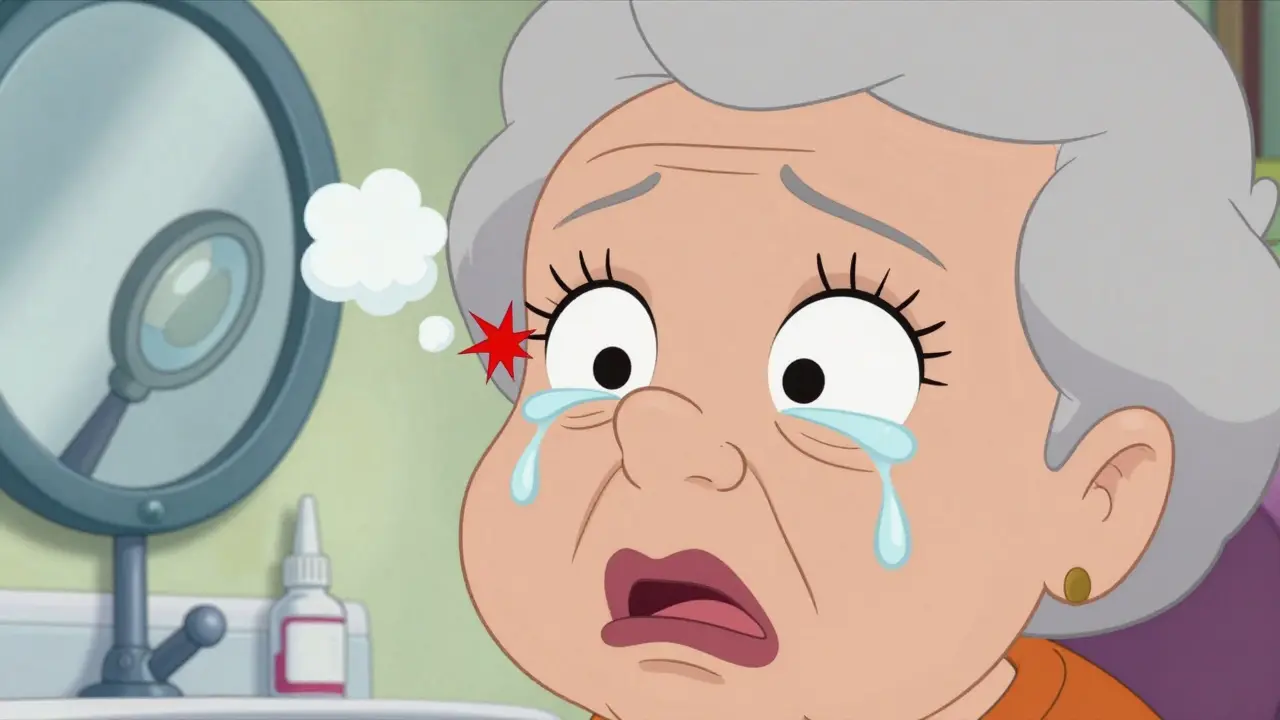
Surgical Repair: What Works for Entropion
Entropion repair focuses on restoring the eyelid’s normal position. For involutional entropion-the most common type-the tarsal fracture procedure is the gold standard. It involves tightening the eyelid’s horizontal support and repositioning the muscle. Success rates are 90-95%. For scarring-related entropion, a tarsal wedge resection removes a small piece of the eyelid to correct the turn. A temporary fix is the Quickert suture, where stitches pull the lid outward. It’s useful for patients who aren’t ready for surgery or need relief while waiting. But it only works about 60-70% of the time and doesn’t last long. New minimally invasive methods now use absorbable sutures that dissolve over time. These reduce recovery from 4-6 weeks down to 1-2 weeks, with similar success rates. Complications include recurrence (5-15%), scarring (2-5%), and infection (1-3%). If you’ve had previous eyelid surgery, your risk of recurrence is 40-60% higher.When Conservative Treatments Help-And When They Don’t
Before surgery, doctors may recommend temporary relief options. Lubricating eye drops and ointments can protect the cornea from drying out and reduce irritation. Taping the lower eyelid with medical tape overnight can help keep it in place. Warm compresses and gentle lid scrubs are essential if blepharitis is involved. But these are stopgaps. They don’t fix the underlying problem. If you’re constantly rubbing your eyes, blinking painfully, or noticing blurred vision, it’s time to consider surgery. Conservative treatments won’t stop the eyelashes from scratching your cornea or prevent vision loss.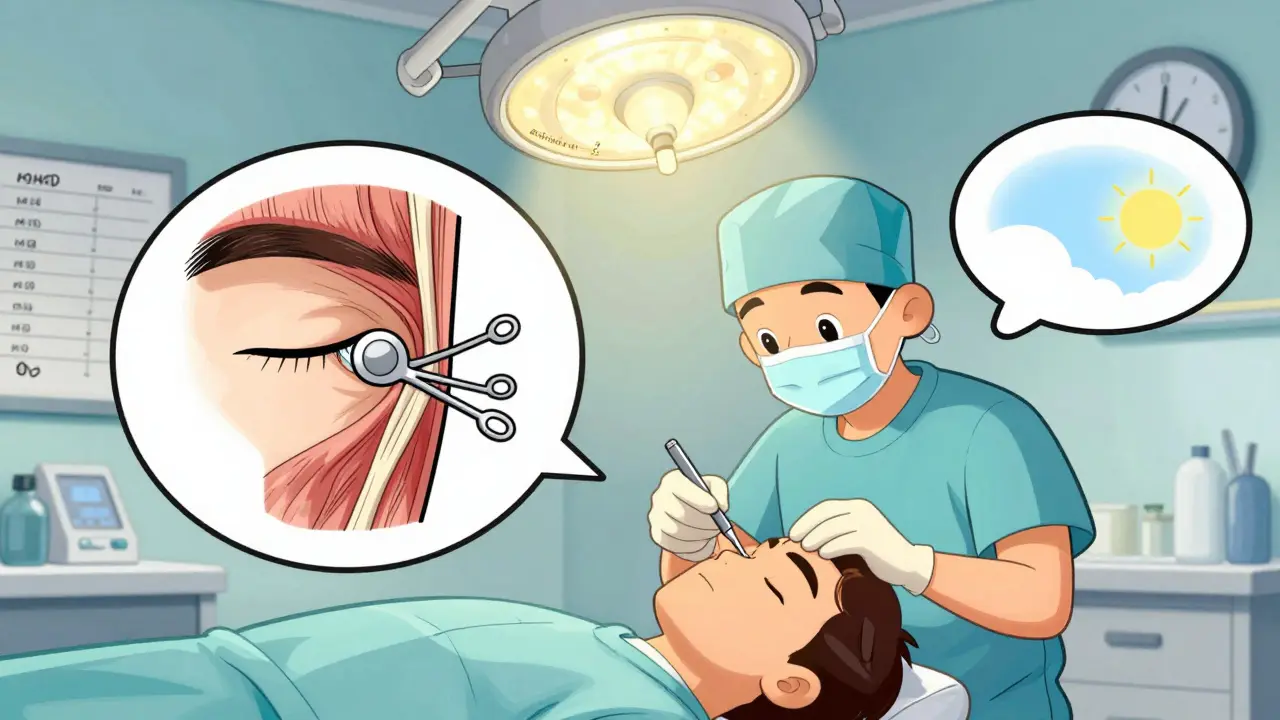
Who’s at Risk-and What to Watch For
Age is the biggest risk factor. While only 0.5% of people aged 50-60 have eyelid malpositions, that jumps to 2.5% for those over 80. People with a history of eye surgery, chronic dry eye, or skin conditions like rosacea are also at higher risk. Ocular rosacea, often overlooked, causes inflammation along the lid margins and can trigger both ptosis and entropion. Family history plays a role too. If your parent had eyelid issues, you’re more likely to develop them. Frequent eye rubbing, long-term contact lens use, and previous eye trauma all increase your chances. Symptoms that need urgent care:- Sudden drooping of the eyelid
- Sharp pain or redness in the eye
- Feeling like something’s stuck in your eye that won’t go away
- Blurred or double vision
- Visible corneal damage or ulcers
The Bigger Picture: Why This Matters Now
The global market for oculoplastic surgery-covering ptosis, entropion, and similar conditions-was worth $1.8 billion in 2022 and is expected to hit $2.7 billion by 2028. Why? Because people are living longer. About 5% of adults over 70 now have some form of eyelid malposition. That’s millions of people struggling to see clearly. Professional societies like the American Society of Ophthalmic Plastic and Reconstructive Surgery report that eyelid malposition repairs make up 15-20% of all oculoplastic surgeries in the U.S. That’s not a niche concern-it’s a major part of eye care. Advances in imaging now let surgeons plan procedures with 30-40% greater accuracy. Future research is looking at genetic markers that could predict who’s likely to develop age-related eyelid changes, opening the door to earlier, preventive care.What to Do Next
If you’re noticing any of these symptoms-drooping eyelids, persistent eye irritation, or lashes scratching your eye-it’s time to see an eye specialist. Don’t wait until it hurts to act. A simple exam can determine if you have ptosis, entropion, or another condition like dermatochalasis (excess eyelid skin). Early intervention prevents complications and improves outcomes. Surgery isn’t just about appearance. It’s about protecting your vision and restoring your quality of life. Whether it’s a quick fix with sutures or a full muscle repositioning, the right procedure can give you back clear, comfortable vision.Can ptosis fix itself without surgery?
No, ptosis won’t fix itself. While mild cases might not worsen quickly, the drooping eyelid won’t improve on its own. The muscles and tissues that cause it have weakened due to age, injury, or genetics, and they don’t regain strength naturally. Surgery is the only reliable way to restore normal eyelid position and prevent long-term vision problems.
Is entropion dangerous if left untreated?
Yes, entropion is sight-threatening. When eyelashes constantly rub against the cornea, they cause scratches, ulcers, and infections. These can lead to permanent scarring of the cornea, which distorts vision or causes blindness. Even if symptoms seem mild at first, the damage builds up over time. Prompt treatment is essential to protect your sight.
How long does recovery take after eyelid surgery?
Recovery varies by procedure. For most ptosis and entropion surgeries, swelling and bruising last about 1-2 weeks. Full healing takes 4-6 weeks. With newer minimally invasive techniques using absorbable sutures, many patients return to normal activities within 1-2 weeks. Avoid heavy lifting, rubbing your eyes, and wearing makeup for at least a week after surgery.
Can blepharitis cause ptosis or entropion?
Blepharitis doesn’t directly cause ptosis, but it can contribute to entropion. Chronic inflammation from clogged oil glands leads to scarring and changes in eyelid structure. Over time, this can make the eyelid turn inward (entropion) or cause eyelashes to grow abnormally (trichiasis). Managing blepharitis with warm compresses and lid hygiene helps reduce this risk.
Are there non-surgical options for entropion?
Temporary relief is possible with lubricating eye drops, taping the eyelid, or using special contact lenses that protect the cornea. The Quickert suture technique can also provide short-term correction. But these don’t fix the underlying structural issue. For lasting results, especially in older adults, surgery is the only effective solution.
What’s the difference between entropion and ectropion?
Entropion is when the eyelid turns inward, causing lashes to rub the eye. Ectropion is the opposite-it turns outward, exposing the eye to air and debris. Both can cause irritation and dryness, but ectropion often leads to excessive tearing and increased risk of infection. Ectropion is commonly caused by aging, sun damage, or scarring, and like entropion, usually requires surgery for correction.
Dayanara Villafuerte
January 16, 2026 AT 19:13Kristin Dailey
January 16, 2026 AT 21:16Naomi Keyes
January 18, 2026 AT 16:36Praseetha Pn
January 19, 2026 AT 10:35Jodi Harding
January 20, 2026 AT 09:34kenneth pillet
January 21, 2026 AT 03:34Chuck Dickson
January 22, 2026 AT 21:42Ryan Otto
January 23, 2026 AT 19:04Jay Clarke
January 24, 2026 AT 06:16Eric Gebeke
January 24, 2026 AT 23:47Zoe Brooks
January 25, 2026 AT 17:46