
Why Diabetic Foot Care Isn’t Just Advice-It’s a Lifesaver
Every year, over 82,000 people in the U.S. lose a foot or leg to diabetes-related amputation. Most of these cases are preventable. The problem isn’t always the diabetes itself-it’s what happens when feet go unnoticed. Nerve damage from high blood sugar means you might not feel a blister, a cut, or a hot spot from your shoe until it’s too late. By the time you see redness or swelling, the infection is already spreading. That’s why daily foot inspection and proper care aren’t optional. They’re the difference between walking tomorrow and needing surgery today.
The Risk Levels That Decide How Often You Need to Check Your Feet
Not everyone with diabetes has the same risk for foot ulcers. The International Working Group on the Diabetic Foot (IWGDF) classifies risk into four levels, and your level tells you exactly how often you need to check your feet and see a specialist.
- Risk 0: No nerve damage, no history of foot problems. Check your feet daily, but get a professional exam once a year.
- Risk 1: Nerve damage (neuropathy) but no foot deformities or past ulcers. Check feet daily and see your doctor every six months.
- Risk 2: Nerve damage plus foot deformities like bunions or hammertoes. Daily inspection is critical. You need a foot check every three months.
- Risk 3: You’ve had a foot ulcer or amputation before. This is high risk. Check your feet every day and see a specialist monthly. Missing one inspection could mean losing a toe.
Most people don’t know their risk level. Ask your doctor to classify yours during your next visit. If they don’t know, ask for a 10-gram monofilament test-it’s the standard way to check for loss of sensation.
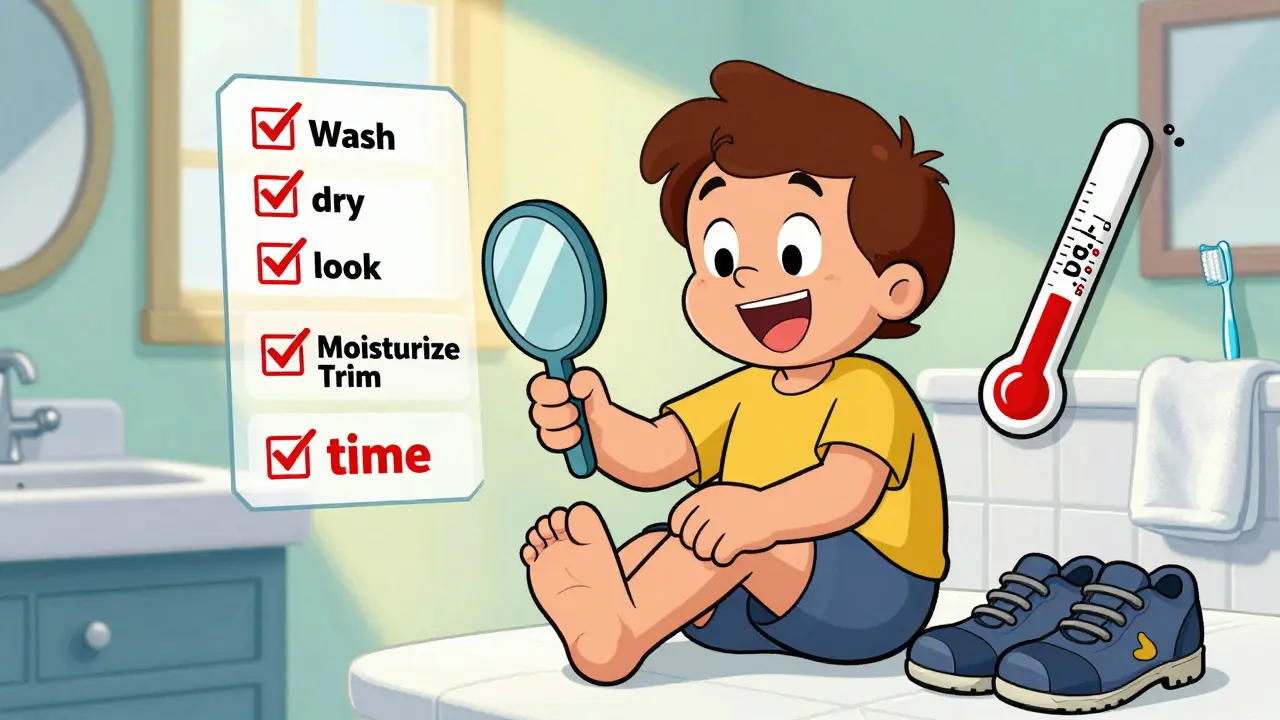
Your Daily Foot Inspection Checklist (The 7-Step Routine)
Doing this right isn’t about rushing. It’s about being thorough. Here’s the exact routine backed by NYU Langone Health and the CDC:
- Wash with lukewarm water. Use water between 90°F and 95°F. Test it with your elbow or a thermometer-your feet can’t feel if it’s too hot. Use mild soap. No Epsom salts, no bleach, no harsh scrubs.
- Dry completely. Especially between your toes. Moisture there breeds fungus and cracks. Use a soft towel. Don’t rub-pat gently.
- Look at every inch. Use a hand mirror or ask someone to help. You need to see the soles, the tops, the sides, and between toes. Don’t guess. Look. Ulcers often start as tiny red spots or blisters under 3mm.
- Spot the warning signs. Look for: blisters larger than a pea, cuts deeper than a scratch, ingrown toenails, redness bigger than a coin, swelling that makes your shoe feel tight, or skin that feels warmer than the other foot.
- Moisturize, but not between toes. Dry skin cracks. Cracks turn into openings. Use unscented lotion on tops and soles. Never put it between toes-that’s a fungus factory.
- Trim nails straight across. Cut them so they’re 1-2mm longer than the tip of your toe. Don’t round the corners. Don’t dig under the nail. If you can’t see well or your nails are thick, get a podiatrist to do it.
- Do it at the same time every day. Best time? Between 10 a.m. and 2 p.m. Your body temperature is stable then. If you check in the morning or at night, heat from your blanket or cold from the floor can trick you into thinking something’s wrong when it’s not.
Studies show 68% of ulcers start from injuries you didn’t notice because inspections were inconsistent. Make this checklist part of your morning coffee or evening wind-down. Tie it to a habit you already have.
Footwear: The Hidden Cause of 87% of Ulcers
Shoes are the #1 cause of diabetic foot ulcers. Not dirt. Not walking too much. Shoes that don’t fit.
Here’s what works:
- Space matters. There should be 0.5 inches (12.7mm) between your longest toe and the end of the shoe. If your toe touches the front, it’s too short.
- Width is critical. Your toes should spread naturally. If they’re squished, you’ll get pressure sores. Look for shoes that allow 15mm of toe splay.
- Heel counter stiffness. The back of the shoe should hold your heel firmly. Too soft? Your foot slides, causing friction. Too hard? It digs in. The ideal heel counter bends between 45 and 60 degrees under pressure.
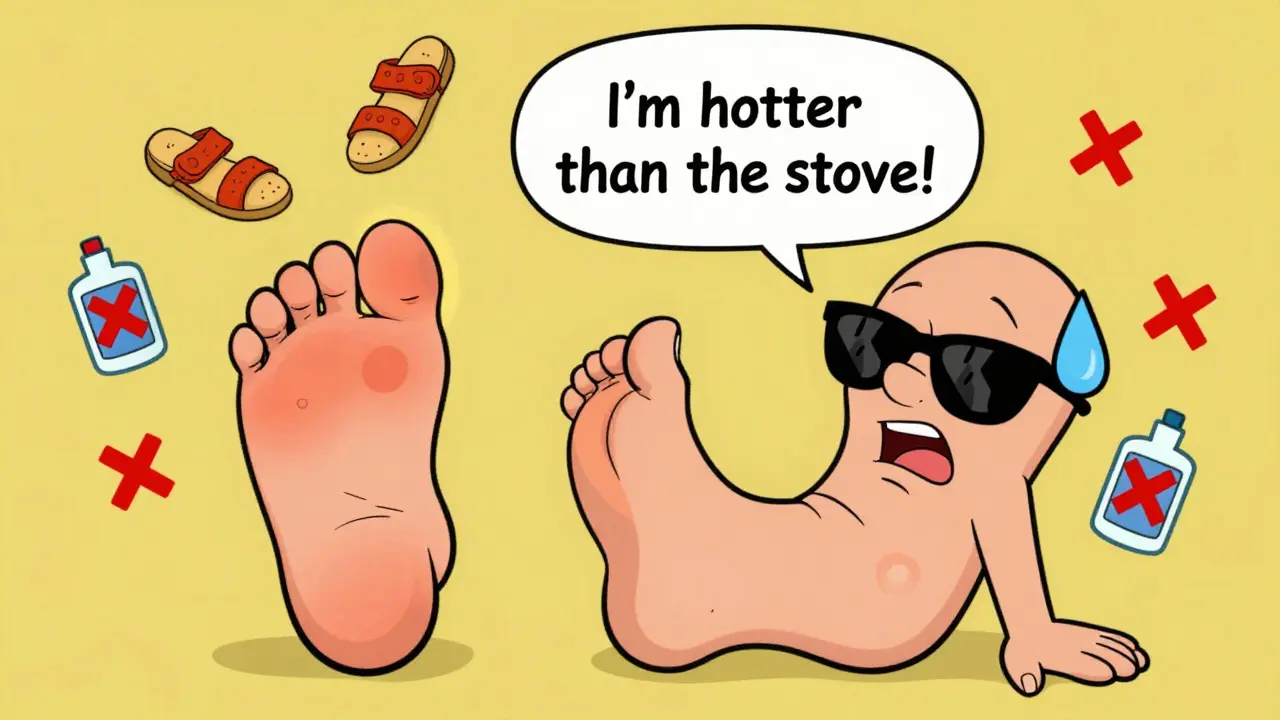
Therapeutic shoes aren’t just for people with ulcers. If you have neuropathy or foot deformities, you need them. Insurance often covers them-ask your doctor for a prescription. Avoid sandals, flip-flops, or barefoot walking-even indoors. Walking barefoot increases ulcer risk by 11.3 times, according to the CDC.
Summer is the worst time. Heat makes feet swell, and people switch to open shoes. Pressure mapping studies show sandals increase ulcer risk by 4.3 times. Keep your therapeutic shoes on, even in 89°F weather.
What Doesn’t Work (And Why You Should Skip It)
There’s a lot of misinformation out there. Don’t waste time-or risk your feet-on these myths:
- Antibiotics for uninfected cuts. Taking antibiotics “just in case” doesn’t help. It makes bacteria stronger. The IDSA says this practice increases antibiotic resistance by 37% with zero benefit.
- Home nerve decompression. Some clinics offer surgery to “release nerves” to prevent ulcers. Nine randomized trials show it doesn’t work. The IWGDF says stop doing it.
- Unsupervised ankle exercises. Moving your feet and ankles sounds good, right? But without gait analysis, you’re putting extra pressure on weak spots. One study found a 22% increase in ulcers from unsupervised exercise.
- Using heating pads or hot water bottles. You can’t feel how hot they are. Burns happen fast-and heal slower when you have diabetes.
Stick to what’s proven: inspection, proper shoes, moisture control, and professional care.
When to Call Your Doctor Immediately
You don’t need to wait for your next appointment if you see these signs:
- Redness spreading beyond a coin-sized area
- Swelling that makes your shoe feel tight within a day
- Warmth in one foot that’s noticeably hotter than the other
- Drainage, pus, or a foul smell
- A blister or cut that doesn’t start healing in 48 hours
Don’t wait for pain. Diabetic ulcers often hurt less than you’d expect. If your foot looks wrong, it probably is. Call your doctor the same day. If you can’t reach them, go to urgent care. Delaying by even 24 hours can turn a small wound into a hospital stay.
Technology Can Help-But It’s Not a Replacement
New tools like smart socks and insole sensors can detect temperature changes that predict ulcers 4-7 days before they form. The D-FOOT trial found these devices catch 73% of ulcers early. But they cost $150-$300 upfront, plus monthly fees. If you can’t afford them, don’t panic. The checklist above works just as well-if you do it every day.
Some smartphone apps can analyze photos of your feet for signs of ulcers. They’re 89.7% accurate in trials. But they need good lighting and fast internet. If you live in a rural area or have slow internet, skip the app. Stick to the mirror and your eyes.

Why Most People Fail-And How to Beat the Odds
Only 42% of people with diabetes do daily foot checks. Why? Vision problems, numbness, depression, or just forgetting. If you’re one of them, here’s how to fix it:
- Put the mirror in your bathroom. Make it part of your routine-after brushing your teeth.
- Use a checklist. Print it. Tape it to the mirror. Check off each step.
- Ask for help. If you can’t see your soles, ask a partner, child, or caregiver to help. It’s not a burden-it’s a lifesaver.
- Set a daily alarm. Label it: “Feet Check-No Excuses.”
Studies show Medicaid patients are 28.7% less likely to check their feet. That’s not about laziness-it’s about access. If you’re struggling, ask your clinic about free foot care programs. Many hospitals offer them.
What’s Working: The Integrated Care Model
The best outcomes come from teams-not just doctors. Integrated care means your primary care provider, podiatrist, diabetes educator, and orthotist all talk to each other. They share notes. They schedule appointments within 14 days of each other.
Programs like this reduce ulcers by 35.7% and amputations by 42.3%. Ask your doctor: “Do you work with a foot care team?” If they say no, ask for a referral. You deserve coordinated care.
Final Thought: Your Feet Are Your Foundation
Diabetes doesn’t have to take your mobility. It doesn’t have to take your feet. The tools are simple: inspection, shoes, moisture, and timely care. It’s not about perfection. It’s about consistency. Do the checklist every day, even if you’re tired. Even if you think nothing’s wrong. Even if it’s raining or you’re on vacation. Your feet can’t tell you when something’s wrong. So you have to tell yourself.
One day of skipping it might not matter. But 30 days? 60 days? That’s how ulcers start. And once they do, the road gets harder. Stay ahead. Check your feet. Today. Right now. Don’t wait.
Jason Shriner
January 12, 2026 AT 09:42Jennifer Littler
January 13, 2026 AT 14:56Matthew Miller
January 13, 2026 AT 23:40Madhav Malhotra
January 14, 2026 AT 07:58Sam Davies
January 15, 2026 AT 22:14Christian Basel
January 16, 2026 AT 21:06Alex Smith
January 16, 2026 AT 22:07Roshan Joy
January 18, 2026 AT 16:28Michael Patterson
January 18, 2026 AT 23:14Priya Patel
January 19, 2026 AT 08:26Alfred Schmidt
January 20, 2026 AT 06:40Sean Feng
January 22, 2026 AT 02:15Priscilla Kraft
January 23, 2026 AT 12:46Vincent Clarizio
January 25, 2026 AT 12:06Adewumi Gbotemi
January 26, 2026 AT 19:42