
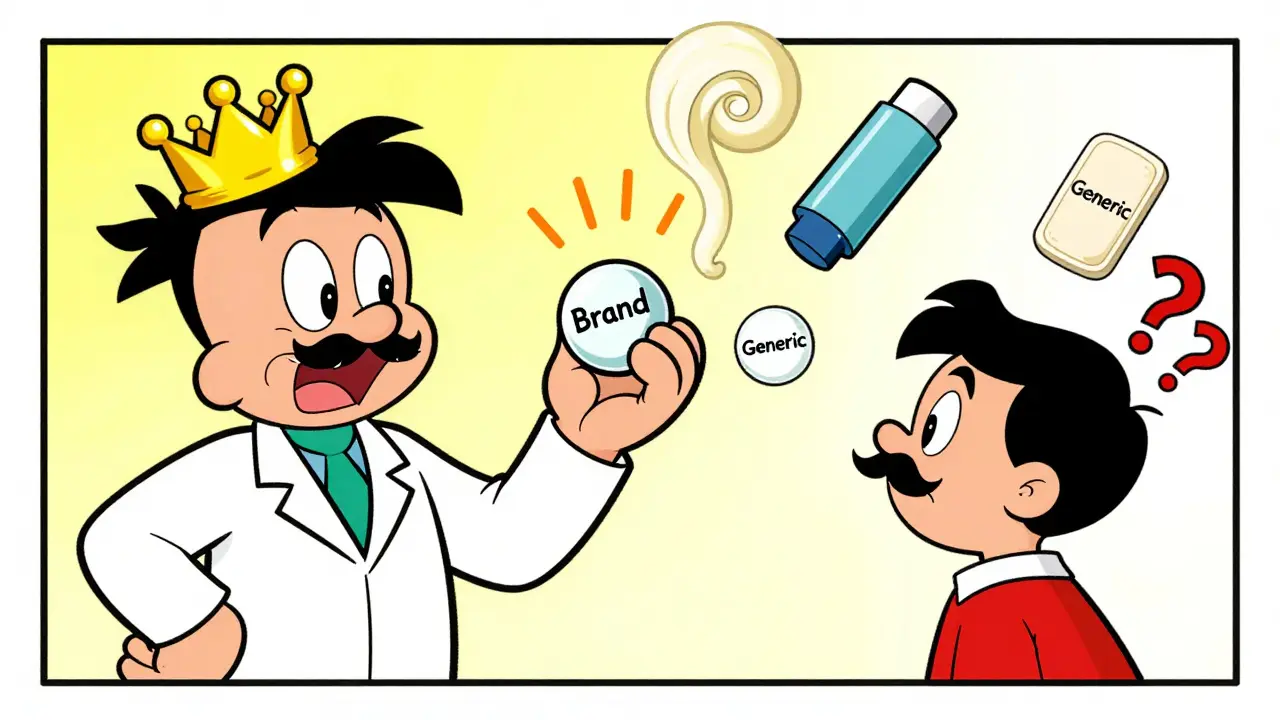
When you pick up a generic pill at the pharmacy, you expect it to work just like the brand-name version. That’s the whole point. But what if the drug isn’t just a simple tablet? What if it’s a cream that needs to penetrate skin, an inhaler that must deliver medicine deep into your lungs, or a gel that stays on your eye for hours? These are complex generic formulations, and proving they work the same as the original isn’t just harder-it’s one of the biggest unsolved problems in modern pharmacy.
What Makes a Generic Drug "Complex"?
Not all generics are created equal. The FDA defines complex generics as products where the active ingredient, delivery method, or formulation is too intricate for standard testing to confirm they’re equivalent to the brand-name drug. These aren’t just pills with different colors. They include:- Liposomes and nanoparticles that trap drugs inside tiny fat bubbles
- Extended-release injectables that slowly release medicine over days or weeks
- Topical creams, gels, and ointments meant to act on the skin, not enter the bloodstream
- inhalers that spray medicine as fine particles into the lungs
- Transdermal patches that deliver drugs through the skin
- Drug-device combos like auto-injectors or nebulizers
These aren’t rare exceptions. About 400 complex branded drugs are on the U.S. market right now-with almost no generic alternatives. Why? Because proving bioequivalence for these products is like trying to match a secret recipe when you only have the final dish to taste.
Why Blood Tests Don’t Work
For simple pills, bioequivalence is straightforward. You give volunteers the generic and the brand-name drug, then measure how much of the drug shows up in their blood over time. If the peak concentration (Cmax) and total exposure (AUC) fall within 80%-125% of the brand, it’s approved. Simple.But that method fails completely for drugs that don’t enter the bloodstream. Take a corticosteroid cream for eczema. The drug’s job is to stay in the skin and reduce inflammation. Measuring blood levels tells you nothing about whether the cream actually worked on the skin. Same with inhaled asthma medications-what matters is how much reaches the lungs, not how much ends up in the arteries.
There’s no reliable, standardized way to measure drug levels at these local sites. You can’t stick a sensor into someone’s lung or eyeball during a clinical trial. So regulators and manufacturers are stuck trying to prove equivalence without direct evidence of how the drug behaves where it’s supposed to work.
The Reverse-Engineering Nightmare
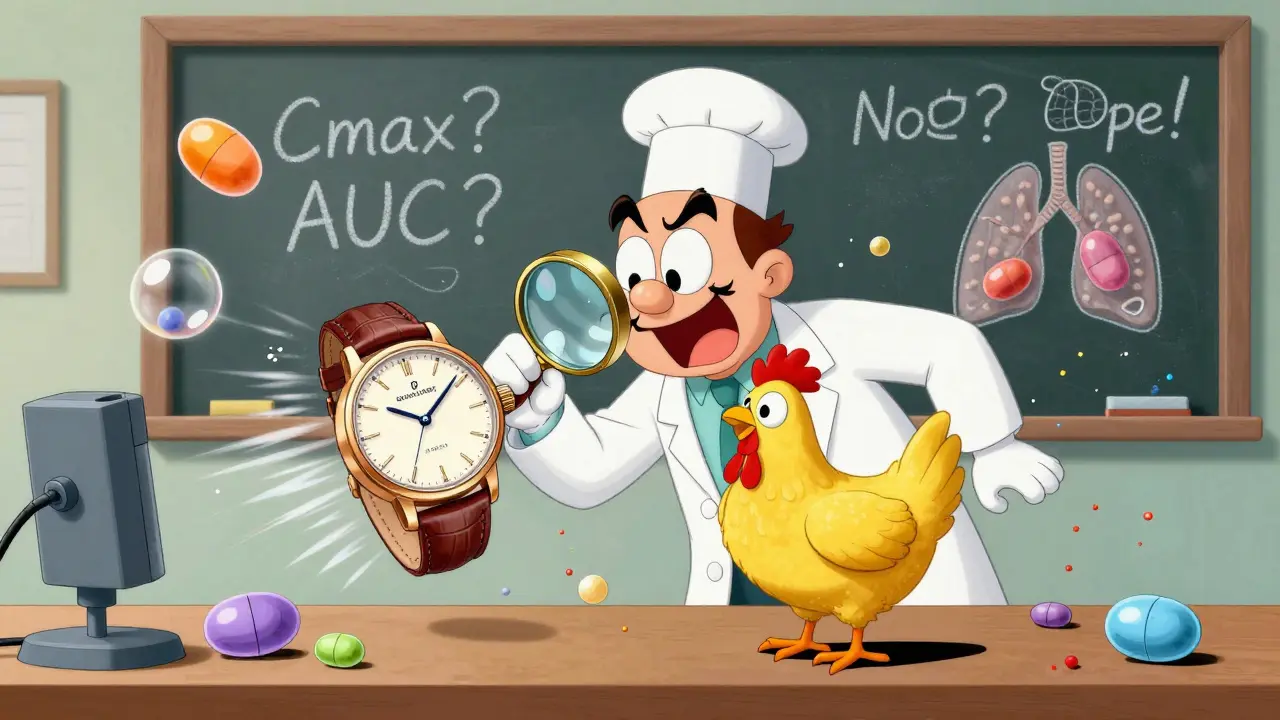
Generic makers don’t get the original formula. They don’t know the exact ratios of ingredients, the manufacturing temperature, the mixing speed, or how the manufacturer controls particle size. They have to reverse-engineer it-often by trial and error.Imagine trying to copy a luxury watch by only having the finished product. You can see the shape, the weight, the ticking sound. But you don’t know if the gears are made of brass or titanium, or how many teeth are on each wheel. Now imagine that tiny changes in gear size make the watch run fast or slow. That’s what happens with complex generics.
A change in the type of emulsifier in a cream can alter how deeply the drug penetrates. A slight difference in particle size in an inhaler can mean the medicine lands in the throat instead of the lungs. These aren’t theoretical risks-they’ve caused real-world failures. One study showed that 70% of complex generic applications fail at the bioequivalence stage, not because the drug is unsafe, but because the data can’t prove it works the same way.
Manufacturing Is a Minefield
Complex generics often contain more than 10 ingredients. Each one can affect stability, absorption, or performance. A change in humidity during production can cause a cream to separate. A shift in temperature during storage can degrade nanoparticles. Even the type of container used can interact with the drug.Unlike simple tablets, where the process is mostly about mixing and pressing, complex products require precise control over physical properties:
- Particle size distribution (must be 1-10 micrometers for inhalers)
- Viscosity and spreadability of topical gels
- Drug release rate from liposomes
- Aerosol plume shape from inhalers
There’s no universal test for any of these. One lab might use laser diffraction. Another might use microscopy. Regulatory agencies don’t always agree on which method is right. This leads to delays, retesting, and outright rejection of applications.
Regulatory Chaos
The FDA, EMA (Europe), and other agencies don’t have the same rules. A product approved in the U.S. might be rejected in Europe because the testing method doesn’t meet their standards. A manufacturer might spend $50 million developing a complex generic, only to find out the EU requires a different type of clinical endpoint.One survey found that 89% of generic drug companies say bioequivalence testing methods are their biggest hurdle. Another 76% struggle with stability testing. And 68% say characterizing the product’s physical properties is nearly impossible without proprietary data.
It’s not just technical-it’s financial. Developing a complex generic takes 18 to 24 months longer than a simple one. Costs can be 2.5 to 3 times higher. Many companies just give up. That’s why, even though 90% of U.S. prescriptions are filled with generics, fewer than 15% of complex generic applications get approved.
How Are Things Changing?
There’s progress. The FDA created the Complex Generic Drug Products Committee to help manufacturers navigate the process. They’ve published 15 new guidance documents since 2022 covering everything from topical corticosteroids to testosterone gels.One major shift is toward Quality by Design. Instead of waiting until the end to test for bioequivalence, companies are now encouraged to build it in from the start. That means:
- Choosing excipients that won’t degrade the drug
- Running compatibility tests between ingredients early
- Understanding how environmental factors affect stability
They’re also investing in new tools:
- Imaging tech to track how creams penetrate skin
- In vitro lung models that simulate how inhalers deposit drugs
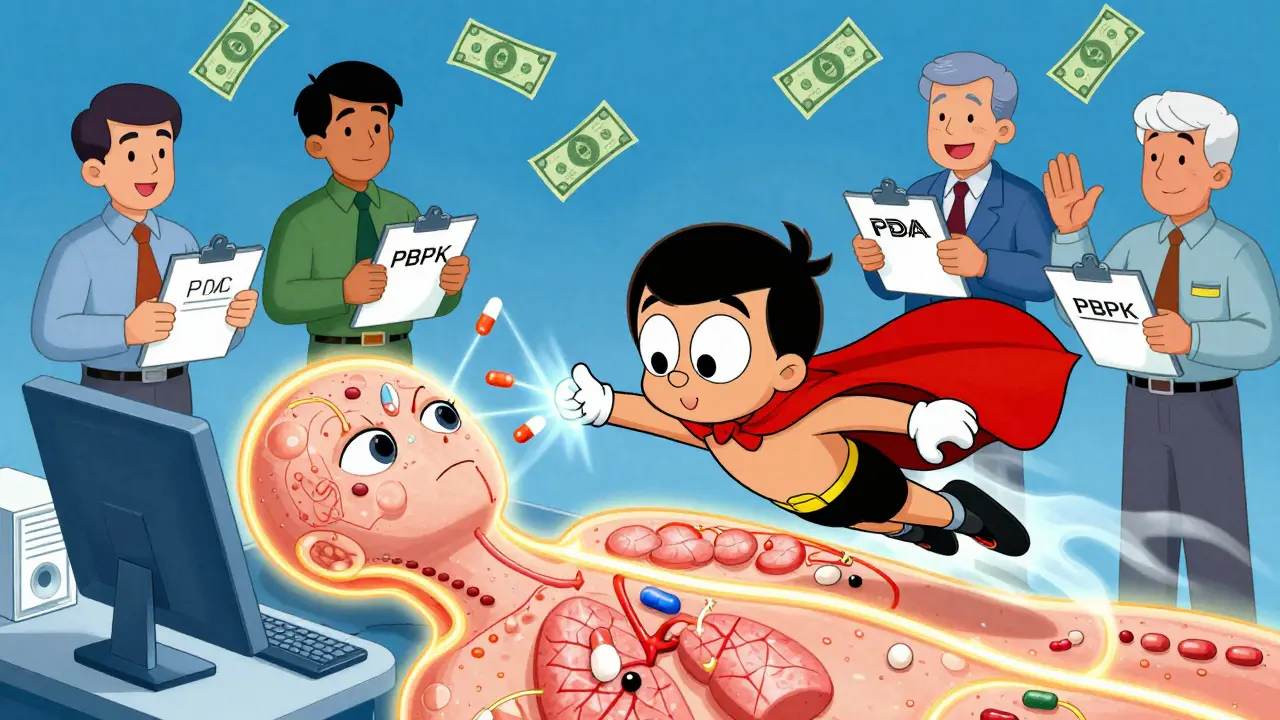
- Physiologically-based pharmacokinetic (PBPK) modeling, which uses computer simulations to predict how a drug behaves in the body based on its physical properties
PBPK modeling is a game-changer. For some products, it could reduce the need for human trials by 40-60%. If the model shows that two formulations behave the same way under simulated conditions, regulators might accept it as proof of equivalence.
The Big Picture: Why It Matters
Complex drugs are often used for chronic, expensive conditions: asthma, eczema, arthritis, hormone replacement, cancer. Many cost over $1,000 a month. If generics could enter the market, patients could save thousands annually.The U.S. market for these drugs is worth $120 billion. Yet, because of the bioequivalence barrier, patients are stuck paying brand prices. That’s not just a business problem-it’s a public health crisis.
Industry experts predict sales of complex generics will grow from $15 billion in 2023 to $45 billion by 2028. But that growth depends on solving the testing problem. Without better methods, more patients will pay more for less access.
What’s Next?
The path forward isn’t about making the tests easier. It’s about making them smarter. Harmonizing global standards, investing in advanced characterization tools, and encouraging early dialogue with regulators are critical. Companies that engage with the FDA’s Complex Generic Drug Product program see approval rates 35% higher than those who don’t.It’s not enough to say a generic is "the same." For complex products, we need to prove it in ways that reflect how the drug actually works in the body-not just how it moves through the blood. That’s the new frontier in generic drug development. And until we get there, millions will keep paying more than they should for medicines that could, in theory, be cheaper.
Scottie Baker
January 14, 2026 AT 07:54This whole system is a scam. Pharma companies patent the damn delivery mechanism, not the drug, then act like they're geniuses for making a cream that doesn't wash off. Meanwhile, patients bleed cash while generics sit in limbo because some lab tech can't replicate the exact shade of white in the ointment.
laura Drever
January 14, 2026 AT 13:22lol so we need sensors in eyeballs now? sounds like a sci fi movie. just let em sell it and see if people die. if not, its fine.
Diana Campos Ortiz
January 16, 2026 AT 02:28I’ve been on a topical steroid for years. The generic I got last month didn’t work at all-my flare-up lasted twice as long. I didn’t realize it was this complicated. This needs to change.
Adam Vella
January 16, 2026 AT 11:18The fundamental epistemological flaw in current bioequivalence paradigms lies in their reductionist reliance on plasma pharmacokinetics as a proxy for therapeutic equivalence-a heuristic that collapses entirely when the pharmacodynamic target is localized, non-systemic, or physicochemically constrained. The regulatory framework remains entrenched in a 1980s paradigm, while the pharmacological reality has evolved into a multidimensional landscape of nano-delivery matrices, interfacial rheology, and microenvironment-dependent release kinetics. Until regulators embrace systems-based modeling and accept in vitro-in vivo correlation (IVIVC) as a valid surrogate for human endpoint trials, we are merely engineering bureaucratic theater.
Angel Molano
January 17, 2026 AT 10:24Stop letting generics near my prescriptions. If you can’t prove it’s exactly the same, don’t sell it. People die from bad generics.
Acacia Hendrix
January 18, 2026 AT 19:55The lack of standardized physicochemical characterization protocols for liposomal and nanoparticulate formulations represents a critical gap in the current regulatory science ecosystem. Without harmonized analytical methodologies for particle size polydispersity index, zeta potential, and drug encapsulation efficiency-metrics that are demonstrably correlated with in vivo performance-the entire bioequivalence paradigm for complex generics is fundamentally untenable. The FDA’s recent guidance documents are a step, but they’re still reactive rather than predictive.
James Castner
January 19, 2026 AT 23:45Let’s take a breath here and look at the bigger picture. We’re talking about human lives-people with chronic asthma, eczema, arthritis, cancer. These aren’t just molecules in a vial; they’re mothers who can’t afford their inhaler, veterans with painful joints, children with severe allergies. The fact that we’ve built a system where profit and paperwork override access is a moral failure. Yes, the science is hard. But so is watching someone suffer because they can’t afford the medicine they need. We need bold leadership-not more committees, not more delay. We need a national push to fund innovation in characterization tools, to incentivize generic manufacturers to engage early with regulators, and to prioritize patient outcomes over bureaucratic convenience. This isn’t just about pharmacology. It’s about justice.
Vinaypriy Wane
January 20, 2026 AT 12:58I understand the science is difficult... but... we have to remember... that people... are suffering... right now... and... every day... we delay... is another day... someone pays too much... or goes without... Please... let’s not make this harder than it needs to be...
Lethabo Phalafala
January 20, 2026 AT 22:46My aunt in Johannesburg uses a topical gel for psoriasis. She pays $800 a month for the brand. The generic? $120. But she can’t get it here because the regulators say it’s ‘not equivalent.’ She cries every time she has to choose between her medicine and her daughter’s school fees. This isn’t science-it’s cruelty dressed up in lab coats.
jefferson fernandes
January 21, 2026 AT 21:05To everyone saying ‘just let generics in and see what happens’-that’s not how medicine works. We don’t gamble with people’s health. But to the regulators: if you’re going to demand perfect equivalence, then you need to fund the tools to measure it. Don’t just throw up your hands and say ‘it’s too hard.’ Build the microscopes, fund the lung simulators, hire the computational biologists. This isn’t magic-it’s engineering. And we’ve solved harder problems before.
Nelly Oruko
January 22, 2026 AT 20:45It’s funny how we trust a pill to work because it’s ‘bioequivalent’... but if you put the same drug in a cream, suddenly it’s a black box. We treat skin like it’s a wall, not an organ. We treat lungs like they’re just tubes, not complex ecosystems. Maybe the problem isn’t the generics-it’s that we still think of the body like a plumbing system.
Lance Nickie
January 24, 2026 AT 14:48wait so generics are hard to make because they’re not exact copies? shocker. maybe the brand names should just stop being so secretive and share the recipe. or maybe... just maybe... the whole system is rigged.
Jesse Ibarra
January 25, 2026 AT 16:39Oh wow, so now we need computer simulations to prove a cream works? That’s it. I’m done. If you can’t test it in a human, it’s not medicine-it’s a sci-fi fantasy. The FDA is turning into a tech startup pretending to be a health agency. This isn’t progress. This is surrender.