

Imagine starting a morning jog, feeling great, and then suddenly feeling like hundreds of tiny needles are piercing your chest. Within minutes, your skin is covered in small, itchy red bumps. This isn't a typical allergic reaction to a bee sting or a new laundry detergent; it's a glitch in how your body handles heat. This condition is known as Cholinergic Urticaria is a type of physical urticaria where the immune system overreacts to an increase in core body temperature, triggering the release of histamine. Also known as heat hives or cholinergic angioedema, it turns a simple workout or a hot shower into a dermatological challenge.
What Exactly Are Heat Hives?
Unlike standard allergies, Cholinergic Urticaria doesn't care what you touched or ate. It cares about your internal thermostat. It typically hits people between the ages of 15 and 25, though it can start later. For most, it's a chronic companion, but there is a silver lining: about 30% of people find their symptoms naturally fade away within a decade of the first breakout.
The science behind it is a bit like a short-circuit in your nerves. Normally, when you get hot, your sweat glands kick in. In people with CU, the nerve fibers in these glands trigger an immune response. This causes Mast Cells is specialized cells in the immune system that release granules containing histamine and other inflammatory mediators when triggered to dump histamine into your skin. This leads to the classic "pinprick" hives-tiny 1-3 millimeter red bumps surrounded by larger red flares.
Recognizing the Patterns and Triggers
One of the most frustrating parts of CU is how predictable yet unavoidable the triggers are. You can't exactly stop eating, feeling stressed, or exercising. For nearly 90% of patients, physical exertion is the primary culprit. However, the "heat" doesn't always have to be physical exercise. Emotional stress, spicy foods, and even a warm room can push your core temperature past the breaking point-usually around 38.1°C (100.6°F).
If you're trying to figure out if you have this, look at the clock and the mirror. These hives usually pop up within 2 to 15 minutes of getting hot. They tingle, itch, and feel warm. They most commonly appear on the chest, face, and upper back, while rarely affecting the palms of your hands or the soles of your feet. The good news is that they usually vanish within 90 minutes once you cool down.
| Condition | Primary Trigger | Onset Time | Typical Location |
|---|---|---|---|
| Cholinergic Urticaria | Body Heat / Sweating | 2-15 Minutes | Chest, Face, Back |
| Cold Urticaria | Cold Air/Water (< 4°C) | Minutes | Exposed skin (Arms/Legs) |
| Solar Urticaria | Sunlight/UV Rays | 1-3 Minutes | Sun-exposed areas only |
| Dermatographism | Skin Friction/Rubbing | Immediate | Linear paths of friction |
| Pressure Urticaria | Physical Pressure | 6-8 Hours | Under tight clothing/belts |

Treatment Options: From Basics to Biologics
Since you can't live in a refrigerator, management is all about blocking the histamine response. The first line of defense is usually second-generation H1 Antihistamines is medications that block histamine 1 receptors to reduce itching, swelling, and redness without causing significant sedation . Drugs like cetirizine or loratadine are the go-to choices because they don't make you drowsy like the older, first-generation versions do.
But what happens if the standard dose doesn't work? About 32% of patients find that normal doses aren't enough. In these cases, doctors might escalate the dose up to four times the recommended amount or add an H2 blocker like famotidine. For those with severe, refractory cases, biologics have entered the chat. Omalizumab is a monoclonal antibody that targets IgE, used for chronic hives when antihistamines fail has shown success in about 78% of patients, though the cost can be a significant barrier.
Practical Prevention and Daily Hacks
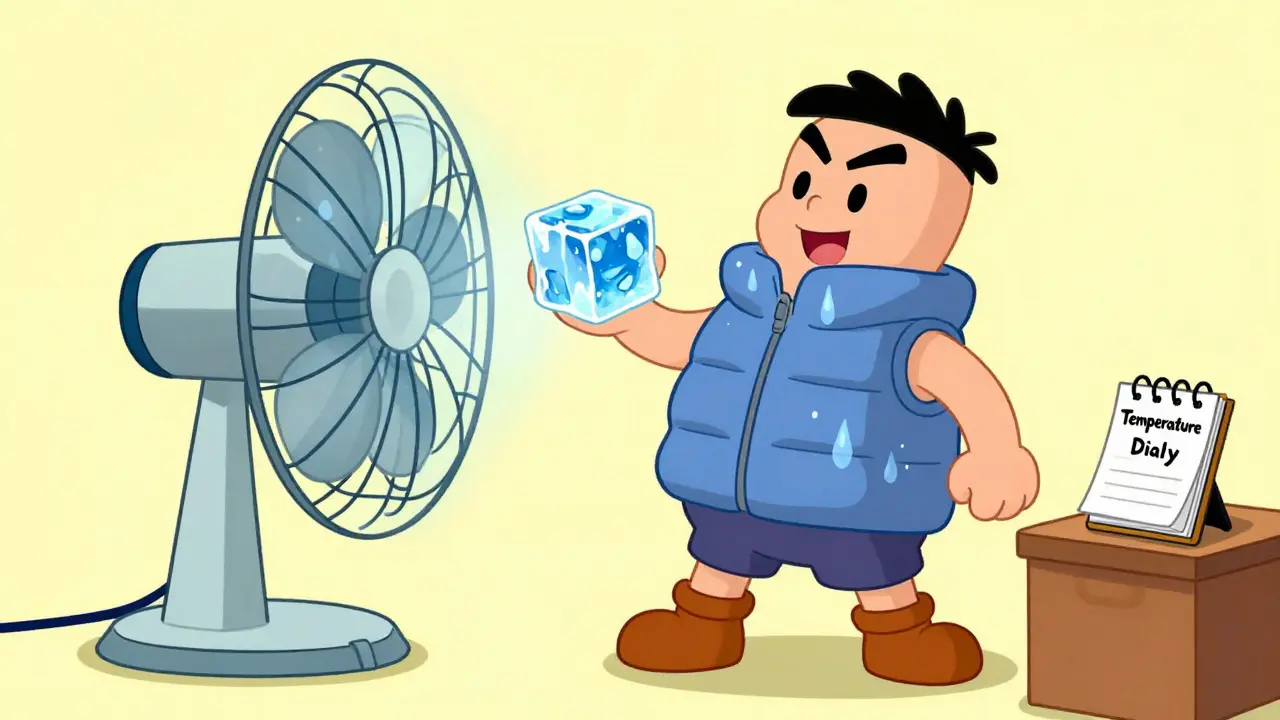
Medication is only half the battle. The other half is lifestyle engineering. If you're an athlete or just someone who hates hives, you need a cooling strategy. Switching to moisture-wicking fabrics-materials that pull sweat away from the skin-can drastically reduce the frequency of flares. Many people find that exercising in air-conditioned environments or using cooling vests helps them stay below their thermal trigger point.
Keep a detailed log of your activities. It takes most people about three months to truly identify their personal "danger zone." Note the temperature of the room, what you ate, and your stress levels. This data is gold for your doctor and helps you predict when a flare is coming so you can pre-treat with antihistamines.
When to Seek Emergency Help
For most, CU is just an annoying itch. But for about 12% of people, it can become a systemic emergency. This is where CU overlaps with Anaphylaxis is a severe, potentially life-threatening systemic allergic reaction that can cause airway constriction and shock . If you experience wheezing, a sudden drop in blood pressure (feeling faint), or a racing heart during a heat flare, you need immediate medical attention.
Because CU can look like exercise-induced anaphylaxis, it's often misdiagnosed in emergency rooms. If you have a history of severe reactions, your doctor might prescribe an epinephrine auto-injector. This is a critical safety net for the roughly 9% of CU patients who face these life-threatening episodes.
Can I ever fully cure cholinergic urticaria?
Currently, there is no definitive cure. However, it is often a self-limiting condition. Roughly 30% of people see their symptoms resolve spontaneously within 7 to 10 years of the onset. For others, it is a lifelong management process focused on symptom control and trigger avoidance.
Does spicy food really trigger heat hives?
Yes, for many people. Spicy foods can increase your internal body temperature and trigger the sweating mechanism, which in turn activates the mast cells. Surveys of CU patients show that about 67% of them identify spicy foods as a secondary trigger.
How do doctors diagnose this condition?
The gold standard is the passive warming test. A doctor will slowly increase your core body temperature by about 0.5°C above your baseline. If you develop the characteristic pinpoint wheals, the diagnosis is confirmed. This test is highly accurate, appearing in about 94% of confirmed cases.
Are there side effects to the long-term use of antihistamines?
Most people use second-generation antihistamines because they lack the sedative effects of older drugs. However, some users still report mild drowsiness. In some cases, patients develop a tolerance to a specific medication, requiring a switch to a different antihistamine or the addition of an H2 blocker.
Will climate change make this condition worse?
Epidemiological modeling suggests it might. Because CU is triggered by heat, rising average global temperatures could increase the prevalence of the condition by 15-25% in temperate regions by 2040, as people are more frequently exposed to triggering thermal environments.
Next Steps for Management
If you suspect you have heat hives, your first step should be a visit to a dermatologist or allergist. Don't just try over-the-counter meds blindly; get a proper diagnosis via a passive warming test to rule out other forms of urticaria.
For those already diagnosed, start a "Temperature Diary." Track your core temperature triggers and how long it takes for the hives to disappear. If you're an active person, experiment with moisture-wicking gear and air-conditioned environments. If you're experiencing any shortness of breath or fainting during flares, prioritize a conversation with your doctor about an epinephrine auto-injector immediately.

Rupert McKelvie
April 6, 2026 AT 03:04It is really heartening to see that a good chunk of people actually recover from this over time. Just keep pushing through those tough workouts and stay positive about the long-term outlook.