Sharps Disposal: Safe Ways to Handle Needles, Syringes, and Medical Waste
When you or someone you care for uses needles, syringes, or lancets at home, sharps disposal, the safe handling and disposal of medical needles and sharp instruments. Also known as needle safety, it's not just a rule—it's a lifeline for your family, neighbors, and waste workers. Improperly thrown away sharps can poke through trash bags, injure sanitation workers, or end up in parks and playgrounds. Every year, thousands of people get stuck by discarded needles—not because they were careless, but because no one knew how to dispose of them right.
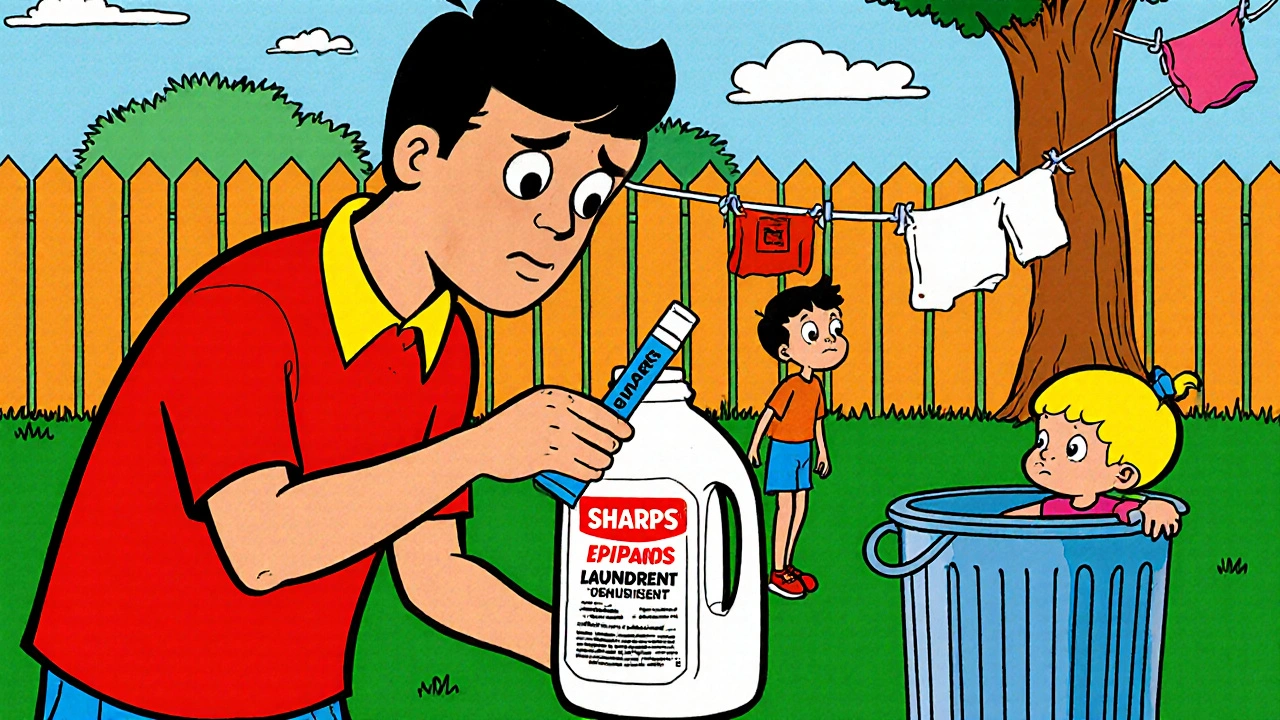
Sharps container, a rigid, puncture-resistant bin designed specifically for collecting used needles and medical sharps. These aren’t fancy gadgets—they’re simple plastic boxes with tight lids, often free from pharmacies or health departments. You don’t need to buy a special container. A heavy-duty laundry detergent bottle with a screw-on cap works too, as long as it’s labeled and sealed before trash day. Medical waste, any item contaminated with blood or bodily fluids that poses infection risk. That includes used test strips, insulin pens, and even gauze soaked in blood. But needles? They’re the biggest risk. They don’t break down. They don’t disappear. And if they’re not contained, they can hurt someone long after you’ve thrown them away.
People with diabetes, those on injectable medications for arthritis or multiple sclerosis, and caregivers managing chronic conditions all face this daily. You’re not alone. But here’s what most don’t tell you: sharps disposal isn’t just about putting the needle in a bottle. It’s about knowing where to drop it off. Many pharmacies, hospitals, and fire stations take used sharps containers for free. Some cities even offer mail-back programs. Check your local health department website—most list drop-off spots with hours and rules. Never put sharps in recycling. Never flush them. Never toss them loose in the trash.
And if you’re caring for someone at home, teach everyone in the house—kids included—what a sharps container is and why it stays locked away. Keep it out of reach, but visible enough that it’s used every time. A single mistake can cost someone an ER visit, a tetanus shot, or worse. The right system turns a scary risk into a simple habit.
Below, you’ll find real-world advice from people who’ve been there: how to handle sharps during travel, what to do when containers fill up fast, why some insurance plans cover disposal supplies, and how to talk to your doctor about getting free supplies. These aren’t theory pages. These are stories from caregivers, patients, and nurses who’ve learned the hard way—and now want to help you avoid it.
 30 Nov 2025
Learn how to safely dispose of expired EpiPens, inhalers, and medicated patches to prevent accidental poisoning, environmental harm, and misuse. Follow step-by-step guidelines backed by FDA, DEA, and medical experts.
View More
